Russo Lilian C, Ferruzo Pault Y M, Forti Fabio L
Laboratory of Biomolecular Systems Signalling, Department of Biochemistry, Institute of Chemistry, University of São Paulo, São Paulo, Brazil.
Front Cell Dev Biol. 2021 Mar 11;9:624933. doi: 10.3389/fcell.2021.624933. eCollection 2021.
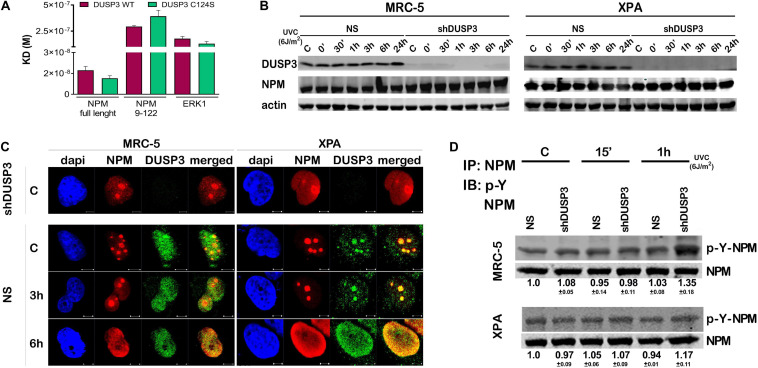
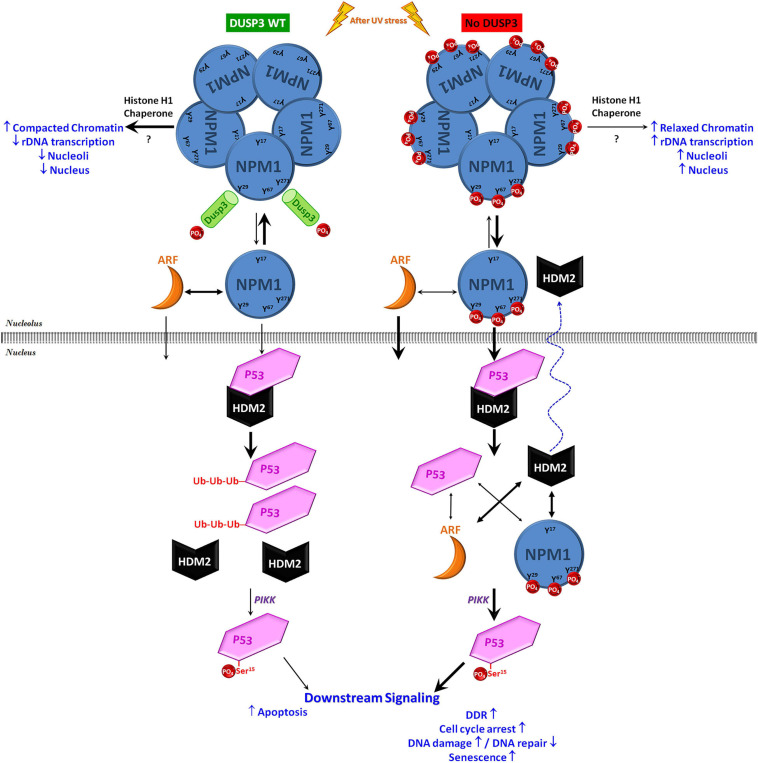
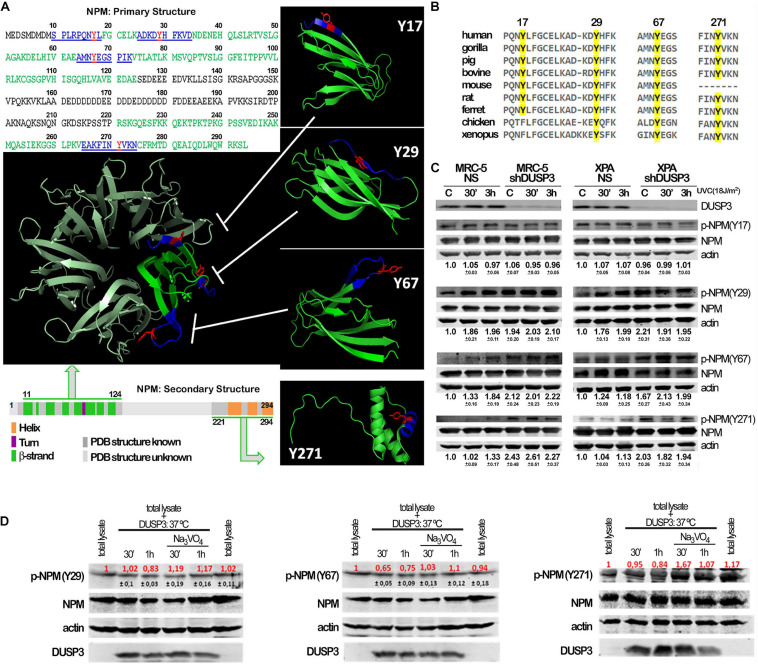
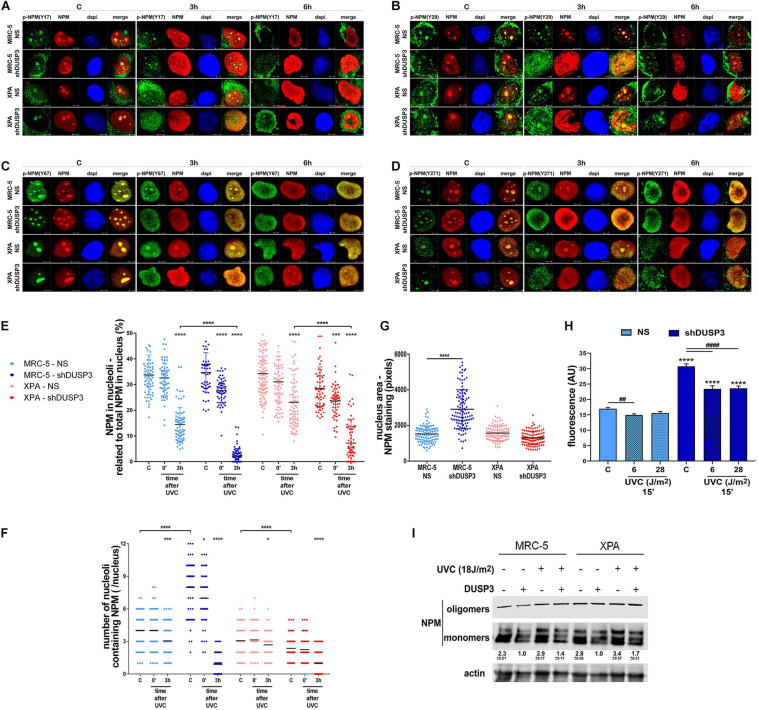
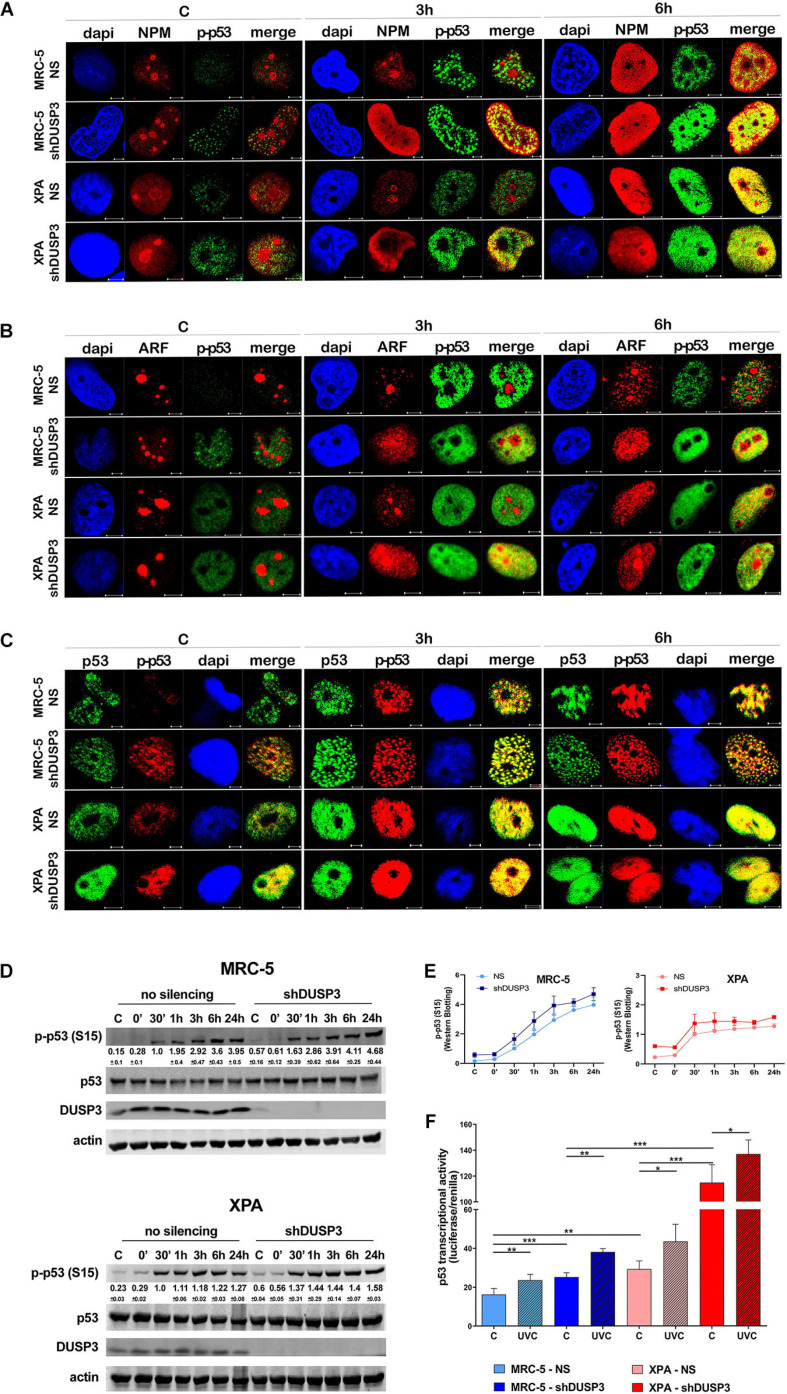
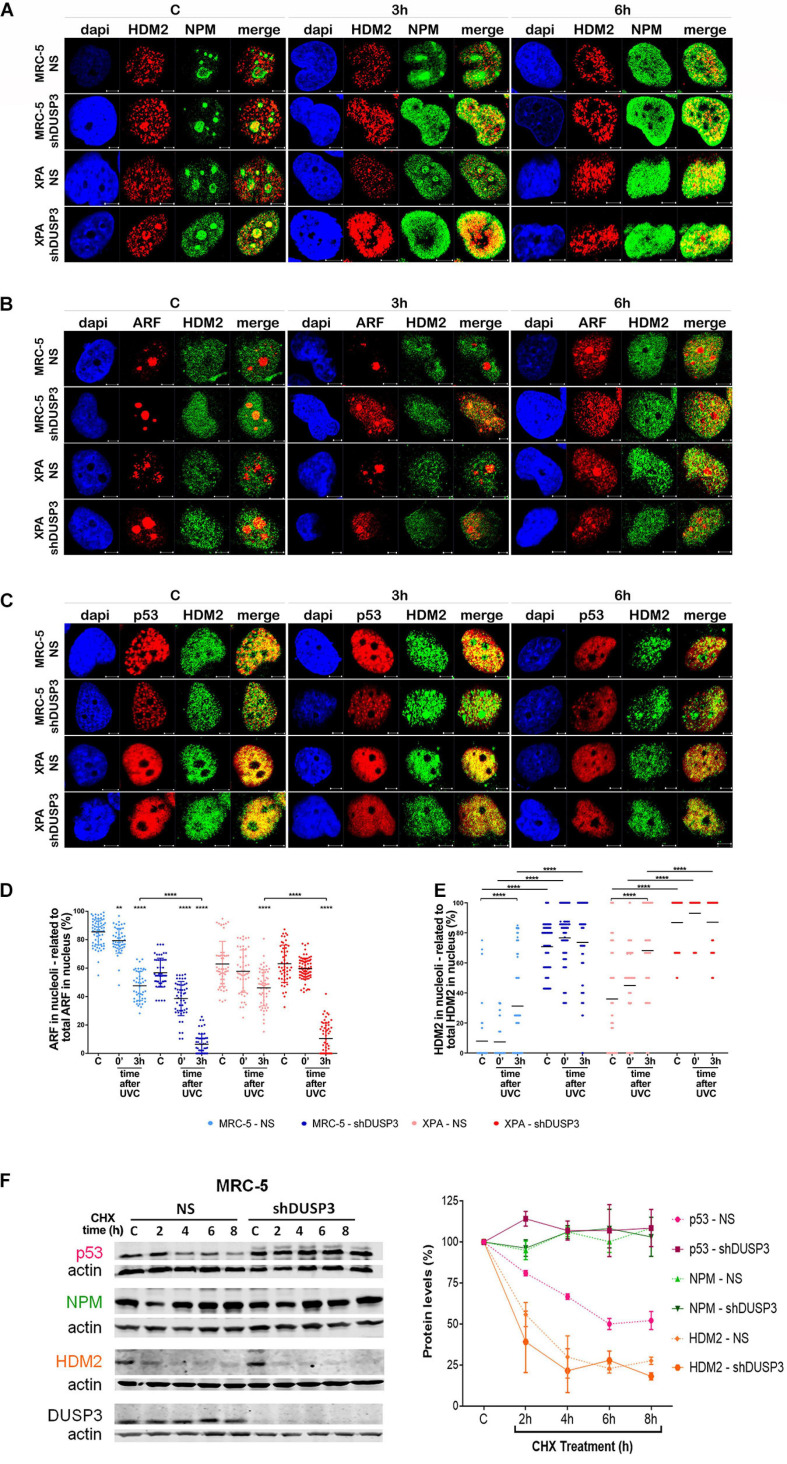
The dual-specificity phosphatase 3 (DUSP3), an atypical protein tyrosine phosphatase (PTP), regulates cell cycle checkpoints and DNA repair pathways under conditions of genotoxic stress. DUSP3 interacts with the nucleophosmin protein (NPM) in the cell nucleus after UV-radiation, implying a potential role for this interaction in mechanisms of genomic stability. Here, we show a high-affinity binding between DUSP3-NPM and NPM tyrosine phosphorylation after UV stress, which is increased in DUSP3 knockdown cells. Specific antibodies designed to the four phosphorylated NPM's tyrosines revealed that DUSP3 dephosphorylates Y29, Y67, and Y271 after UV-radiation. DUSP3 knockdown causes early nucleolus exit of NPM and ARF proteins allowing them to disrupt the HDM2-p53 interaction in the nucleoplasm after UV-stress. The anticipated p53 release from proteasome degradation increased p53-Ser15 phosphorylation, prolonged p53 half-life, and enhanced p53 transcriptional activity. The regular dephosphorylation of NPM's tyrosines by DUSP3 balances the p53 functioning and favors the repair of UV-promoted DNA lesions needed for the maintenance of genomic stability.
双特异性磷酸酶3(DUSP3)是一种非典型蛋白酪氨酸磷酸酶(PTP),在基因毒性应激条件下调节细胞周期检查点和DNA修复途径。紫外线辐射后,DUSP3在细胞核中与核磷蛋白(NPM)相互作用,这意味着这种相互作用在基因组稳定性机制中可能发挥作用。在这里,我们展示了紫外线应激后DUSP3-NPM与NPM酪氨酸磷酸化之间的高亲和力结合,在DUSP3敲低的细胞中这种结合增加。针对NPM的四个磷酸化酪氨酸设计的特异性抗体显示,紫外线辐射后DUSP3使Y29、Y67和Y271去磷酸化。DUSP3敲低导致NPM和ARF蛋白提前从核仁中退出,使它们在紫外线应激后破坏核质中的HDM2-p53相互作用。预期从蛋白酶体降解中释放的p53增加了p53-Ser15磷酸化,延长了p53半衰期,并增强了p53转录活性。DUSP3对NPM酪氨酸的定期去磷酸化平衡了p53的功能,并有利于修复维持基因组稳定性所需的紫外线诱导的DNA损伤。