Guerrero Julien, Häckel Sonja, Croft Andreas S, Albers Christoph E, Gantenbein Benjamin
Tissue Engineering for Orthopaedics & Mechanobiology, Department for BioMedical Research (DBMR) of the Faculty of Medicine of the University of Bern University of Bern Switzerland.
Department of Orthopaedic Surgery & Traumatology, Inselspital Bern University Hospital Bern Switzerland.
JOR Spine. 2020 Dec 8;4(1):e1131. doi: 10.1002/jsp2.1131. eCollection 2021 Mar.
Low back pain (LBP) is a global health concern. Increasing evidence implicates intervertebral disk (IVD) degeneration as a major contributor. In this respect, tissue-specific progenitors may play a crucial role in tissue regeneration, as these cells are perfectly adapted to their niche. Recently, a novel progenitor cell population was described in the nucleus pulposus (NP) that is positive for Tie2 marker. These cells have self-renewal capacity and multipotency potential. However, extremely low numbers of the NP progenitors limit the feasibility of cell therapy strategies.
Here, we studied the influence of the culture method and of the microenvironment on the proliferation rate and the differentiation potential of human NP progenitors .
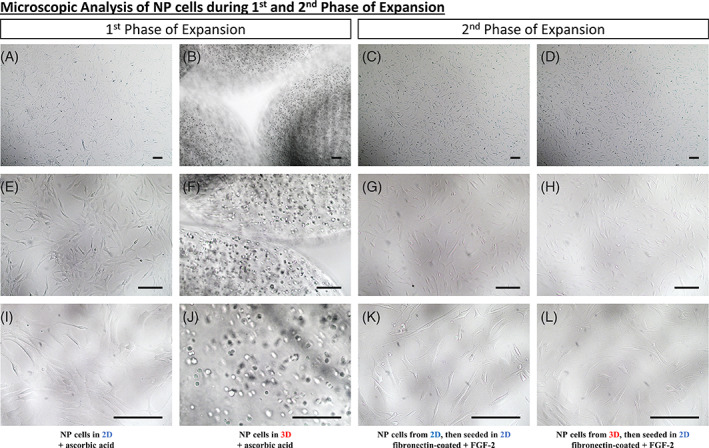
Cells were obtained from human NP tissue from trauma patients. Briefly, the NP tissue cells were cultured in two-dimensional (2D) (monolayer) or three-dimensional (3D) (alginate beads) conditions. After 1 week, cells from 2D or 3D culture were expanded on fibronectin-coated flasks. Subsequently, expanded NP cells were then characterized by cytometry and tri-lineage differentiation, which was analyzed by qPCR and histology. Moreover, experiments using Tie2 and Tie2 NP cells were also performed.
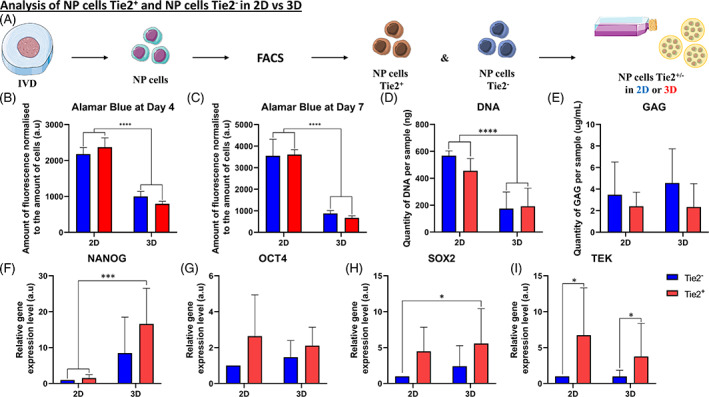
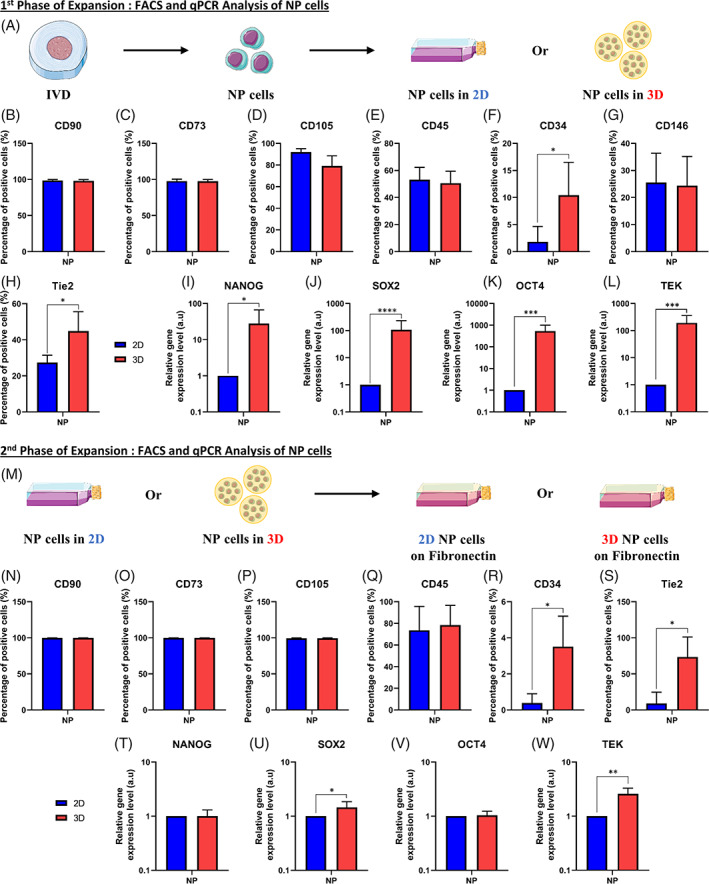
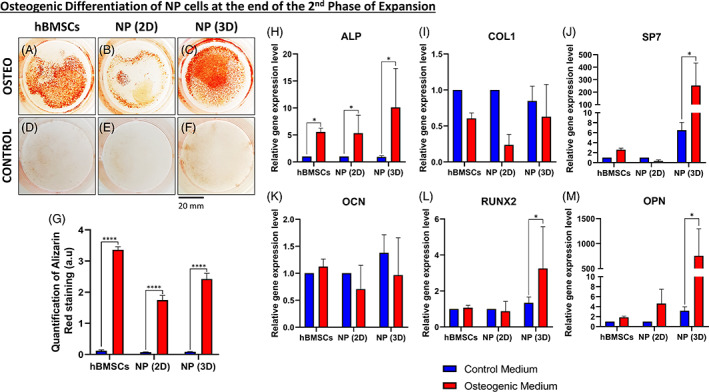
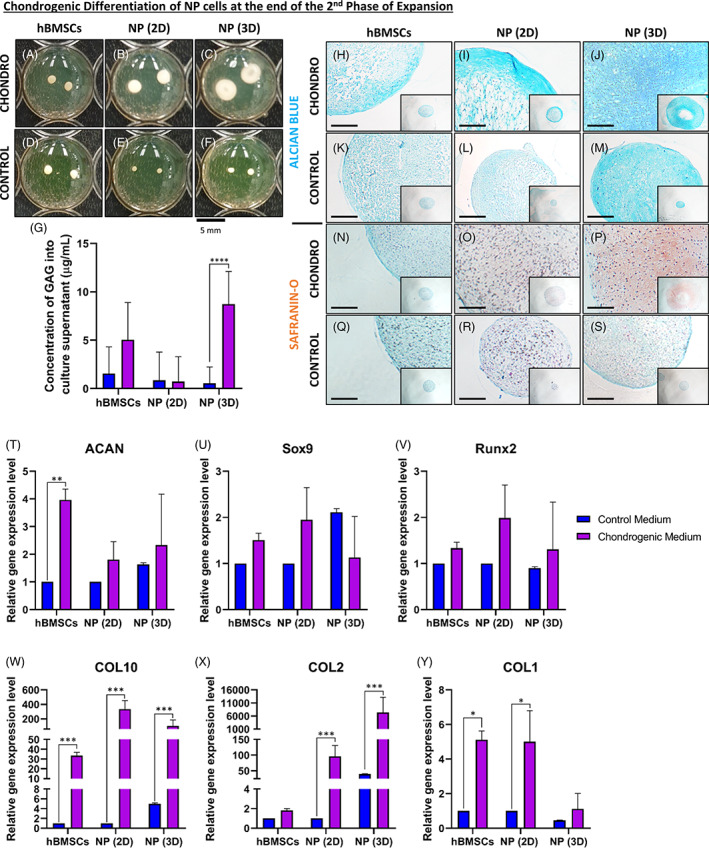
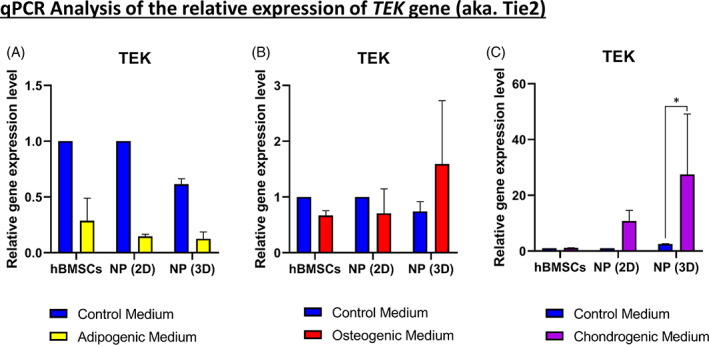
The present study aims to demonstrate that 3D expansion of NP cells better preserves the Tie2 cell populations and increases the chondrogenic and osteogenic differentiation potential compared to 2D expansion. Moreover, the cell sorting experiments reveal that only Tie2 cells were able to maintain the pluripotent gene expression if cultured in 3D within alginate beads. Therefore, our results highly suggest that the maintenance of the cell's multipotency is mainly, but not exclusively, due to the higher presence of Tie2 cells due to 3D culture.
This project not only might have a scientific impact by evaluating the influence of a two-step expansion protocol on the functionality of NP progenitors, but it could also lead to an innovative clinical approach.
下腰痛(LBP)是一个全球性的健康问题。越来越多的证据表明椎间盘(IVD)退变是一个主要因素。在这方面,组织特异性祖细胞可能在组织再生中发挥关键作用,因为这些细胞能完美地适应其微环境。最近,在髓核(NP)中发现了一种新型的祖细胞群体,其Tie2标记呈阳性。这些细胞具有自我更新能力和多能性潜能。然而,NP祖细胞数量极少限制了细胞治疗策略的可行性。
在此,我们研究了培养方法和微环境对人NP祖细胞增殖率和分化潜能的影响。
从创伤患者的人NP组织中获取细胞。简要地说,NP组织细胞在二维(2D)(单层)或三维(3D)(藻酸盐珠)条件下培养。1周后,将2D或3D培养的细胞在纤连蛋白包被的培养瓶上进行扩增。随后,通过细胞计数和三系分化对扩增的NP细胞进行表征,通过qPCR和组织学进行分析。此外,还进行了使用Tie2和Tie2 NP细胞的实验。
本研究旨在证明,与2D扩增相比,NP细胞的3D扩增能更好地保留Tie2细胞群体,并增加软骨生成和成骨分化潜能。此外,细胞分选实验表明,如果在3D藻酸盐珠中培养,只有Tie2细胞能够维持多能基因表达。因此,我们的结果强烈表明,细胞多能性的维持主要但并非唯一地归因于3D培养导致的Tie2细胞数量增加。
该项目不仅可能通过评估两步扩增方案对NP祖细胞功能的影响产生科学影响,还可能导致一种创新的临床方法。