MSD KK, Chiyoda-ku, Tokyo, Japan.
MSD KK, Chiyoda-ku, Tokyo, Japan
BMJ Open Respir Res. 2021 Mar;8(1). doi: 10.1136/bmjresp-2020-000764.
Cough lasting 3-8 and >8 weeks are defined as subacute/prolonged cough and chronic cough (CC), respectively. Studies have revealed that CC negatively impact patients' quality of life (QoL). In Japan, there is limited data on the impact of CC on health-related quality of life (HRQoL), work productivity and activity impairment (WPAI) and healthcare resource utilisation (HRU) using validated instruments. This study aimed to estimate the burden of CC and to compare the burden among patients with CC between subgroups.
Data from two cross-sectional online surveys conducted between September and November 2019 were combined for the analysis. Eligible patients with cough were propensity score matched to non-cough respondents. Comparisons of general HRQoL, WPAI, HRU and other symptoms experienced were conducted between matched non-cough respondents and patients with cough. Among patients with CC, subgroup comparisons were performed to understand general HRQoL, WPAI, HRU, cough-related QoL (Leicester Cough Questionnaire and Hull Airway Reflux Questionnaire) between patients with CC of different severities, patients with refractory CC and patients with non-refractory CC and patients with CC whose underlying diseases were unknown and others.
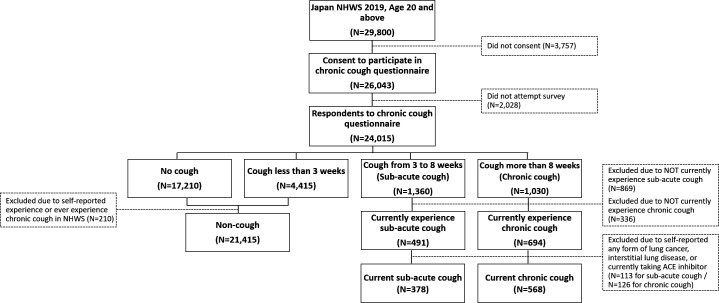
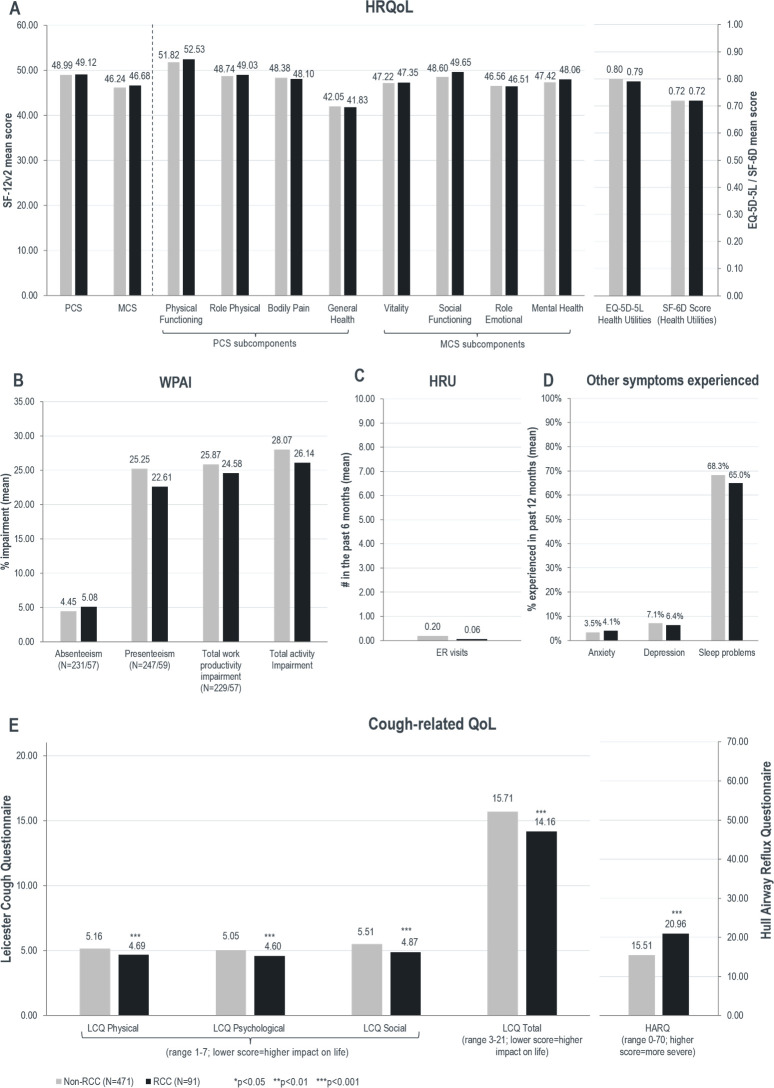
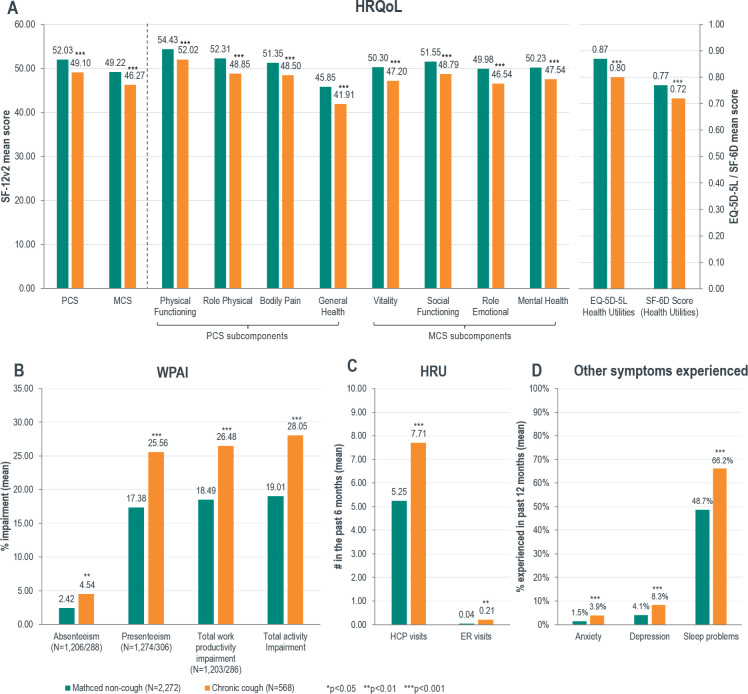
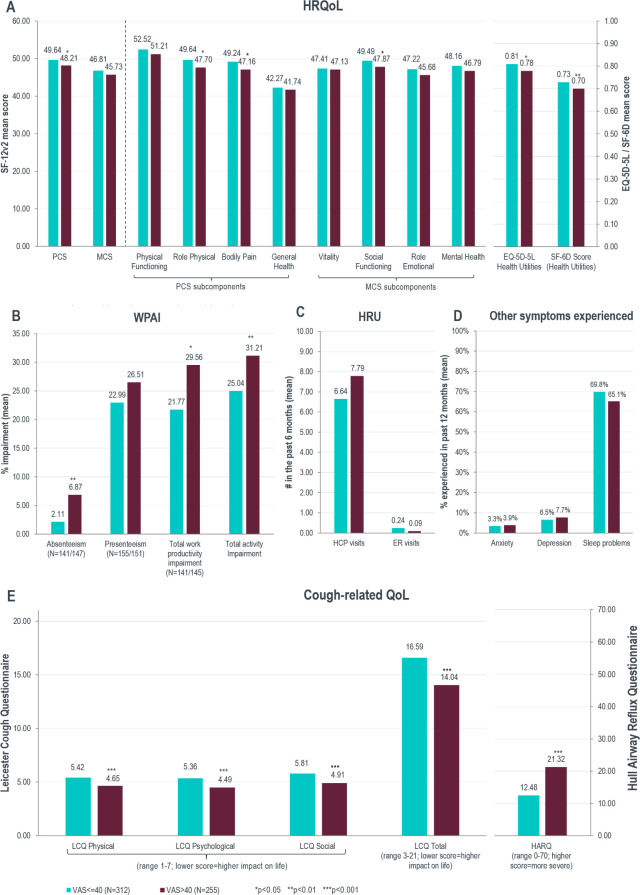
Patients with CC (n=568) in Japan reported significantly poorer HRQoL, increased WPAI, more HRU and higher proportion of psychological and sleep problems, compared with matched non-cough respondents selected from 21 415 non-cough respondents. More patients with severe CC reported significantly poorer HRQoL, increased WPAI and worse cough-related QoL. Patients with refractory CC experienced significantly greater burden measured by cough-related QoL. No significant differences were observed between patients with CC whose underlying diseases were unknown and other patients with CC in terms of general HRQoL and cough-related QoL.
This study showed that patients with CC in Japan experienced significant burden compared with non-cough respondents. Patients with more severe cough and refractory CC experienced worse cough-related QoL. These results highlighted the unmet need for better interventions and treatments to reduce the burden among patients with CC.
持续 3-8 周和>8 周的咳嗽分别定义为亚急性/持续性咳嗽和慢性咳嗽(CC)。研究表明,CC 会对患者的生活质量(QoL)产生负面影响。在日本,使用经过验证的工具,关于 CC 对健康相关生活质量(HRQoL)、工作生产力和活动障碍(WPAI)以及医疗资源利用(HRU)的影响,数据有限。本研究旨在评估 CC 的负担,并比较 CC 患者亚组之间的负担。
合并了 2019 年 9 月至 11 月期间进行的两项横断面在线调查的数据进行分析。对咳嗽患者进行倾向评分匹配,与非咳嗽患者进行比较。比较匹配的非咳嗽患者与咳嗽患者的一般 HRQoL、WPAI、HRU 和其他症状。在 CC 患者中,进行亚组比较,以了解不同严重程度的 CC 患者、难治性 CC 患者、非难治性 CC 患者以及未知潜在疾病的 CC 患者之间的一般 HRQoL、WPAI、HRU、咳嗽相关 QoL(莱斯特咳嗽问卷和赫尔气道反流问卷)。
日本的 CC 患者(n=568)报告的 HRQoL 明显较差,WPAI 增加,HRU 增加,心理和睡眠问题的比例较高,与从 21415 名非咳嗽患者中选择的匹配非咳嗽患者相比。更多严重 CC 患者报告的 HRQoL 明显较差,WPAI 增加,咳嗽相关 QoL 更差。难治性 CC 患者的咳嗽相关 QoL 测量的负担明显更大。在一般 HRQoL 和咳嗽相关 QoL 方面,未知潜在疾病的 CC 患者与其他 CC 患者之间无显著差异。
本研究表明,日本的 CC 患者与非咳嗽患者相比,经历了显著的负担。咳嗽更严重和难治性 CC 患者的咳嗽相关 QoL 更差。这些结果强调了需要更好的干预和治疗措施来减轻 CC 患者的负担。