Grote Ulrike, Arvand Mardjan, Brinkwirth Simon, Brunke Melanie, Buchholz Udo, Eckmanns Tim, von Kleist Max, Niebank Michaela, Ruehe Bettina, Schulze Kai, Stoliaroff-Pépin Anna, Thanheiser Marc, Schaade Lars, Said Dunja, Haas Walter
Abteilung für Infektionsepidemiologie, Robert Koch-Institut, Berlin, Deutschland.
ÖGD Kontaktstelle: Infektionsepidemiologisches Krisenmanagement, Ausbruchsuntersuchungen und Trainingsprogramme (Fachgebiet 38), Abteilung für Infektionsepidemiologie, Robert Koch-Institut, Seestraße 10, 13353, Berlin, Deutschland.
Bundesgesundheitsblatt Gesundheitsforschung Gesundheitsschutz. 2021 Apr;64(4):435-445. doi: 10.1007/s00103-021-03306-z. Epub 2021 Mar 31.
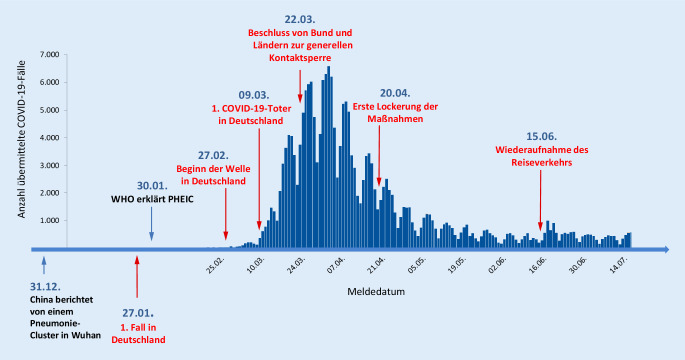
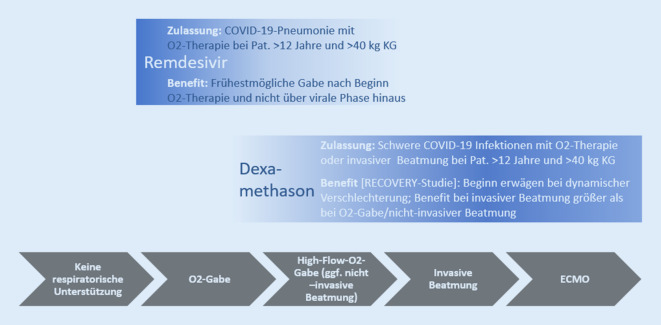
When the emerging novel SARS-CoV‑2 virus first appeared in December 2019, neither specific therapeutic options nor vaccinations were available. The role of nonpharmaceutical interventions (NPIs) became of central importance. At the Robert Koch Institute, a multilayer strategy consisting of population-based and individual preventive measures to control the pandemic was developed, which built upon existing influenza pandemic plans as well as generic plans. This paper explains the recommended NPIs and illustrates the pharmaceutical approaches developed in parallel.Among others, general contact bans, providing material for infection prevention and control, ban of events, closing educational institutions, and restricting travel are counted among population-based measures. Additional individual preventive measures are necessary, e.g., keeping a minimum distance, reducing contacts, and wearing a mouth-nose covering as well as quarantine and isolation. Measures within the health system are based on recommendations of the Commission on Hospital Hygiene and Infection Protection (Kommission für Krankenhaushygiene und Infektionsprävention (KRINKO)) and specified and implemented by professional societies. Since November 2020, an antiviral therapy with remdesivir and treatment with the glucocorticoid dexamethasone have been available as pharmaceutical interventions. Monoclonal antibodies are at this time not approved. Therapeutic anticoagulation is recommended.Recommendations are constantly adapted to the increasing knowledge on the pathogen and its means of transmission. A challenge is to strengthen the trust of the population. Many measures have to be applied on an individual basis in order to work together.
2019年12月新型严重急性呼吸综合征冠状病毒2(SARS-CoV-2)首次出现时,既没有特定的治疗方案,也没有可用的疫苗。非药物干预措施(NPIs)的作用变得至关重要。在罗伯特·科赫研究所,制定了一项由基于人群和个体预防措施组成的多层策略来控制疫情,该策略以现有的流感大流行计划以及通用计划为基础。本文解释了推荐的非药物干预措施,并阐述了同时制定的药物治疗方法。其中,基于人群的措施包括全面接触禁令、提供感染预防和控制物资、活动禁令、关闭教育机构以及限制旅行。还需要额外的个体预防措施,例如保持最小距离、减少接触、佩戴口鼻覆盖物以及检疫和隔离。卫生系统内的措施基于医院卫生与感染防护委员会(Kommission für Krankenhaushygiene und Infektionsprävention (KRINKO))的建议,并由专业协会进行细化和实施。自2020年11月以来,瑞德西韦抗病毒治疗和糖皮质激素地塞米松治疗已作为药物干预措施可用。单克隆抗体目前尚未获批。推荐进行治疗性抗凝。建议会根据对病原体及其传播方式的认识不断增加而持续调整。一项挑战是增强民众的信任。许多措施必须在个体层面上实施才能协同发挥作用。