Granito Alessandro, Muratori Luigi, Tovoli Francesco, Muratori Paolo
Division of Internal Medicine, IRCCS Azienda Ospedaliero-Universitaria di Bologna, 40138, Bologna, Italy.
Center for the Study, Treatment of Autoimmune Diseases of the Liver, Biliary System, Bologna, Italy.
Allergy Asthma Clin Immunol. 2021 Mar 31;17(1):35. doi: 10.1186/s13223-021-00539-0.
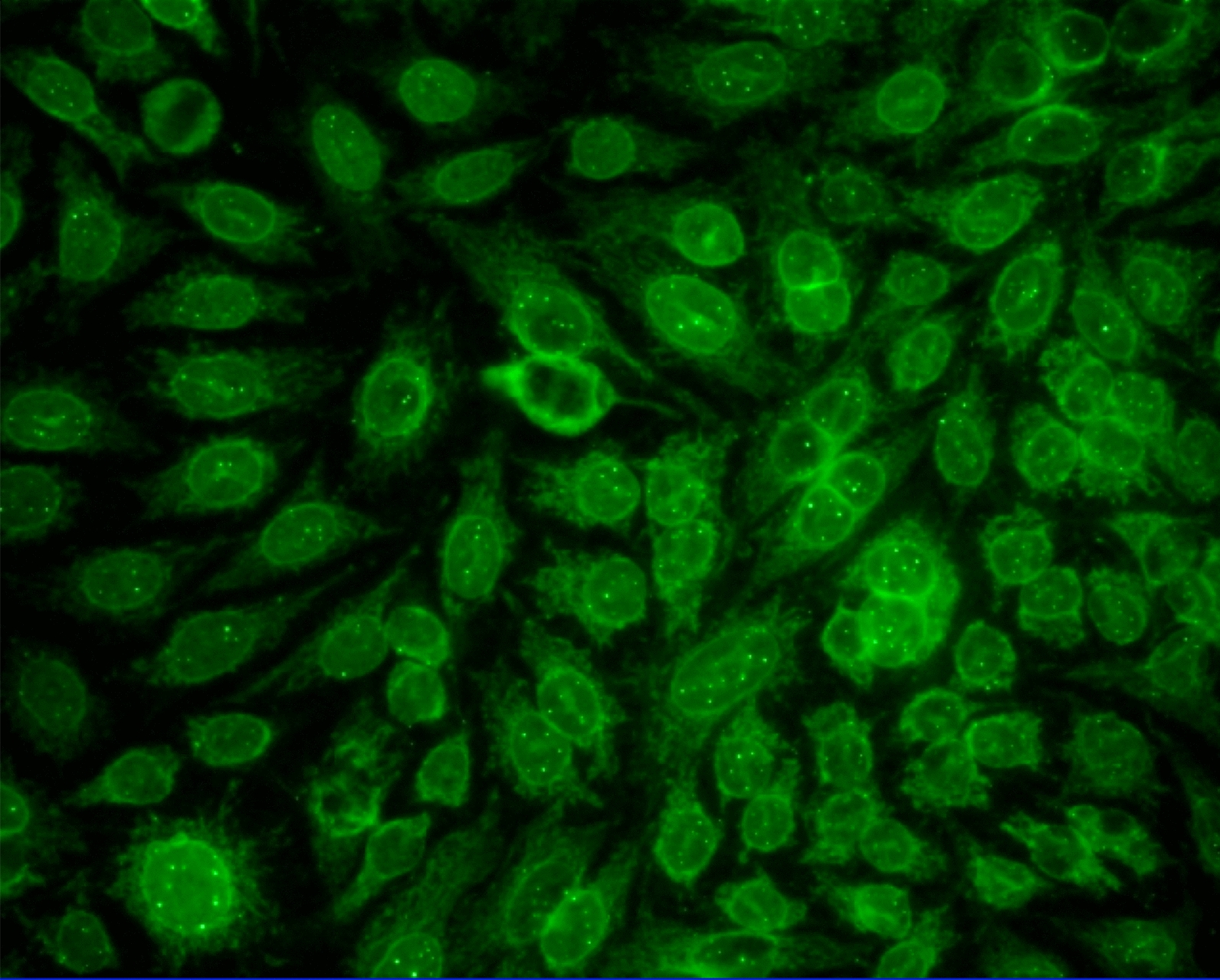
The autoantibody profile of primary biliary cholangitis (PBC) includes antinuclear antibodies (ANA) which are detectable by indirect immunofluorescence in more than 50% of PBC patients. One of the two immunofluorescence patterns which are historically considered "PBC-specific" is the so-called "multiple nuclear dots" (MND) targeting nuclear body proteins such as Sp100, Sp140, Sp140L proteins, promyelocytic leukemia protein (PML) and small ubiquitin-related modifier proteins (SUMO). It has been hypothesized a role of nuclear body protein alterations in immune disorders such as PBC, thus suggesting novel and more refined therapeutic approaches.
原发性胆汁性胆管炎(PBC)的自身抗体谱包括抗核抗体(ANA),通过间接免疫荧光法可在超过50%的PBC患者中检测到。历史上被认为是“PBC特异性”的两种免疫荧光模式之一是所谓的“多核点”(MND),其靶向核体蛋白,如Sp100、Sp140、Sp140L蛋白、早幼粒细胞白血病蛋白(PML)和小泛素相关修饰蛋白(SUMO)。有人推测核体蛋白改变在诸如PBC等免疫疾病中起作用,从而提示新的、更精细的治疗方法。