Hou Jin-Bo, Hughes Nigel C, Hopkins Melanie J
Department of Earth and Planetary Sciences, University of California, Riverside, CA 92521, USA.
Geological Studies Unit, Indian Statistical Institute, Kolkata 700108, India.
Sci Adv. 2021 Mar 31;7(14). doi: 10.1126/sciadv.abe7377. Print 2021 Mar.
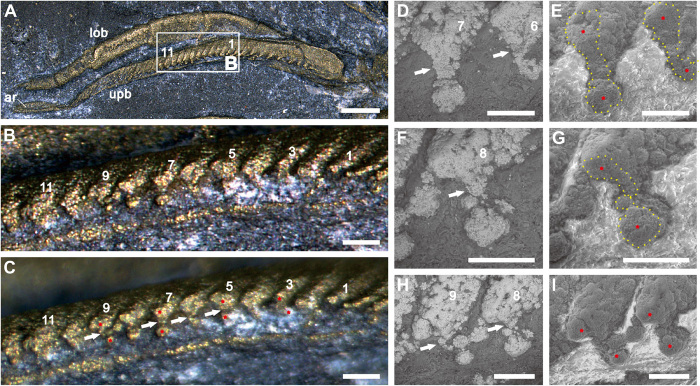
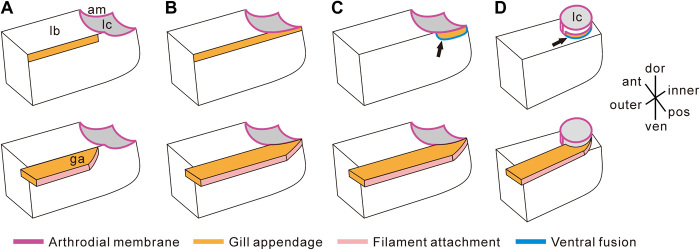
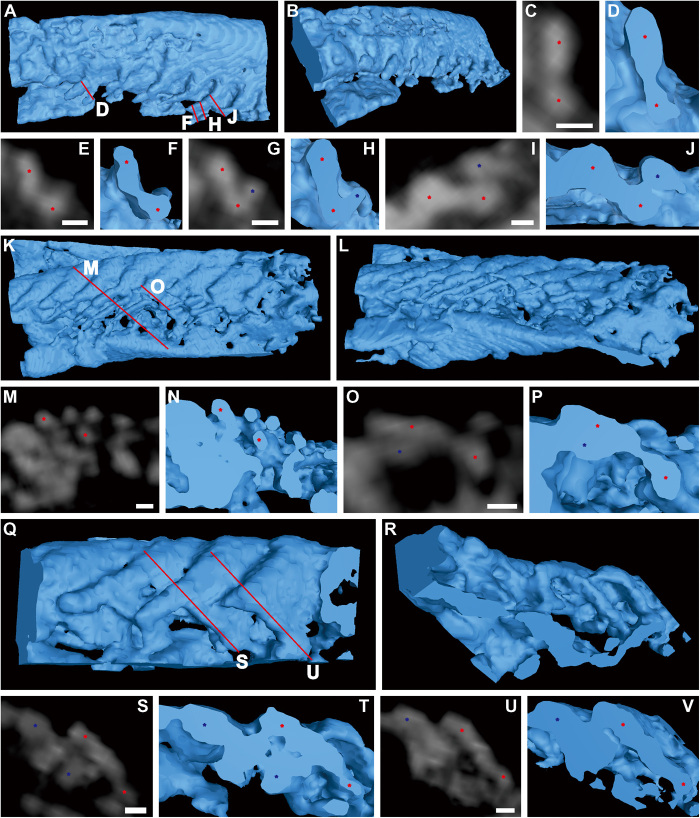
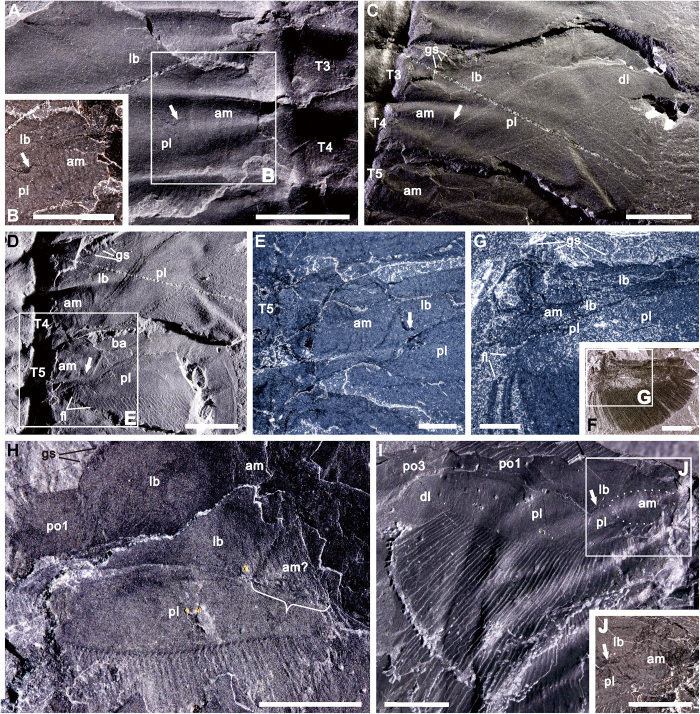
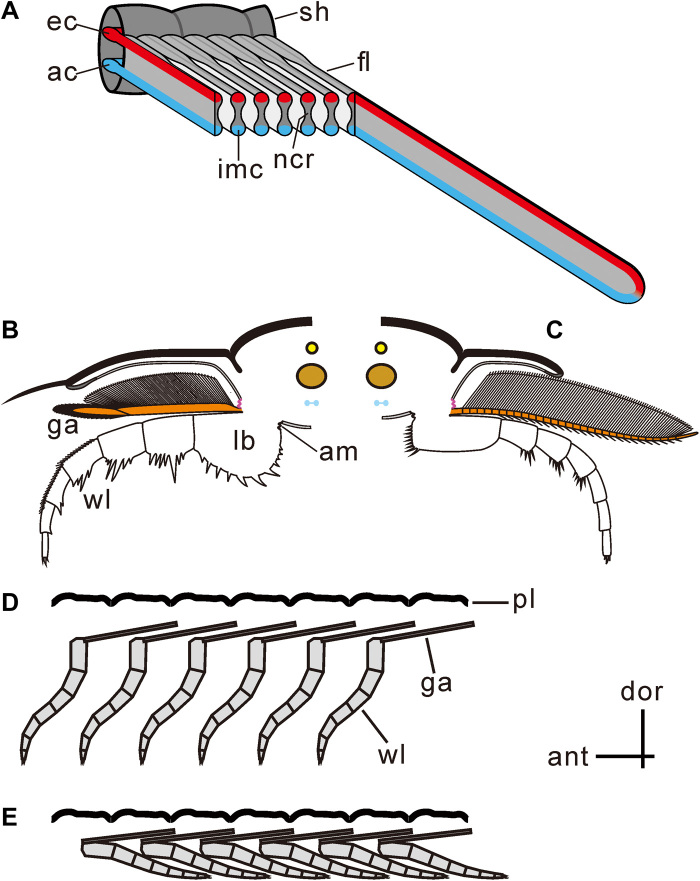
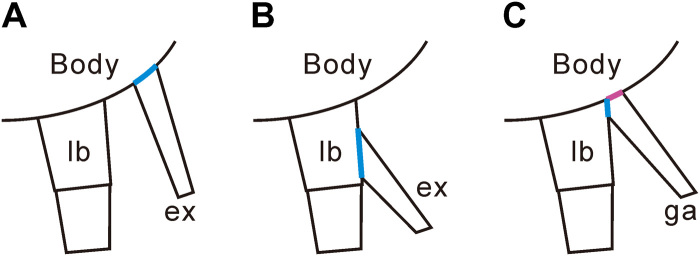
Whether the upper limb branch of Paleozoic "biramous" arthropods, including trilobites, served a respiratory function has been much debated. Here, new imaging of the trilobite shows that dumbbell-shaped filaments in the upper limb branch are morphologically comparable with gill structures in crustaceans that aerate the hemolymph. In , the upper limb's partial articulation to the body via an extended arthrodial membrane is morphologically comparable to the junction of the respiratory book gill of and differentiates it from the typically robust exopod junction in Chelicerata or Crustacea. Apparently limited mechanical rotation of the upper branch may have protected the respiratory structures. Partial attachment of the upper branch to the body wall may represent an intermediate state in the evolution of limb branch fusion between dorsal attachment to the body wall, as in Radiodonta, and ventral fusion to the limb base, as in extant Euarthropoda.
包括三叶虫在内的古生代“双枝型”节肢动物的上肢分支是否具有呼吸功能一直存在诸多争议。在此,对三叶虫的新成像显示,上肢分支中的哑铃形细丝在形态上与为血淋巴充气的甲壳类动物的鳃结构相当。在[具体内容缺失]中,上肢通过延伸的关节膜与身体的部分关节连接在形态上与[具体内容缺失]的呼吸书鳃的连接处相当,并将其与螯肢动物或甲壳类动物中通常坚固的外肢连接处区分开来。上肢分支明显有限的机械旋转可能保护了呼吸结构。上肢分支与体壁的部分附着可能代表了肢体分支融合进化过程中的一种中间状态,这种融合在背侧附着于体壁(如奇虾类)和腹侧融合到肢体基部(如现存真节肢动物)之间。