MacDougall-Shackleton S A, Bonier F, Romero L M, Moore I T
Department of Psychology, University of Western Ontario, London, Ontario, Canada N6A 5C2.
Biology Department, Queen's University, Kingston, Ontario, Canada K7L 3N6.
Integr Org Biol. 2019 Jul 13;1(1):obz017. doi: 10.1093/iob/obz017. eCollection 2019.
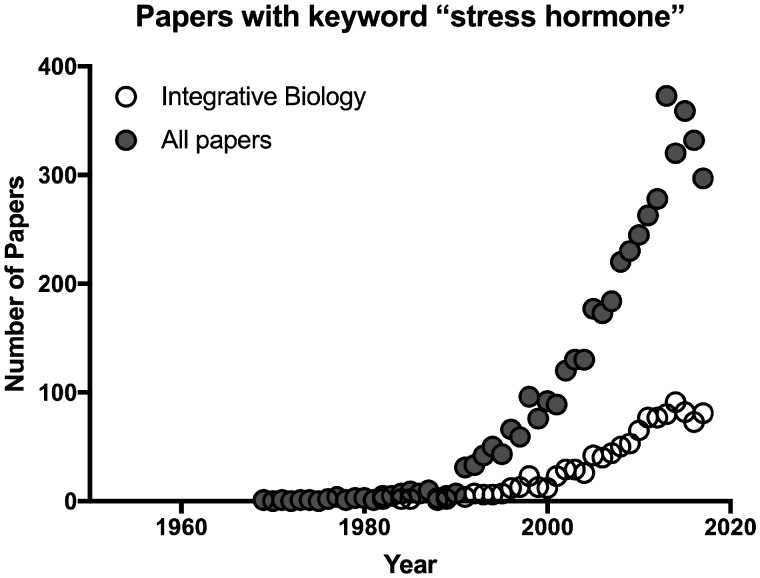
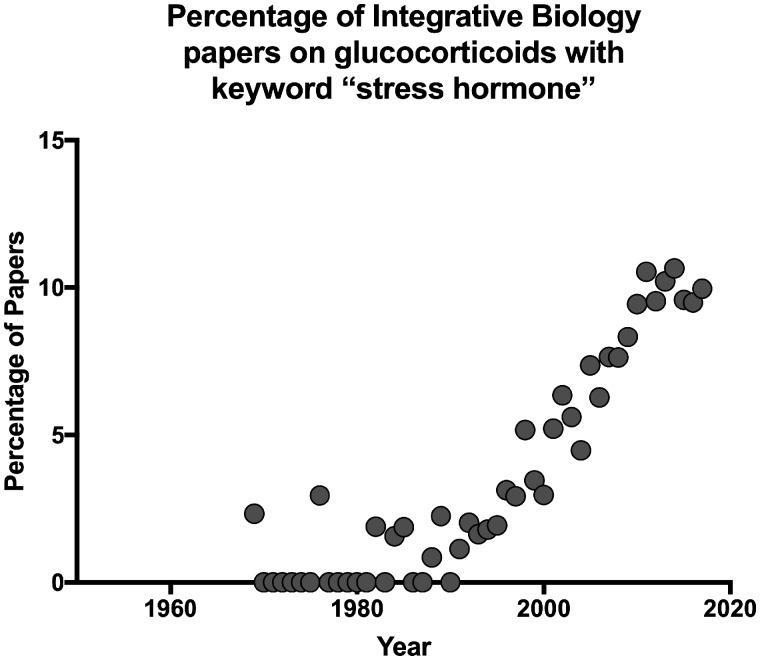
Reference to glucocorticoids as "stress hormones" has been growing in prevalence in the literature, including in comparative and environmental endocrinology. Although glucocorticoids are elevated in response to a variety of stressors in vertebrate animals, the primary functions of glucocorticoids are not responding to stressors and they are only one component of complex suite of physiological and behavioral responses to stressors. Thus, the use of the short-hand phrase "stress hormone" can be misleading. Further, simply measuring glucocorticoids is not equivalent to measuring a stress response, nor is manipulating glucocorticoids equivalent to exposing an animal to a stressor. In this commentary we highlight the problems with using functional names for hormones, and of treating cortisol or corticosterone as synonymous with stress. We provide recommendations to add clarity to the presentation of research on this topic, and to avoid conflation of glucocorticoids with stressors and the stress response in the design of experiments.
在包括比较内分泌学和环境内分泌学在内的文献中,将糖皮质激素称为“应激激素”的情况越来越普遍。尽管在脊椎动物中,糖皮质激素会因各种应激源而升高,但其主要功能并非对应激源做出反应,它们只是对应激源的一系列复杂生理和行为反应的一个组成部分。因此,使用“应激激素”这个简称可能会产生误导。此外,仅仅测量糖皮质激素并不等同于测量应激反应,操纵糖皮质激素也不等同于让动物暴露于应激源。在这篇评论中,我们强调了使用激素功能名称以及将皮质醇或皮质酮视为与应激同义的问题。我们提供了一些建议,以明确该主题研究的表述,并在实验设计中避免将糖皮质激素与应激源及应激反应混为一谈。