Department of Biochemistry and Biomedical Sciences, McMaster University, Hamilton, ON, Canada.
Michael G. DeGroote Institute for Infectious Disease Research, Hamilton, ON, Canada.
Nat Commun. 2021 Apr 1;12(1):2032. doi: 10.1038/s41467-021-22306-w.
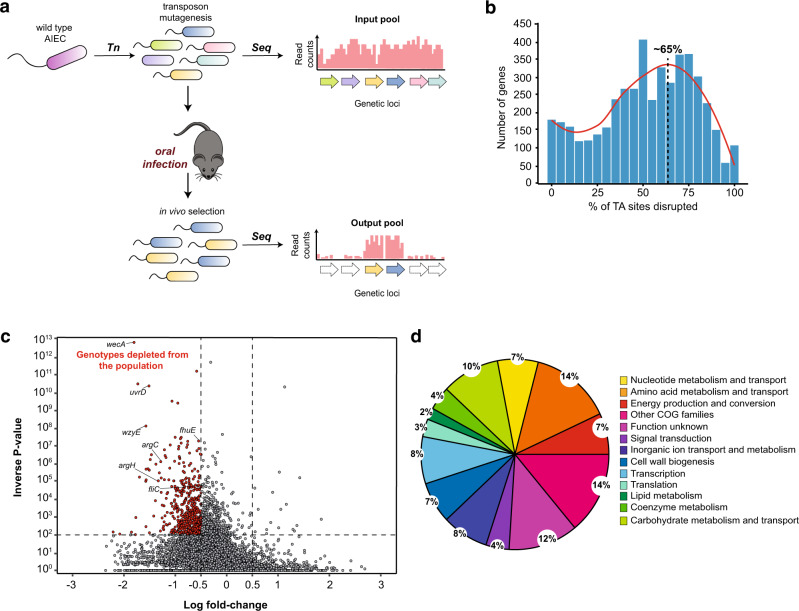
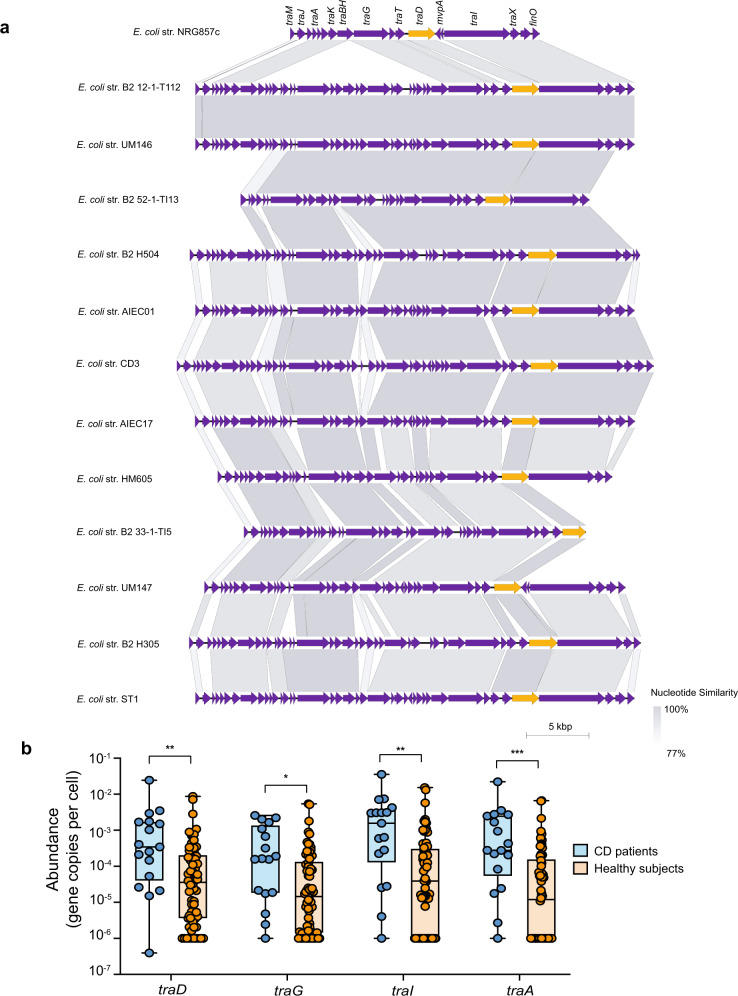
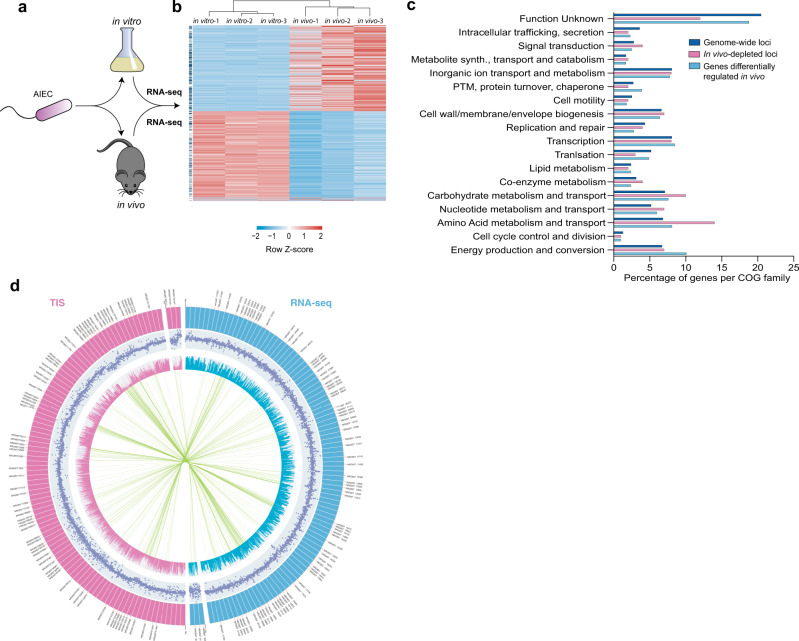
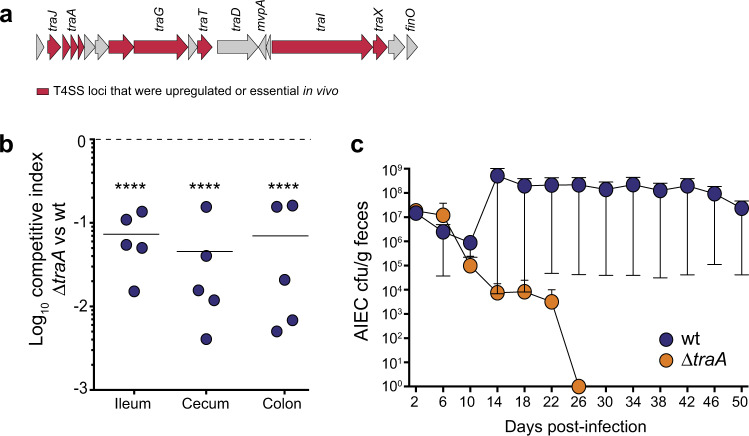
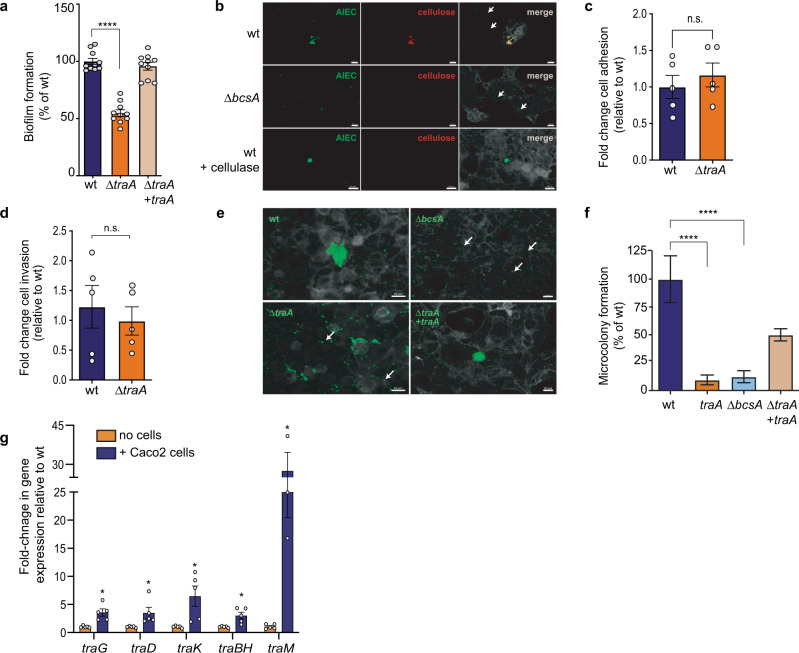
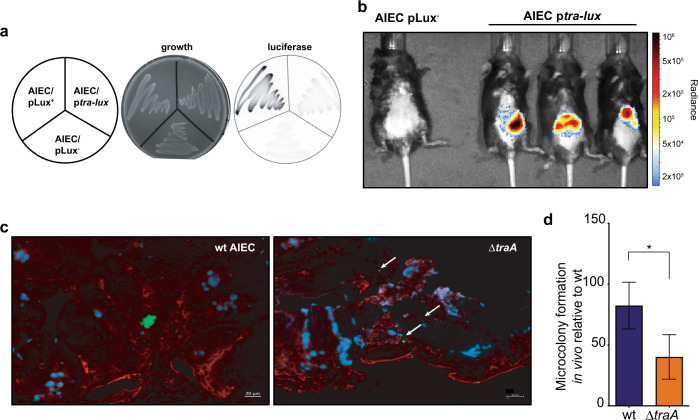
Adherent-invasive Escherichia coli (AIEC) are pathogenic bacteria frequently isolated from patients who have Crohn's disease (CD). Despite the phenotypic differences between AIEC and commensal E. coli, comparative genomic approaches have been unable to differentiate these two groups, making the identification of key virulence factors a challenge. Here, we conduct a high-resolution, in vivo genetic screen to map AIEC genes required for intestinal colonization of mice. In addition, we use in vivo RNA-sequencing to define the host-associated AIEC transcriptome. We identify diverse metabolic pathways required for efficient gut colonization by AIEC and show that a type IV secretion system (T4SS) is required to form biofilms on the surface of epithelial cells, thereby promoting AIEC persistence in the gut. E. coli isolated from CD patients are enriched for a T4SS, suggesting a possible connection to disease activity. Our findings establish the T4SS as a principal AIEC colonization factor and highlight the use of genome-wide screens in decoding the infection biology of CD-associated bacteria that otherwise lack a defined genetic signature.
黏附侵袭型大肠杆菌(AIEC)是一种经常从患有克罗恩病(CD)的患者中分离出来的致病菌。尽管 AIEC 和共生大肠杆菌之间存在表型差异,但比较基因组学方法无法区分这两组细菌,这使得鉴定关键毒力因子成为一项挑战。在这里,我们进行了高分辨率的体内遗传筛选,以绘制 AIEC 基因图谱,这些基因对于 AIEC 在小鼠肠道中的定植是必需的。此外,我们还使用体内 RNA 测序来定义与宿主相关的 AIEC 转录组。我们确定了 AIEC 有效定植肠道所需的各种代谢途径,并表明 IV 型分泌系统(T4SS)是在肠上皮细胞表面形成生物膜所必需的,从而促进 AIEC 在肠道中的持续存在。从 CD 患者中分离出的大肠杆菌富含 T4SS,这表明其与疾病活动有关。我们的研究结果确立了 T4SS 是 AIEC 定植的主要因素,并强调了使用全基因组筛选来解码与 CD 相关的细菌的感染生物学,这些细菌缺乏明确的遗传特征。