Laboratory of Phytopathology, Wageningen University and Research, Wageningen, Netherlands.
Institute for Plant Sciences, Cluster of Excellence on Plant Sciences (CEPLAS), University of Cologne, Cologne, Germany.
Mol Plant Pathol. 2021 Jun;22(6):683-693. doi: 10.1111/mpp.13055. Epub 2021 Apr 1.
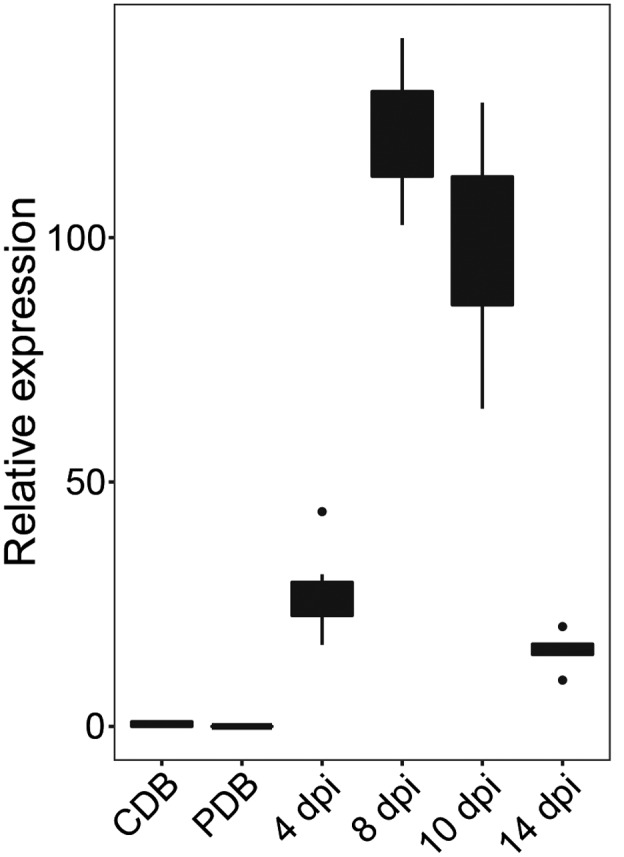
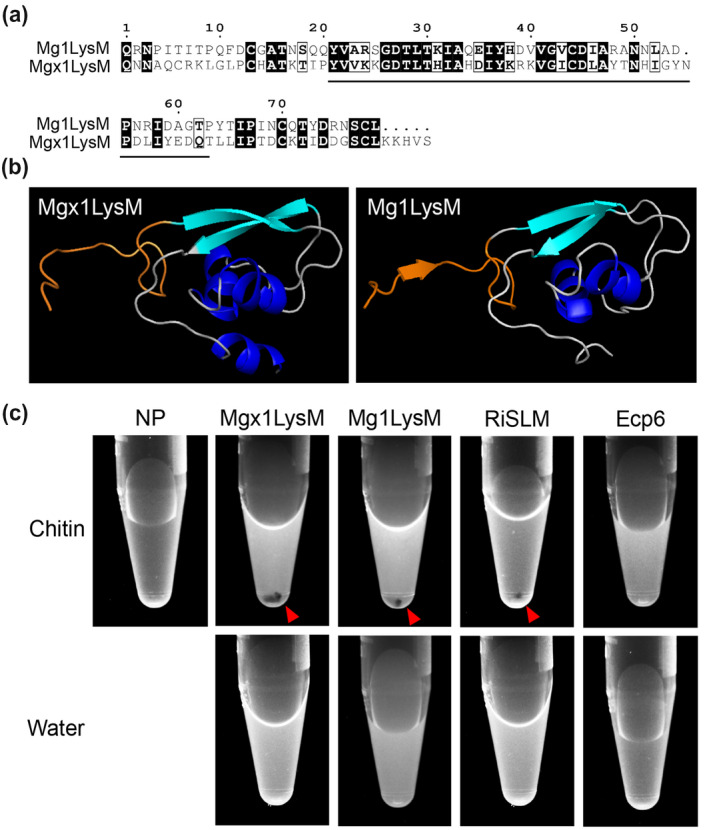
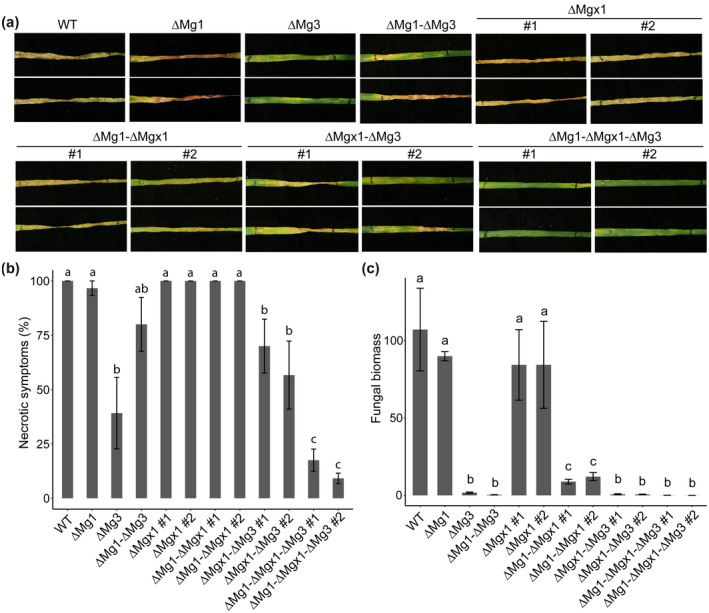
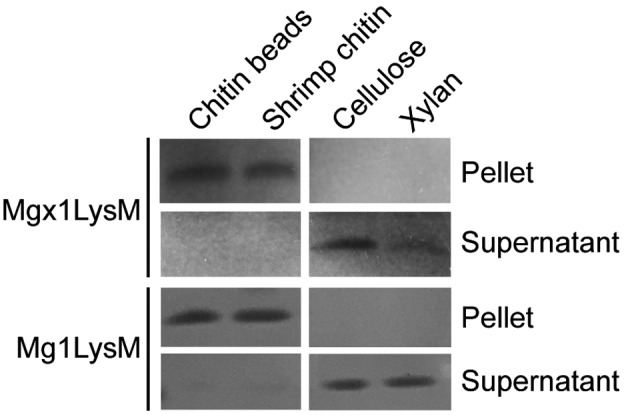
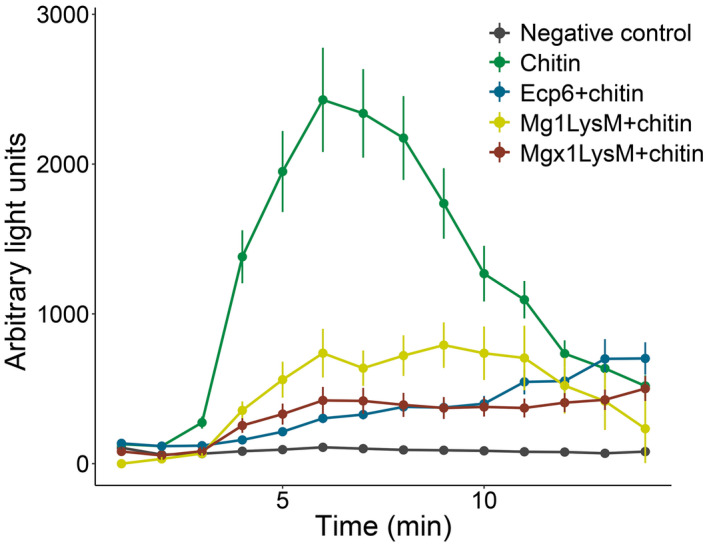
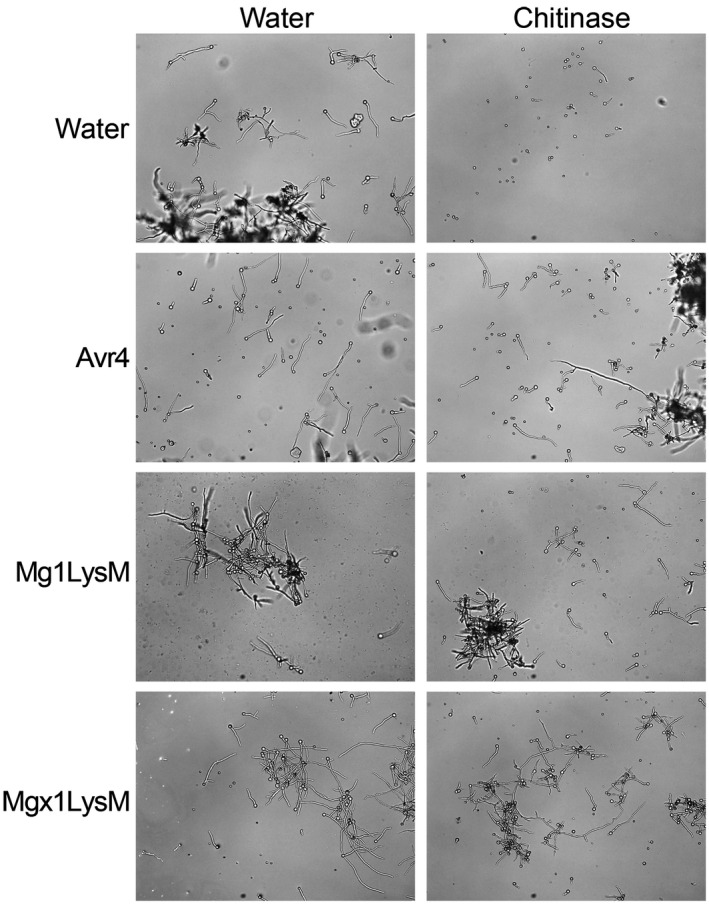
Chitin is a major structural component of fungal cell walls and acts as a microbe-associated molecular pattern (MAMP) that, on recognition by a plant host, triggers the activation of immune responses. To avoid the activation of these responses, the Septoria tritici blotch (STB) pathogen of wheat, Zymoseptoria tritici, secretes LysM effector proteins. Previously, the LysM effectors Mg1LysM and Mg3LysM were shown to protect fungal hyphae against host chitinases. Furthermore, Mg3LysM, but not Mg1LysM, was shown to suppress chitin-induced reactive oxygen species (ROS) production. Whereas initially a third LysM effector gene was disregarded as a presumed pseudogene, we now provide functional data to show that this gene also encodes a LysM effector, named Mgx1LysM, that is functional during wheat colonization. While Mg3LysM confers a major contribution to Z. tritici virulence, Mgx1LysM and Mg1LysM contribute to Z. tritici virulence with smaller effects. All three LysM effectors display partial functional redundancy. We furthermore demonstrate that Mgx1LysM binds chitin, suppresses the chitin-induced ROS burst, and is able to protect fungal hyphae against chitinase hydrolysis. Finally, we demonstrate that Mgx1LysM is able to undergo chitin-induced polymerization. Collectively, our data show that Z. tritici utilizes three LysM effectors to disarm chitin-triggered wheat immunity.
几丁质是真菌细胞壁的主要结构成分,作为一种微生物相关的分子模式(MAMP),在被植物宿主识别后,触发免疫反应的激活。为了避免这些反应的激活,小麦的 Septoria tritici blotch(STB)病原体,即玉蜀黍平脐蠕孢,分泌 LysM 效应蛋白。以前,LysM 效应蛋白 Mg1LysM 和 Mg3LysM 被证明可以保护真菌菌丝免受宿主几丁质酶的侵害。此外,Mg3LysM 但不是 Mg1LysM 被证明可以抑制几丁质诱导的活性氧(ROS)的产生。虽然最初第三个 LysM 效应基因被忽视为假定的假基因,但我们现在提供了功能数据来表明该基因也编码一种 LysM 效应蛋白,命名为 Mgx1LysM,在小麦定殖期间具有功能。虽然 Mg3LysM 对 Z. tritici 的毒力有主要贡献,但 Mgx1LysM 和 Mg1LysM 的贡献较小。所有三个 LysM 效应蛋白都显示出部分功能冗余。我们还证明 Mgx1LysM 结合几丁质,抑制几丁质诱导的 ROS 爆发,并能够保护真菌菌丝免受几丁质酶水解。最后,我们证明 Mgx1LysM 能够进行几丁质诱导的聚合。总的来说,我们的数据表明,Z. tritici 利用三种 LysM 效应蛋白来解除几丁质触发的小麦免疫。