Zhao Panpan, Cao Lili, Wang Xiaocen, Dong Jingquan, Zhang Nan, Li Xin, Li Jianhua, Zhang Xichen, Gong Pengtao
Key Laboratory of Zoonosis, College of Veterinary Medicine, Jilin University, Changchun, China.
Jiangsu Key Laboratory of Marine Biological Resources and Environment, Jiangsu Key Laboratory of Marine Pharmaceutical Compound Screening, Co-Innovation Center of Jiangsu Marine Bio-industry Technology, Jiangsu Ocean University, Lianyungang, China.
PLoS Negl Trop Dis. 2021 Apr 2;15(4):e0009304. doi: 10.1371/journal.pntd.0009304. eCollection 2021 Apr.
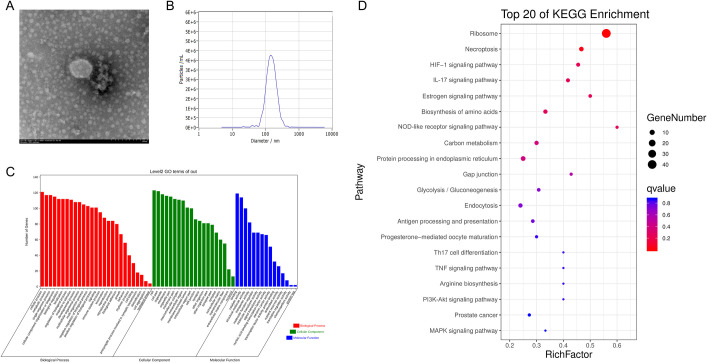
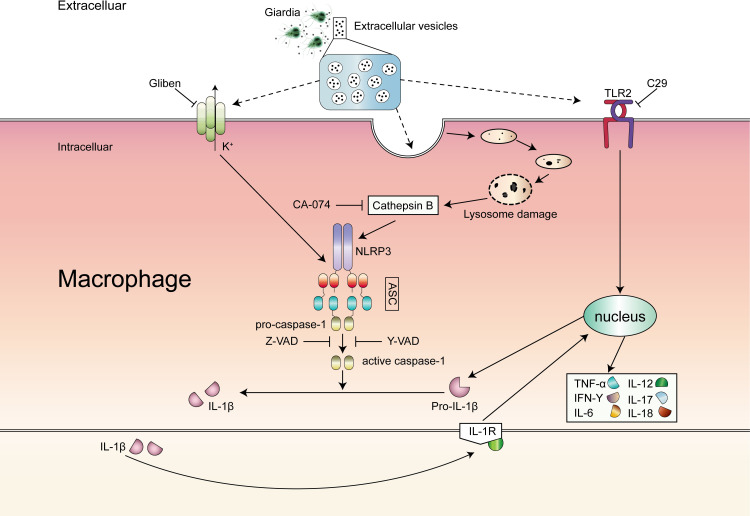
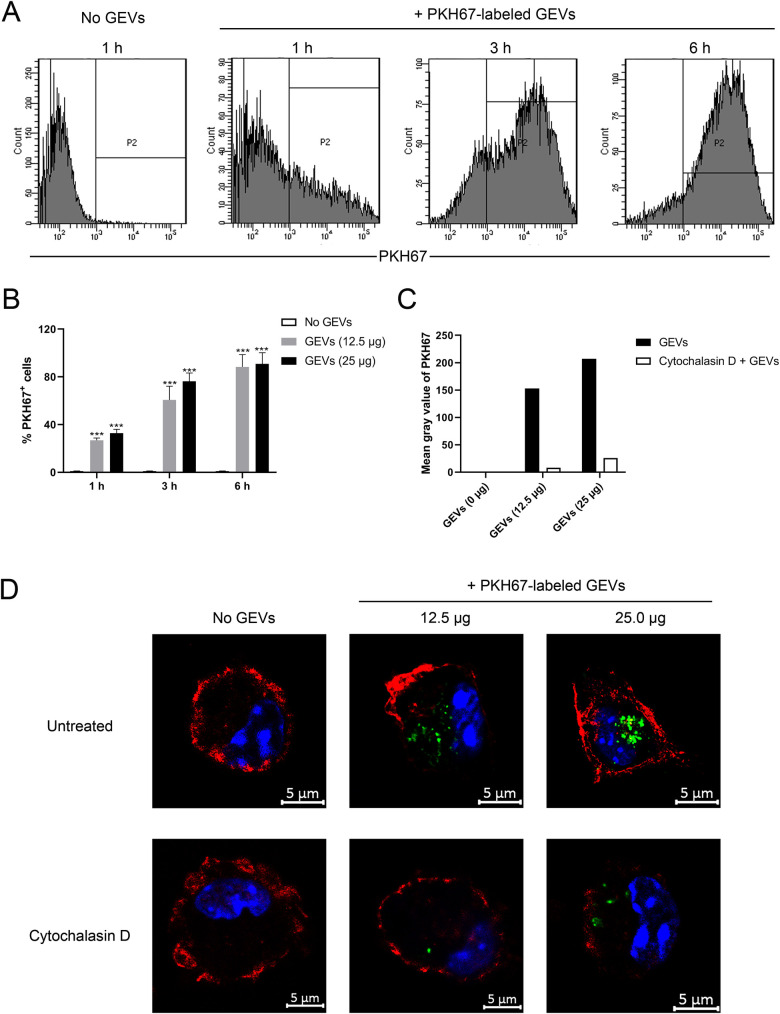
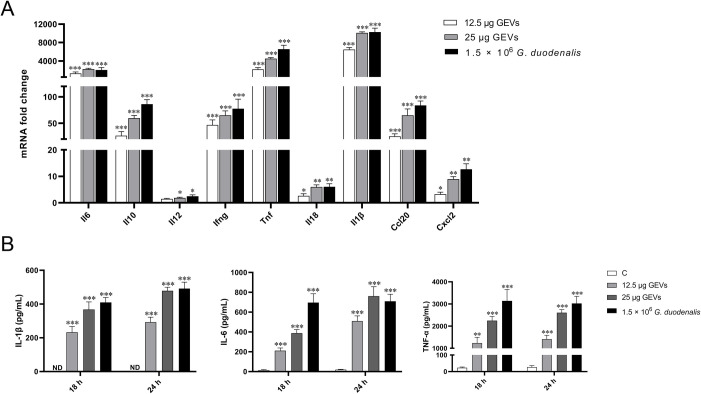
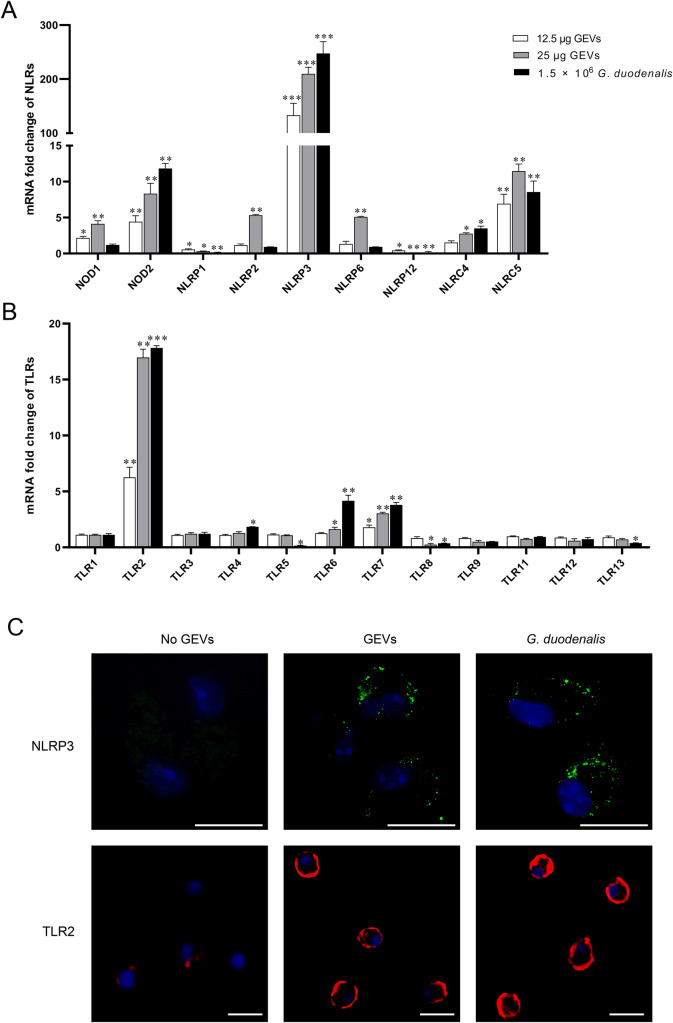
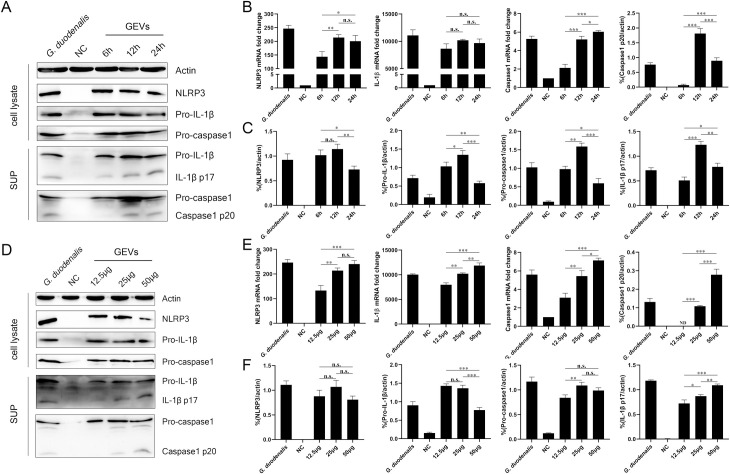
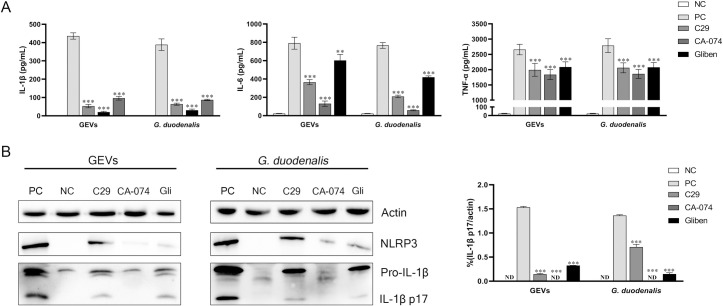
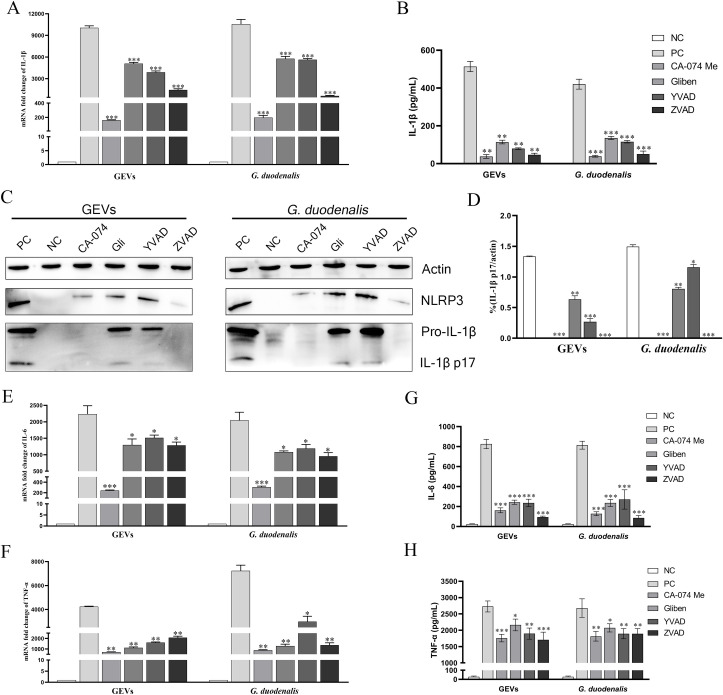
Giardia duodenalis, also known as G. intestinalis or G. lamblia, is the major cause of giardiasis leading to diarrheal disease with 280 million people infections annually worldwide. Extracellular vesicles (EVs) have emerged as a ubiquitous mechanism participating in cells communications. The aim of this study is to explore the roles of G. duodenalis EVs (GEVs) in host-pathogen interactions using primary mouse peritoneal macrophages as a model. Multiple methods of electron microscopy, nanoparticle tracking analysis, proteomic assays, flow cytometry, immunofluorescence, qPCR, western blot, ELISA, inhibition assays, were used to characterize GEVs, and explore its effects on the host cell innate immunity as well as the underlying mechanism using primary mouse peritoneal macrophages. Results showed that GEVs displayed typical cup-shaped structure with 150 nm in diameter. GEVs could be captured by macrophages and triggered immune response by increasing the production of inflammatory cytokines Il1β, Il6, Il10, Il12, Il17, Ifng, Tnf, Il18, Ccl20 and Cxcl2. Furthermore, activation of TLR2 and NLRP3 inflammasome signaling pathways involved in this process. In addition, CA-074 methyl ester (an inhibitor of cathepsin B) or zVAD-fmk (an inhibitor of pan-caspase) pretreatment entirely diminished these effects triggered by GEVs exposure. Taken together, these findings demonstrated that GEVs could be internalized into mouse peritoneal macrophages and regulate host cell innate immunity via TLR2 and NLRP3 inflammasome signaling pathways.
十二指肠贾第虫,也被称为肠贾第虫或蓝氏贾第虫,是导致贾第虫病的主要病因,全球每年有2.8亿人感染,引发腹泻疾病。细胞外囊泡(EVs)已成为参与细胞通讯的一种普遍机制。本研究的目的是以原代小鼠腹腔巨噬细胞为模型,探索十二指肠贾第虫细胞外囊泡(GEVs)在宿主-病原体相互作用中的作用。采用多种电子显微镜、纳米颗粒跟踪分析、蛋白质组学分析、流式细胞术、免疫荧光、qPCR、蛋白质免疫印迹、酶联免疫吸附测定、抑制试验等方法对GEVs进行表征,并以原代小鼠腹腔巨噬细胞为模型,探讨其对宿主细胞固有免疫的影响及潜在机制。结果显示,GEVs呈现典型的杯状结构,直径为150纳米。GEVs可被巨噬细胞捕获,并通过增加炎性细胞因子Il1β、Il6、Il10、Il12、Il17、Ifng、Tnf、Il18、Ccl20和Cxcl2的产生来触发免疫反应。此外,该过程涉及TLR2和NLRP3炎性小体信号通路的激活。此外,CA-074甲酯(组织蛋白酶B抑制剂)或zVAD-fmk(泛半胱天冬酶抑制剂)预处理完全消除了GEVs暴露引发的这些效应。综上所述,这些发现表明GEVs可被内化到小鼠腹腔巨噬细胞中,并通过TLR2和NLRP3炎性小体信号通路调节宿主细胞固有免疫。