Department of Medicine, School of Medicine, Nazarbayev University, Nur-Sultan 010000, Kazakhstan.
Int J Mol Sci. 2021 Mar 8;22(5):2715. doi: 10.3390/ijms22052715.
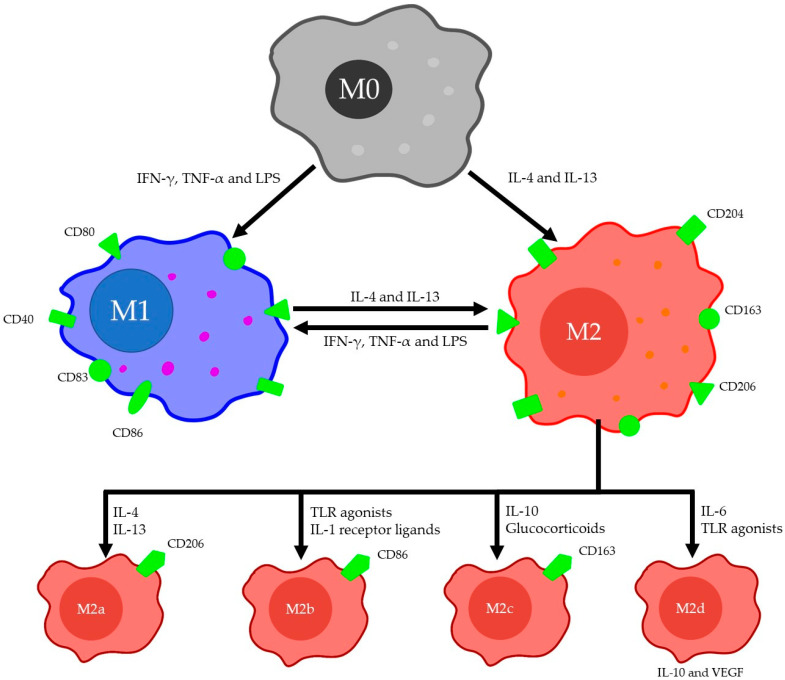
Cardiovascular disease is the leading cause of mortality and morbidity around the globe, creating a substantial socio-economic burden as a result. Myocardial infarction is a significant contributor to the detrimental impact of cardiovascular disease. The death of cardiomyocytes following myocardial infarction causes an immune response which leads to further destruction of tissue, and subsequently, results in the formation of non-contractile scar tissue. Macrophages have been recognized as important regulators and participants of inflammation and fibrosis following myocardial infarction. Macrophages are generally classified into two distinct groups, namely, classically activated, or M1 macrophages, and alternatively activated, or M2 macrophages. The phenotypic profile of cardiac macrophages, however, is much more diverse and should not be reduced to these two subsets. In this review, we describe the phenotypes and functions of macrophages which are present in the healthy, as well as the infarcted heart, and analyze them with respect to M1 and M2 polarization states. Furthermore, we discuss therapeutic strategies which utilize macrophage polarization towards an anti-inflammatory or reparative phenotype for the treatment of myocardial infarction.
心血管疾病是全球范围内导致死亡和发病的主要原因,因此造成了巨大的社会经济负担。心肌梗死是心血管疾病不良影响的重要因素。心肌梗死后心肌细胞死亡会引发免疫反应,导致组织进一步破坏,随后形成非收缩性瘢痕组织。巨噬细胞已被认为是心肌梗死后炎症和纤维化的重要调节者和参与者。巨噬细胞通常分为两种截然不同的类型,即经典激活型或 M1 巨噬细胞,以及替代激活型或 M2 巨噬细胞。然而,心脏巨噬细胞的表型谱更加多样化,不应简化为这两个亚群。在这篇综述中,我们描述了健康和梗死心脏中存在的巨噬细胞的表型和功能,并根据 M1 和 M2 极化状态对其进行了分析。此外,我们讨论了利用巨噬细胞极化向抗炎或修复表型的治疗策略,以治疗心肌梗死。