Chaudhary Saurabh, Grover Atul, Sharma Prakash Chand
Cardiff School of Biosciences, Cardiff University, Cardiff CF10 3AT, UK.
Defence Institute of Bio-Energy Research, Defence Research and Development Organisation (DRDO), Haldwani 263139, India.
Life (Basel). 2021 Mar 28;11(4):289. doi: 10.3390/life11040289.
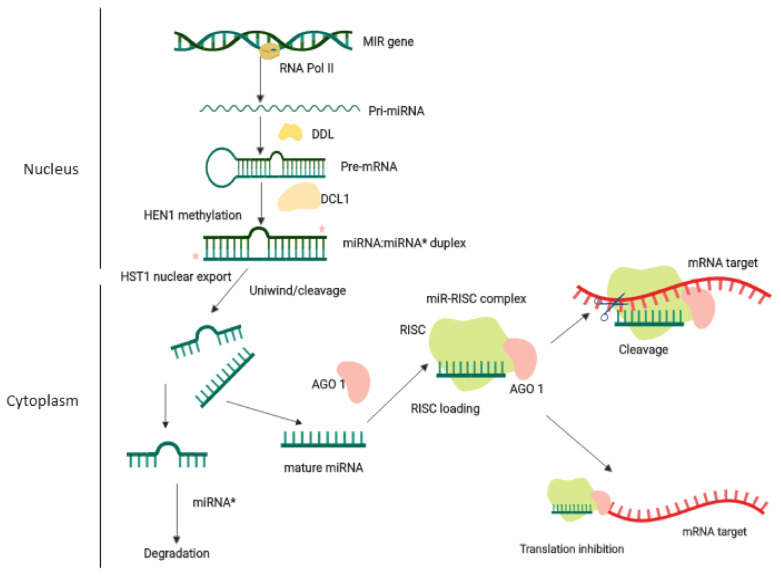
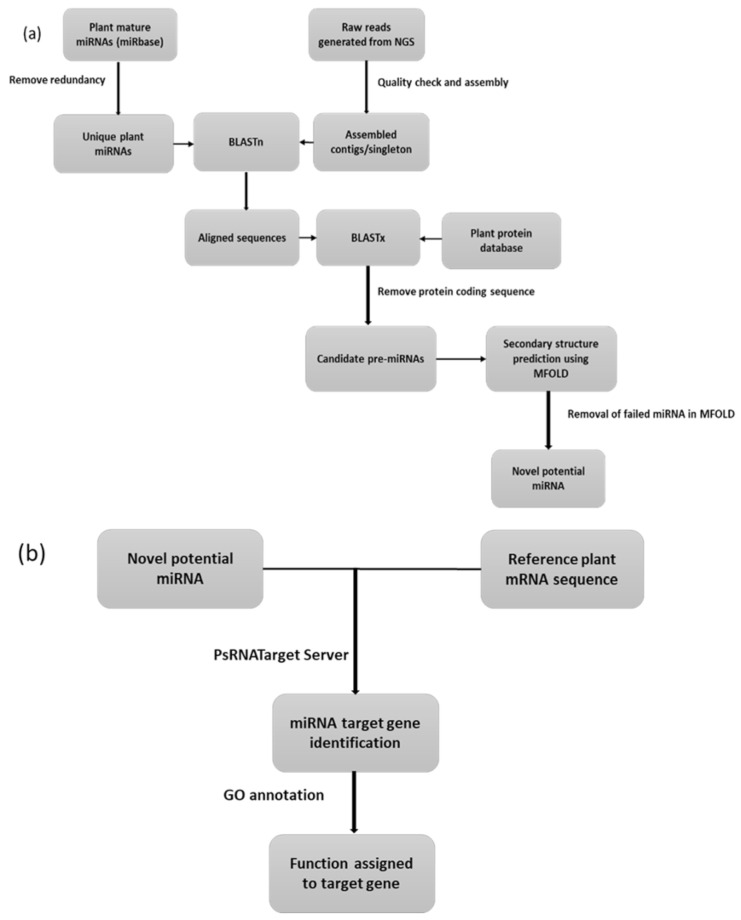
Crop yield is challenged every year worldwide by changing climatic conditions. The forecasted climatic scenario urgently demands stress-tolerant crop varieties to feed the ever-increasing global population. Molecular breeding and genetic engineering approaches have been frequently exploited for developing crops with desired agronomic traits. Recently, microRNAs (miRNAs) have emerged as powerful molecules, which potentially serve as expression markers during stress conditions. The miRNAs are small non-coding endogenous RNAs, usually 20-24 nucleotides long, which mediate post-transcriptional gene silencing and fine-tune the regulation of many abiotic- and biotic-stress responsive genes in plants. The miRNAs usually function by specifically pairing with the target mRNAs, inducing their cleavage or repressing their translation. This review focuses on the exploration of the functional role of miRNAs in regulating plant responses to abiotic and biotic stresses. Moreover, a methodology is also discussed to mine stress-responsive miRNAs from the enormous amount of transcriptome data available in the public domain generated using next-generation sequencing (NGS). Considering the functional role of miRNAs in mediating stress responses, these molecules may be explored as novel targets for engineering stress-tolerant crop varieties.
全球范围内,作物产量每年都受到气候变化的挑战。预测的气候情景迫切需要耐逆性作物品种,以养活不断增长的全球人口。分子育种和基因工程方法经常被用于培育具有理想农艺性状的作物。最近,微小RNA(miRNA)已成为强大的分子,在胁迫条件下可能作为表达标记。miRNA是小的非编码内源性RNA,通常长20 - 24个核苷酸,介导转录后基因沉默,并微调植物中许多非生物和生物胁迫响应基因的调控。miRNA通常通过与靶mRNA特异性配对发挥作用,诱导其切割或抑制其翻译。本综述着重探讨miRNA在调节植物对非生物和生物胁迫反应中的功能作用。此外,还讨论了一种从公共领域利用下一代测序(NGS)产生的大量转录组数据中挖掘胁迫响应miRNA的方法。考虑到miRNA在介导胁迫反应中的功能作用,这些分子可作为培育耐逆性作物品种的新靶点进行探索。