College of Pharmacy, Keimyung University, Daegu 42601, Korea.
Molecules. 2021 Mar 17;26(6):1682. doi: 10.3390/molecules26061682.
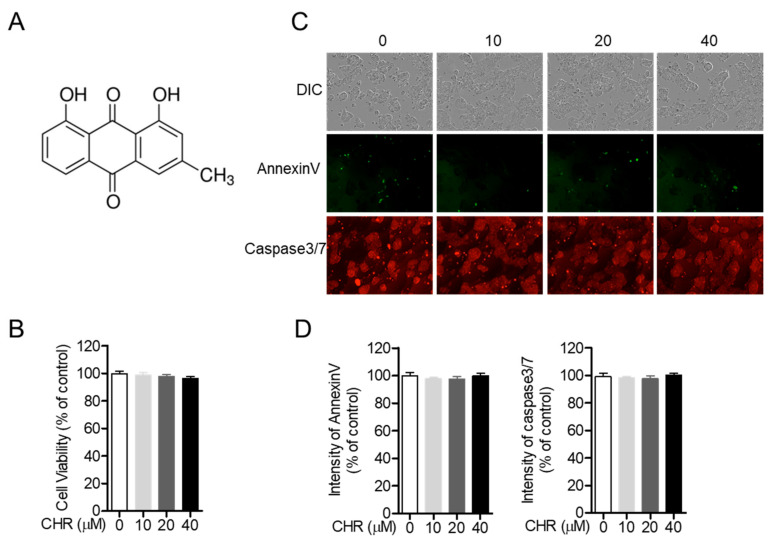
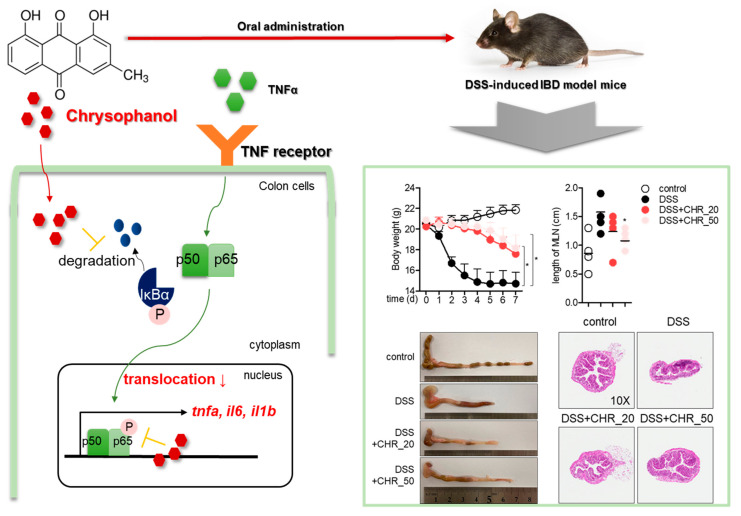
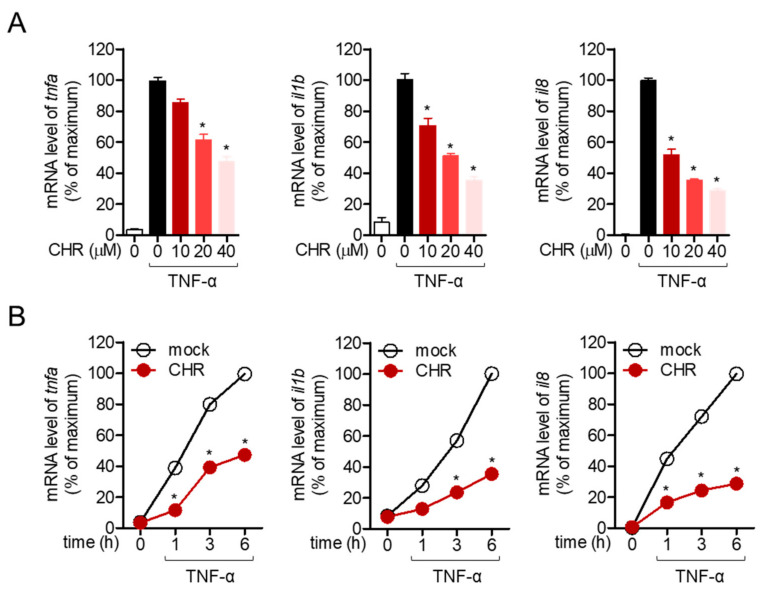
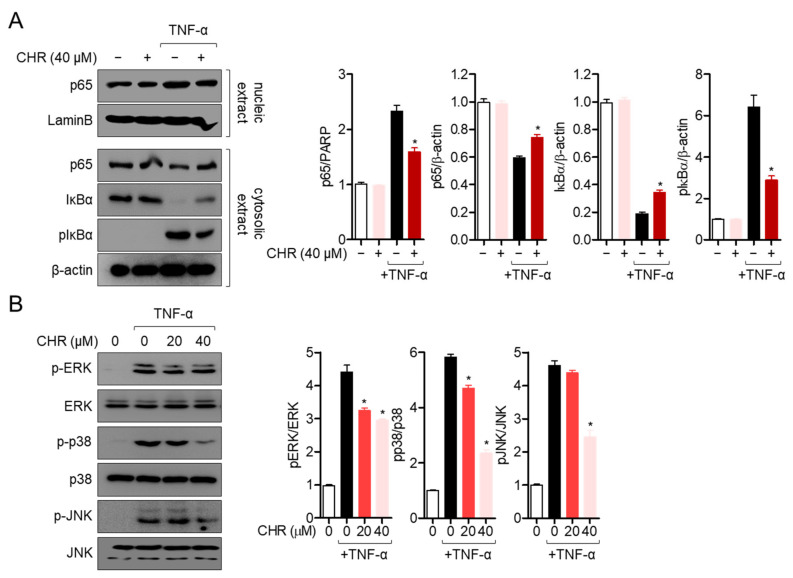
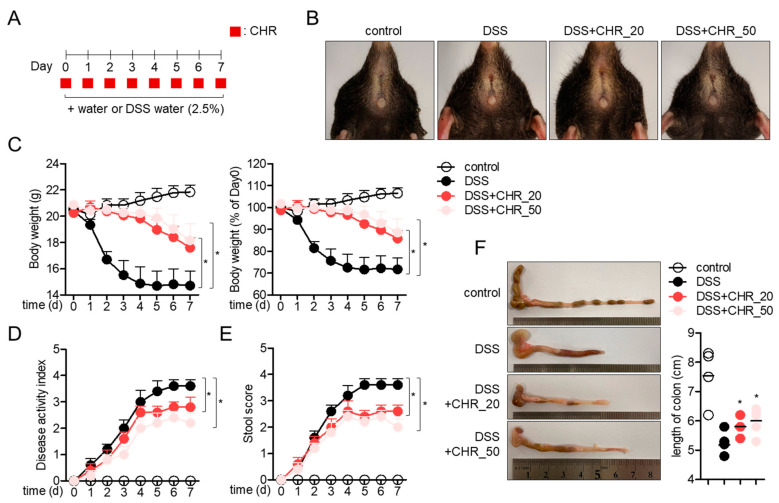
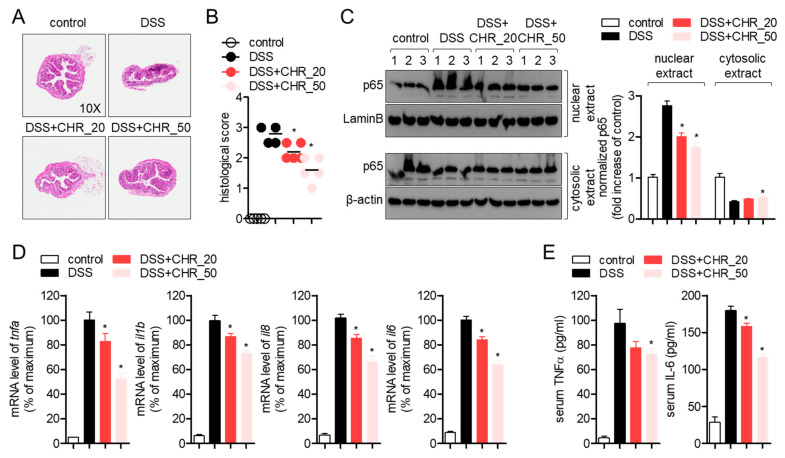
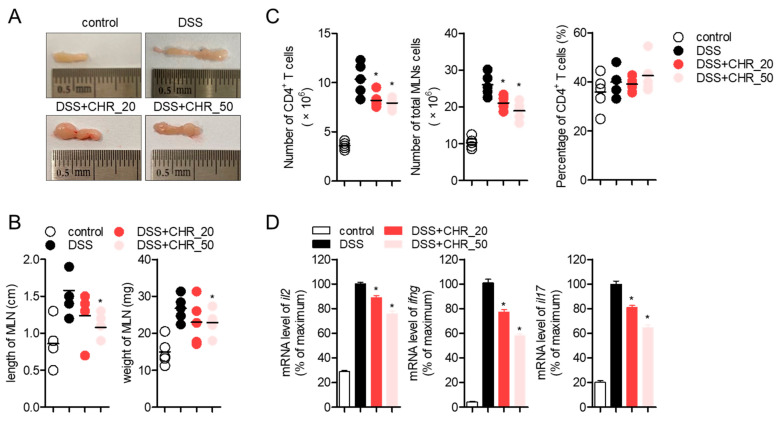
Inflammatory bowel disease (IBD) is an immune disorder that develops due to chronic inflammation in several cells. It is known that colorectal and T cells are mainly involved in the pathogenesis of IBD. Chrysophanol is an anthraquinone family member that possesses several bioactivities, including anti-diabetic, anti-tumor, and inhibitory effects on T cell activation. However, it is unknown whether chrysophanol suppresses the activity of colorectal cells. In this study, we found that chrysophanol did not induce cytotoxicity in HT-29 colorectal cells. Pre-treatment with chrysophanol inhibited the mRNA levels of pro-inflammatory cytokines in tumor necrosis factor-α (TNF-α)-stimulated HT-29 cells. Western blot analysis revealed that pre-treatment with chrysophanol mitigates p65 translocation and the mitogen-activated protein kinase (MAPK) pathway in activated HT-29 cells. Results from the in vivo experiment confirmed that oral administration of chrysophanol protects mice from dextran sulfate sodium (DSS)-induced IBD. Chrysophanol administration attenuates the expression of pro-inflammatory cytokines in colon tissues of the DSS-induced IBD model. In addition, we found that oral administration of chrysophanol systemically decreased the expression of effector cytokines from mesenteric lymph nodes. Therefore, these data suggest that chrysophanol has a potent modulatory effect on colorectal cells as well as exhibiting a beneficial potential for curing IBD in vivo.
炎症性肠病(IBD)是一种免疫紊乱疾病,由于几种细胞的慢性炎症而发展。已知结直肠和 T 细胞主要参与 IBD 的发病机制。大黄酚是蒽醌家族的一员,具有多种生物活性,包括抗糖尿病、抗肿瘤和抑制 T 细胞活化的作用。然而,尚不清楚大黄酚是否抑制结直肠细胞的活性。在这项研究中,我们发现大黄酚在 HT-29 结直肠细胞中不会诱导细胞毒性。大黄酚预处理抑制了肿瘤坏死因子-α(TNF-α)刺激的 HT-29 细胞中促炎细胞因子的 mRNA 水平。Western blot 分析表明,大黄酚预处理减轻了激活的 HT-29 细胞中 p65 易位和丝裂原活化蛋白激酶(MAPK)途径。体内实验的结果证实,口服大黄酚可保护小鼠免受葡聚糖硫酸钠(DSS)诱导的 IBD。大黄酚给药可减轻 DSS 诱导的 IBD 模型中结肠组织中促炎细胞因子的表达。此外,我们发现大黄酚口服给药可系统性地降低肠系膜淋巴结中效应细胞因子的表达。因此,这些数据表明大黄酚对结直肠细胞具有强大的调节作用,并在体内具有治疗 IBD 的潜在益处。