Monfredini Chiara, Cavallin Francesco, Villani Paolo Ernesto, Paterlini Giuseppe, Allais Benedetta, Trevisanuto Daniele
Neonatal Intensive Care Unit, Department of Mother and Child Health, Fondazione Poliambulanza, 25124 Brescia, Italy.
Independent Statistician, 36020 Solagna, Italy.
Children (Basel). 2021 Mar 17;8(3):230. doi: 10.3390/children8030230.
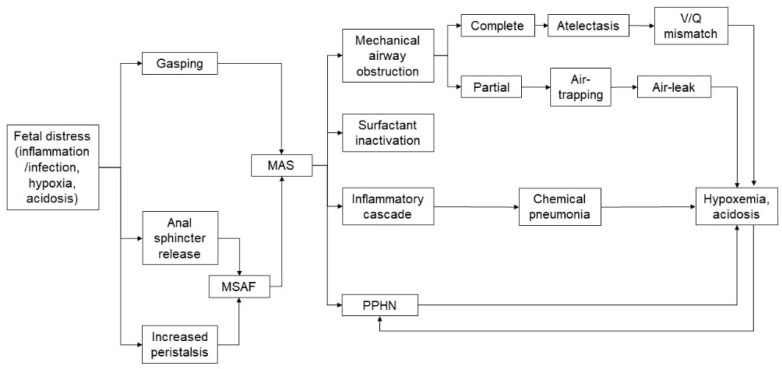
Meconium aspiration syndrome is a clinical condition characterized by respiratory failure occurring in neonates born through meconium-stained amniotic fluid. Worldwide, the incidence has declined in developed countries thanks to improved obstetric practices and perinatal care while challenges persist in developing countries. Despite the improved survival rate over the last decades, long-term morbidity among survivors remains a major concern. Since the 1960s, relevant changes have occurred in the perinatal and postnatal management of such patients but the most appropriate approach is still a matter of debate. This review offers an updated overview of the epidemiology, etiopathogenesis, diagnosis, management and prognosis of infants with meconium aspiration syndrome.
胎粪吸入综合征是一种临床病症,其特征为出生于羊水被胎粪污染的新生儿出现呼吸衰竭。在全球范围内,由于产科实践和围产期护理的改善,发达国家的发病率有所下降,而发展中国家仍面临挑战。尽管在过去几十年中存活率有所提高,但幸存者的长期发病率仍是一个主要问题。自20世纪60年代以来,此类患者的围产期和产后管理发生了相关变化,但最合适的方法仍存在争议。本综述提供了胎粪吸入综合征患儿的流行病学、病因发病机制、诊断、管理和预后的最新概述。