Department of Social Care and Social Work, Faculty of Health, Psychology and Social Care, Manchester Metropolitan University, Manchester M15 6GX, UK.
Public Health England Behavioural Insights, Wellington House, 133-155 Waterloo Road, London SE1 8UG, UK.
Int J Environ Res Public Health. 2021 Mar 5;18(5):2602. doi: 10.3390/ijerph18052602.
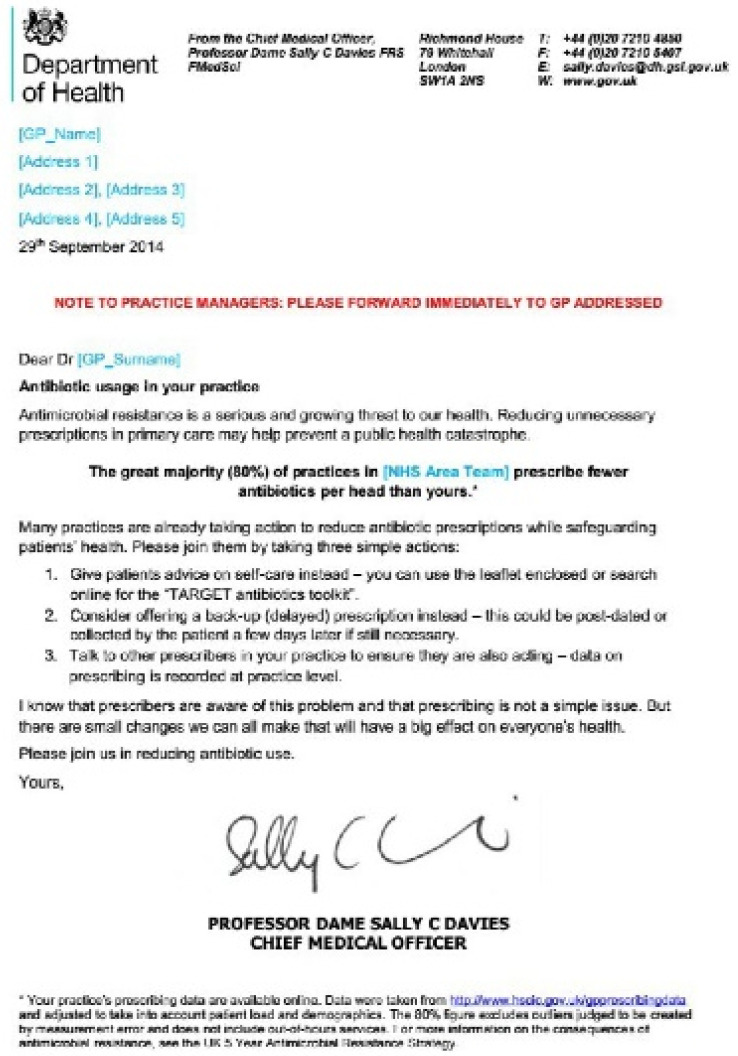
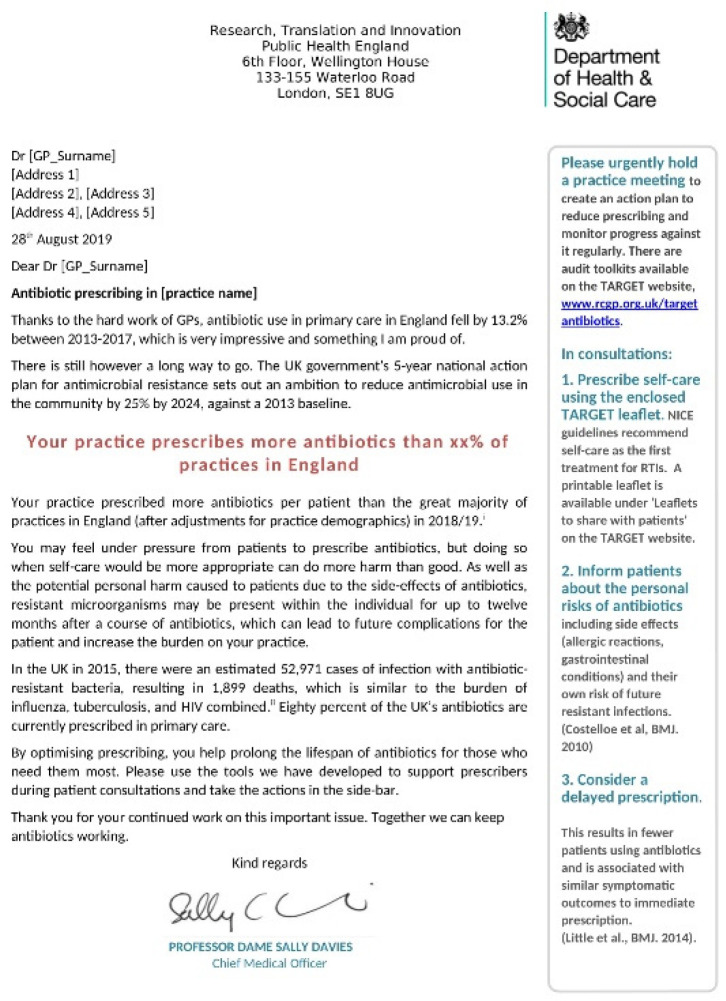
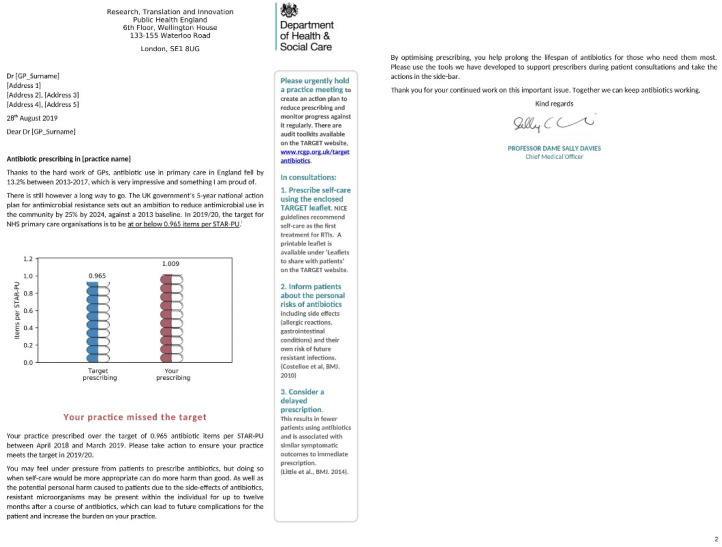
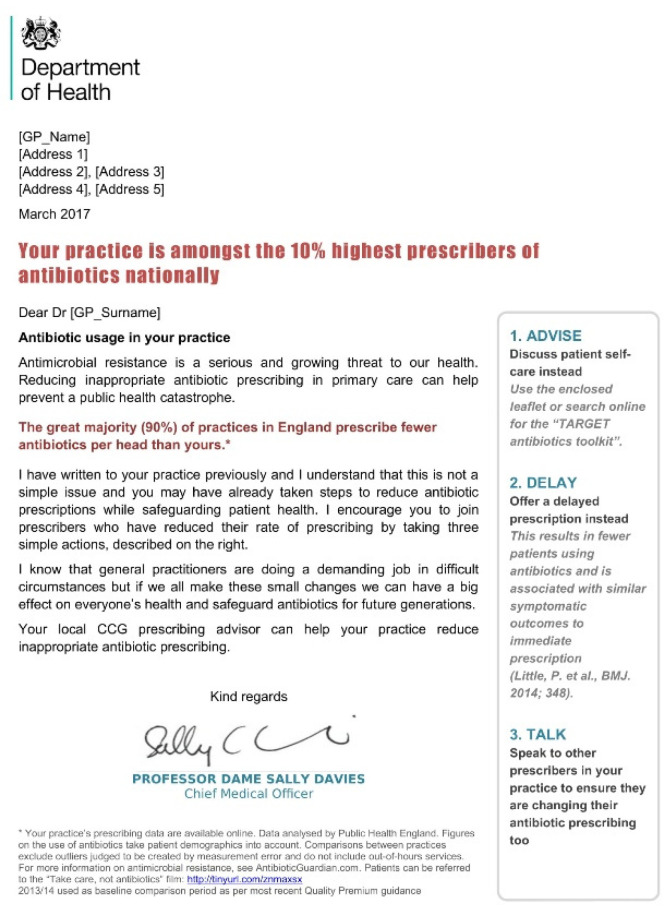
In the UK, 81% of all antibiotics are prescribed in primary care. Previous research has shown that a letter from the Chief Medical Officer (CMO) giving social norms feedback to General Practitioners (GPs) whose practices are high prescribers of antibiotics can decrease antibiotic prescribing. The aim of this study was to understand the best way for engaging with GPs to deliver feedback on prescribing behaviour that could be replicated at scale; and explore GP information requirements that would be needed to support prescribing behaviour change. Two workshops were devised utilising a participatory approach. Discussion points were noted and agreed with each group of participants. Minutes of the workshops and observation notes were taken. Data were analysed thematically. Four key themes emerged through the data analysis: (1) Our day-to-day reality, (2) GPs are competitive, (3) Face-to-face support, and (4) Empowerment and engagement. Our findings suggest there is potential for using behavioural science in the form of social norms as part of a range of engagement strategies in reducing antibiotic prescribing within primary care. This should include tailored and localised data with peer-to-peer comparisons.
在英国,所有抗生素中有 81%是在初级保健中开具的。之前的研究表明,首席医疗官(CMO)给抗生素开具量大的全科医生(GP)的反馈信,可以减少抗生素的开具。这项研究的目的是了解与 GP 接触的最佳方式,以提供可大规模复制的处方行为反馈;并探索支持处方行为改变所需的 GP 信息需求。设计了两个利用参与式方法的研讨会。记录了每个小组讨论的要点并达成一致。记录了研讨会的记录和观察笔记。对数据进行了主题分析。通过数据分析得出了四个关键主题:(1)我们的日常现实,(2)GP 之间存在竞争,(3)面对面支持,(4)赋权和参与。我们的研究结果表明,在减少初级保健中抗生素的开具方面,有潜力将行为科学作为一系列参与策略的一部分,采用社会规范的形式。这应该包括与同行进行比较的定制化和本地化数据。