Toyoda Eriko, Maehara Miki, Watanabe Masahiko, Sato Masato
Department of Orthopaedic Surgery, Surgical Science, Tokai University School of Medicine, 143 Shimokasuya, Isehara 259-1193, Japan.
Center for Musculoskeletal Innovative Research and Advancement (C-MiRA), Tokai University Graduate School of Medicine, 143 Shimokasuya, Isehara 259-1193, Japan.
Int J Mol Sci. 2021 Mar 30;22(7):3594. doi: 10.3390/ijms22073594.
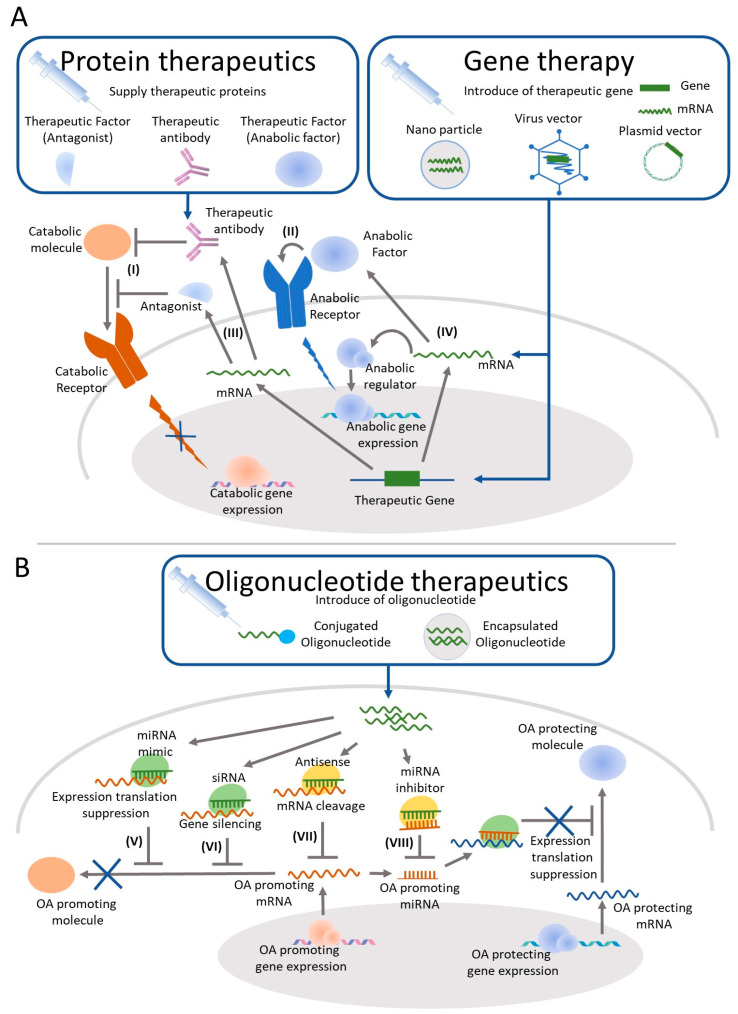
Osteoarthritis (OA) of the knee is a disease that significantly decreases the quality of life due to joint deformation and pain caused by degeneration of articular cartilage. Since the degeneration of cartilage is irreversible, intervention from an early stage and control throughout life is important for OA treatment. For the treatment of early OA, the development of a disease-modifying osteoarthritis drug (DMOAD) for intra-articular (IA) injection, which is attracting attention as a point-of-care therapy, is desired. In recent years, the molecular mechanisms involved in OA progression have been clarified while new types of drug development methods based on gene sequences have been established. In addition to conventional chemical compounds and protein therapeutics, the development of DMOAD from the new modalities such as gene therapy and oligonucleotide therapeutics is accelerating. In this review, we have summarized the current status and challenges of DMOAD for IA injection, especially for protein therapeutics, gene therapy, and oligonucleotide therapeutics.
膝关节骨关节炎(OA)是一种因关节软骨退变导致关节变形和疼痛而显著降低生活质量的疾病。由于软骨退变是不可逆的,因此早期干预和终身控制对OA治疗至关重要。对于早期OA的治疗,人们期望开发一种用于关节内(IA)注射的改善病情的骨关节炎药物(DMOAD),它作为一种即时治疗方法备受关注。近年来,OA进展所涉及的分子机制已得到阐明,同时基于基因序列的新型药物开发方法也已建立。除了传统的化合物和蛋白质疗法外,基因治疗和寡核苷酸疗法等新形式的DMOAD开发也在加速。在本综述中,我们总结了IA注射用DMOAD的现状和挑战,特别是蛋白质疗法、基因治疗和寡核苷酸疗法方面的情况。