Department of Translational Hematology and Oncology Research, Taussig Cancer Institute, Cleveland Clinic, Cleveland, OH 44195, USA.
Department of Biomedicine and Prevention, University of Rome Tor Vergata, 00133 Rome, Italy.
Int J Mol Sci. 2021 Mar 19;22(6):3135. doi: 10.3390/ijms22063135.
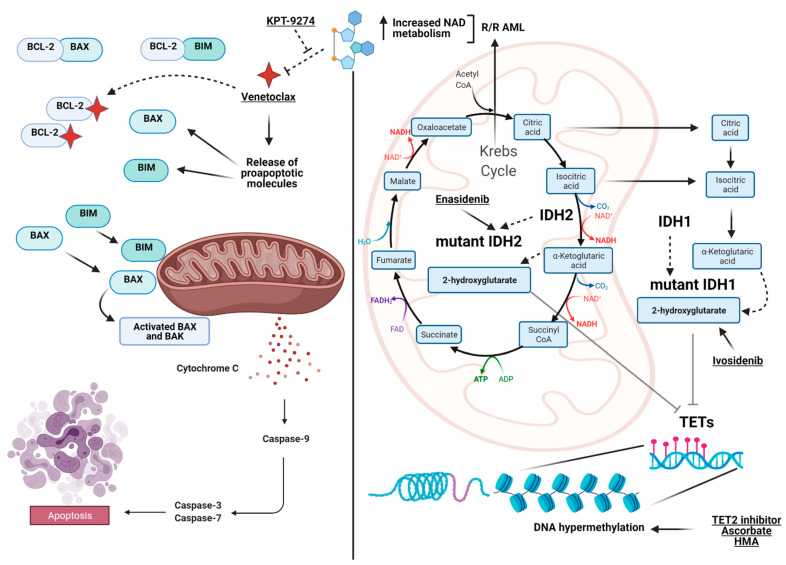
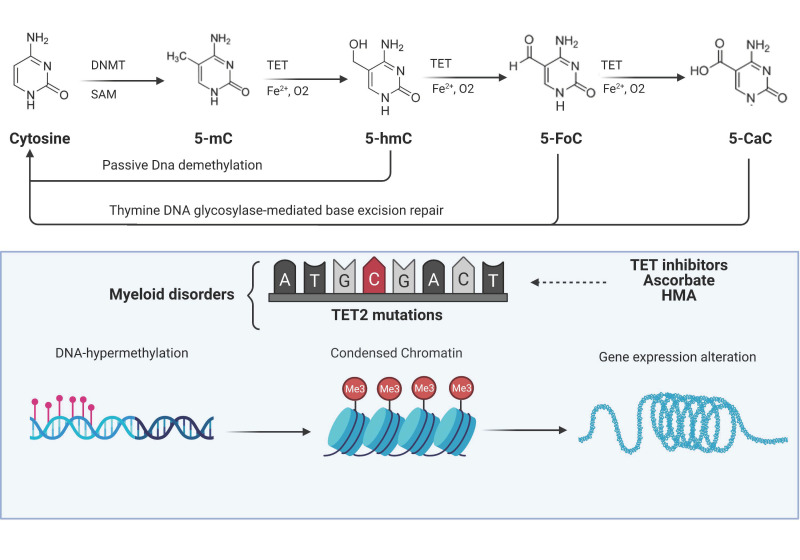
The study of metabolic deregulation in myeloid malignancies has led to the investigation of metabolic-targeted therapies considering that cells undergoing leukemic transformation have excessive energy demands for growth and proliferation. However, the most difficult challenge in agents targeting metabolism is to determine a window of therapeutic opportunities between normal and neoplastic cells, considering that all or most of the metabolic pathways important for cancer ontogeny may also regulate physiological cell functions. Targeted therapies have used the properties of leukemic cells to produce altered metabolic products when mutated. This is the case of / mutations generating the abnormal conversion of α-ketoglutarate (KG) to 2-hydroxyglutarate, an oncometabolite inhibiting KG-dependent enzymes, such as the family of genes (pivotal in characterizing leukemia cells either by mutations, e.g., , or by altered expression, e.g., ). Additional observations derive from the high sensitivity of leukemic cells to oxidative phosphorylation and its amelioration using BCL-2 inhibitors (Venetoclax) or by disrupting the mitochondrial respiration. More recently, nicotinamide metabolism has been described to mediate resistance to Venetoclax in patients with acute myeloid leukemia. Herein, we will provide an overview of the latest research on the link between metabolic pathways interactome and leukemogenesis with a comprehensive analysis of the metabolic consequences of driver genetic lesions and exemplificative druggable pathways.
骨髓性恶性肿瘤的代谢失调研究促使人们研究代谢靶向治疗,因为发生白血病转化的细胞在生长和增殖方面有过多的能量需求。然而,靶向代谢的药物最困难的挑战是在正常细胞和肿瘤细胞之间确定治疗机会的窗口,因为所有或大多数对癌症发生很重要的代谢途径也可能调节生理细胞功能。靶向治疗利用白血病细胞的特性,在发生突变时产生改变的代谢产物。这就是 / 突变导致异常的 α-酮戊二酸 (KG) 转化为 2-羟基戊二酸的情况,这是一种致癌代谢物,抑制 KG 依赖性酶,如基因家族(在通过突变,例如 ,或通过改变表达,例如 ,来特征化白血病细胞方面起着关键作用)。其他观察结果源于白血病细胞对氧化磷酸化的高度敏感性,以及使用 BCL-2 抑制剂(Venetoclax)或通过破坏线粒体呼吸来改善这种敏感性。最近,烟酰胺代谢被描述为介导急性髓系白血病患者对 Venetoclax 的耐药性。在此,我们将提供一个关于代谢途径相互作用组与白血病发生之间联系的最新研究综述,对驱动基因突变的代谢后果进行全面分析,并举例说明可药物治疗的途径。