Zhu Zhongcheng, Gong Xiaoyi, Li Jing, Shi Yufeng, Zhang Mingyun
Department of Radiotherapy, Cangzhou Central Hospital, Cangzhou, Hebei 061000, P.R. China.
Return Visit Office, Cangzhou Central Hospital, Cangzhou, Hebei 061000, P.R. China.
Exp Ther Med. 2021 May;21(5):518. doi: 10.3892/etm.2021.9949. Epub 2021 Mar 22.
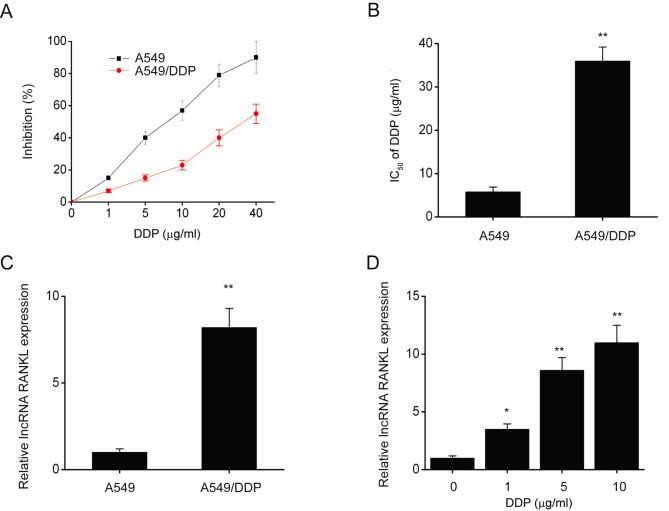
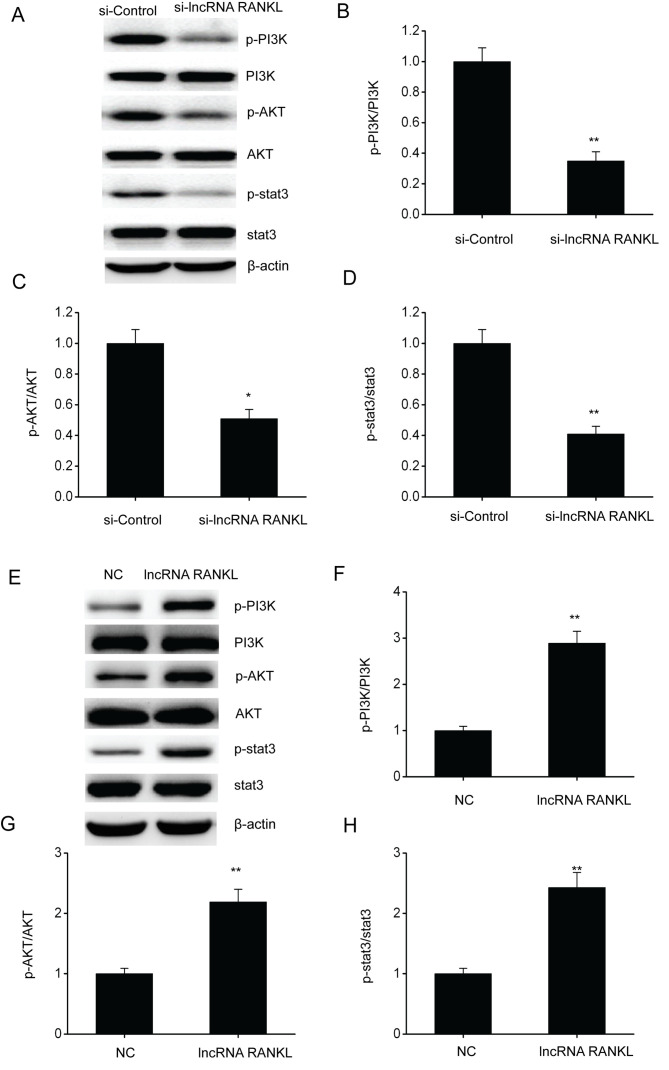
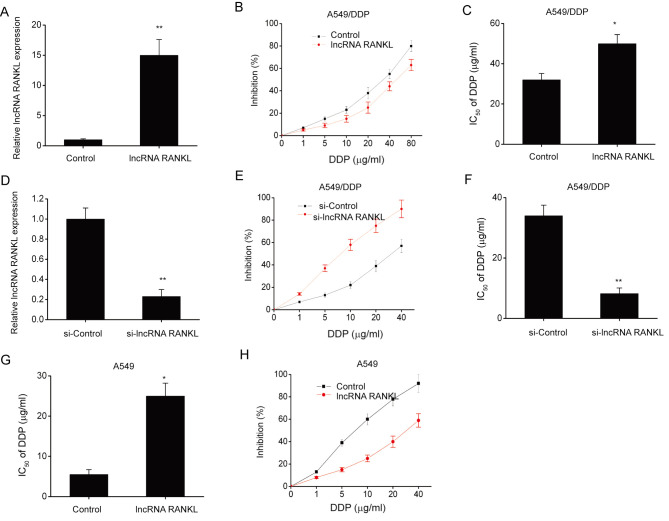
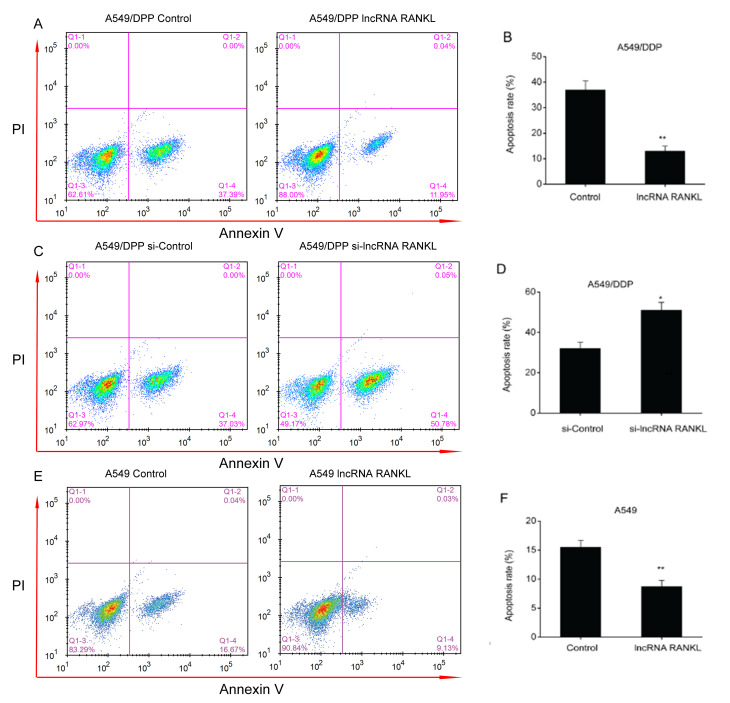
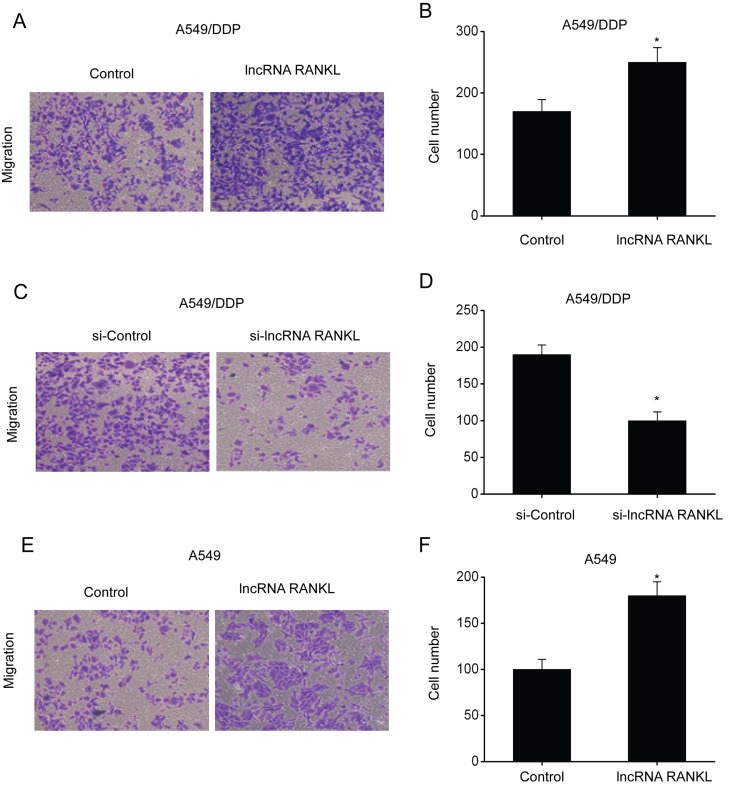
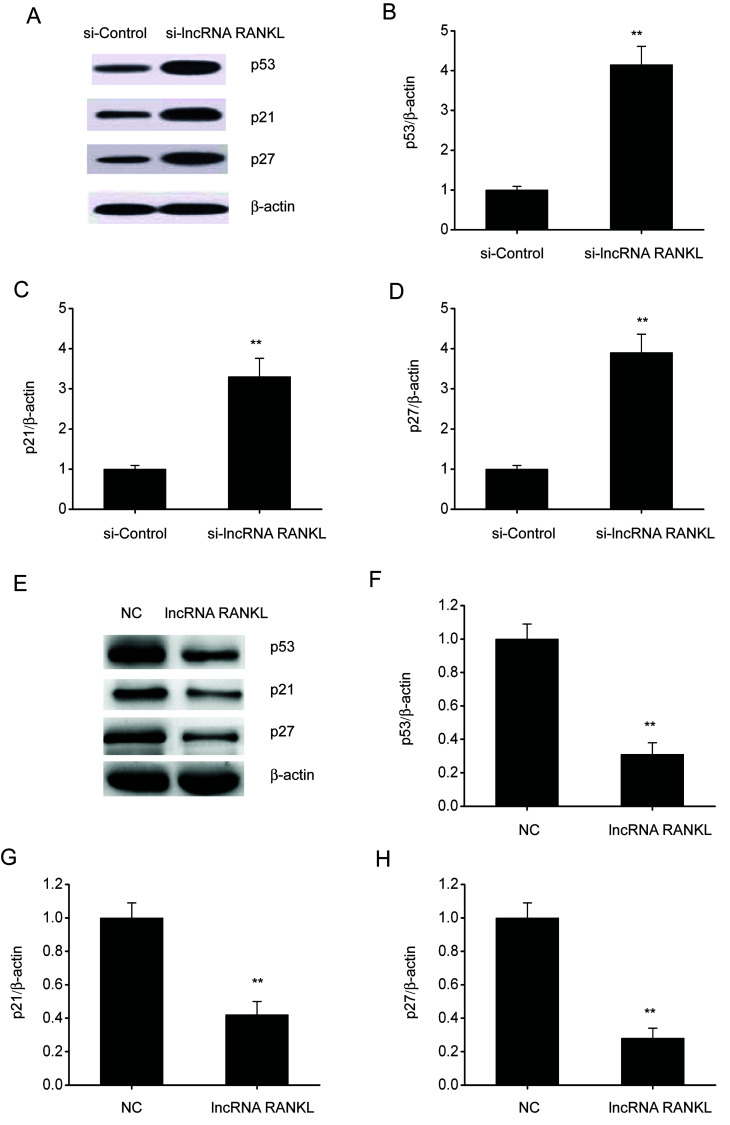
Non-small cell lung cancer (NSCLC) is a common malignancy associated with poor clinical outcomes and high mortality rate. The association between NSCLC development and long non-coding RNA (lncRNA) expression remains to be elucidated. The current study investigated the role of a novel lncRNA, receptor activator of nuclear factor-κ B ligand (RANKL), in the resistance of NSCLC to chemotherapy. RANKL expression was assessed via reverse transcription-quantitative PCR, cell death rate was evaluated using flow cytometry and sensitivity of cisplatin (DDP)-resistant A549/DDP cells to chemotherapy was determined using the Cell Counting Kit-8 assay. Western blotting was performed to quantify p53 protein levels. Compared with matched A549 cells, A549/DDP cells exhibited significant upregulation of RANKL expression. Sensitivity of A549/DDP cells to DDP was restored following RANKL knockdown. A549 cells overexpressing RANKL exhibited notably impaired DDP sensitivity compared with controls. Conversely, downregulated RANKL expression triggered cell death and inhibited cell migration via p53 stimulation and phosphatidylinositol 3-kinase/protein kinase B pathway suppression. The current findings indicate that RANKL contributes to DDP resistance in NSCLC and may represent a novel therapeutic target in this malignancy.
非小细胞肺癌(NSCLC)是一种常见的恶性肿瘤,临床预后较差,死亡率较高。NSCLC的发生与长链非编码RNA(lncRNA)表达之间的关联尚待阐明。本研究调查了一种新型lncRNA——核因子κB受体活化因子配体(RANKL)在NSCLC化疗耐药中的作用。通过逆转录定量PCR评估RANKL表达,使用流式细胞术评估细胞死亡率,并使用细胞计数试剂盒-8检测法测定顺铂(DDP)耐药的A549/DDP细胞对化疗的敏感性。进行蛋白质印迹法以量化p53蛋白水平。与匹配的A549细胞相比,A549/DDP细胞的RANKL表达显著上调。RANKL敲低后,A549/DDP细胞对DDP的敏感性得以恢复。与对照相比,过表达RANKL的A549细胞的DDP敏感性明显受损。相反,RANKL表达下调通过刺激p53和抑制磷脂酰肌醇3激酶/蛋白激酶B途径触发细胞死亡并抑制细胞迁移。目前的研究结果表明,RANKL促成NSCLC对DDP的耐药性,可能是这种恶性肿瘤的一个新的治疗靶点。