Sansom Garett T, Kirsch Katie R, Casillas Gaston A, Camargo Krisa, Wade Terry L, Knap Anthony H, Baker Erin S, Horney Jennifer A
Department of Environmental and Occupational Health, Texas A&M School of Public Health, College Station, Texas, USA.
Department of Epidemiology and Biostatistics, Texas A&M School of Public Health, College Station, Texas, USA.
J Health Pollut. 2021 Mar 2;11(29):210308. doi: 10.5696/2156-9614-11.29.210308. eCollection 2021 Mar.
Hurricane Harvey made landfall along the Texas Gulf Coast as a Category 4 hurricane on August 25, 2017, producing unprecedented precipitation that devastated coastal areas. Catastrophic flooding in the City of Houston inundated industrial and residential properties resulting in the displacement and transfer of soil, sediment, and debris and heightening existing environmental justice (EJ) concerns.
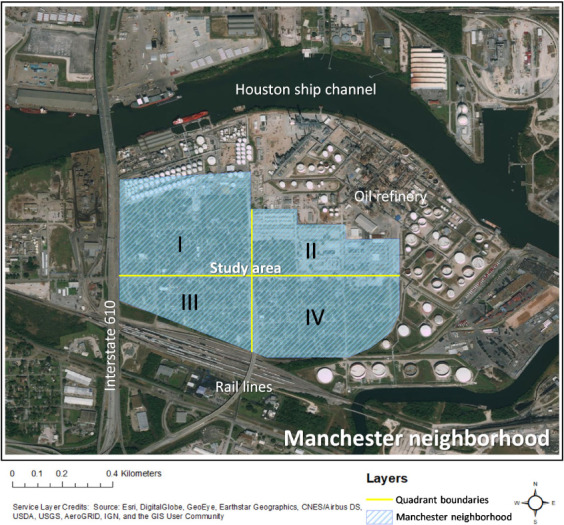
The primary aim of this study was to evaluate the presence, distribution, and potential human health implications of polycyclic aromatic hydrocarbons (PAHs) in a residential neighborhood of Houston, Texas following a major hurricane.
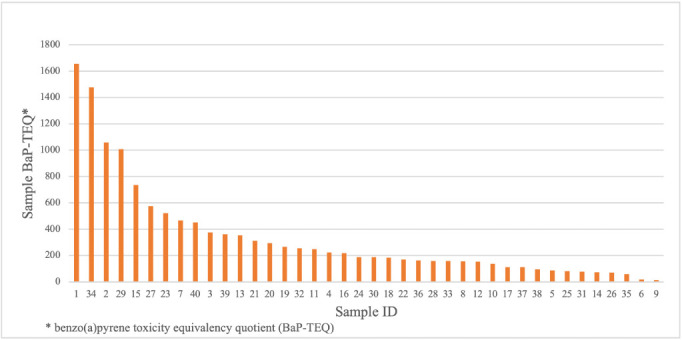
Concentrations of PAHs in 40 soil samples collected from a residential neighborhood in Houston, Texas were measured. Spatial interpolation was applied to determine the distribution of PAHs. Potential human health risks were evaluated by calculating toxicity equivalency quotients (TEQs) and incremental excess lifetime cancer risk (IELCR).
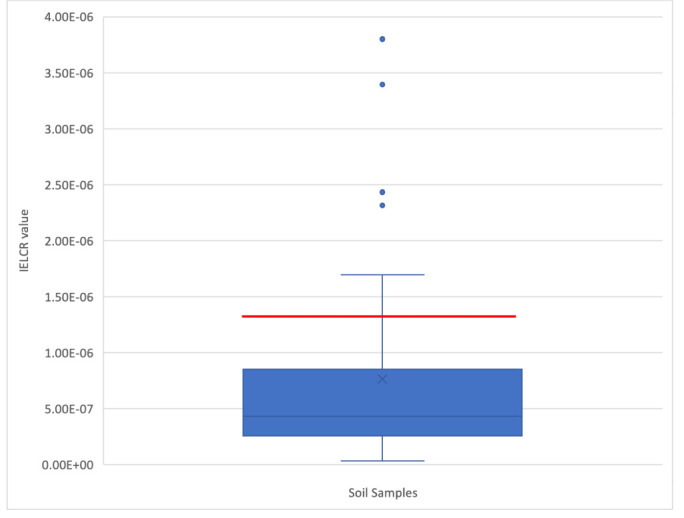
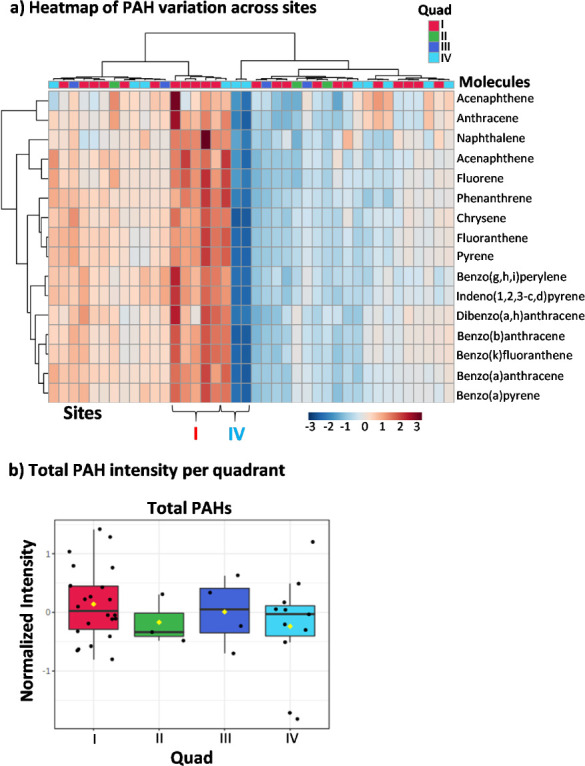
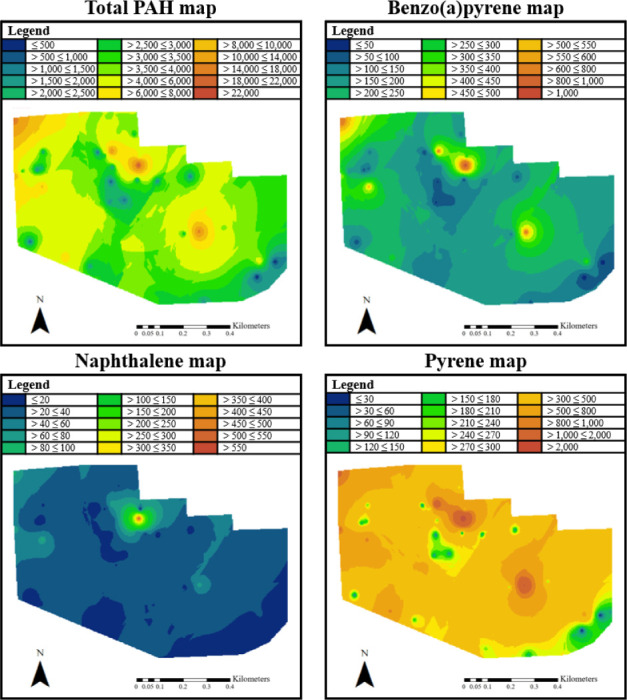
Total priority PAH concentrations varied across samples (range: 9.7 × 10 ng/g-1.6 × 10 ng/g; mean: 3.0 × 10 ng/g ± 3.6 × 10 standard deviation). Spatial analysis indicated a variable distribution of PAH constituents and concentrations. The IELCR analysis indicated that nine of the 40 samples were above minimum standards.
Findings from this study highlight the need for fine scale soil testing in residential areas as well as the importance of site-specific risk assessment.
The authors declare no competing financial interests.
2017年8月25日,飓风哈维以4级飓风强度登陆德克萨斯州墨西哥湾沿岸,带来了前所未有的降水,给沿海地区造成了巨大破坏。休斯顿市的灾难性洪水淹没了工业和住宅物业,导致土壤、沉积物和碎片的转移,加剧了现有的环境正义(EJ)问题。
本研究的主要目的是评估德克萨斯州休斯顿一个居民区在遭受重大飓风后多环芳烃(PAHs)的存在、分布及其对人类健康的潜在影响。
测量了从德克萨斯州休斯顿一个居民区采集的40个土壤样本中多环芳烃的浓度。应用空间插值法确定多环芳烃的分布。通过计算毒性当量商(TEQs)和增量终生癌症风险(IELCR)来评估潜在的人类健康风险。
各样本中优先多环芳烃的总浓度各不相同(范围:9.7×10 ng/g - 1.6×10 ng/g;平均值:3.0×10 ng/g ± 3.6×10标准差)。空间分析表明多环芳烃成分和浓度分布各异。IELCR分析表明,40个样本中有9个高于最低标准。
本研究结果强调了在居民区进行精细土壤检测的必要性以及特定场地风险评估的重要性。
作者声明不存在相互竞争的财务利益。