Hariyanto Timotius Ivan, Kurniawan Andree
Faculty of Medicine, Pelita Harapan University, Boulevard Jendral Sudirman Street, Karawaci, Tangerang, 15811 Indonesia.
Department of Internal Medicine, Faculty of Medicine, Pelita Harapan University, Boulevard Jendral Sudirman Street, Karawaci, Tangerang, 15811 Indonesia.
J Diabetes Metab Disord. 2021 Mar 27;20(1):543-550. doi: 10.1007/s40200-021-00777-4. eCollection 2021 Jun.
One of the drugs which is commonly used in diabetic patients is Dipeptidyl Peptidase-4 (DPP-4) inhibitor. Currently, the association between DPP-4 inhibitor and coronavirus disease 2019 (COVID-19) outcome is not yet established. This study aims to analyze the potential association between DPP-4 inhibitor and the composite poor outcome of COVID-19.
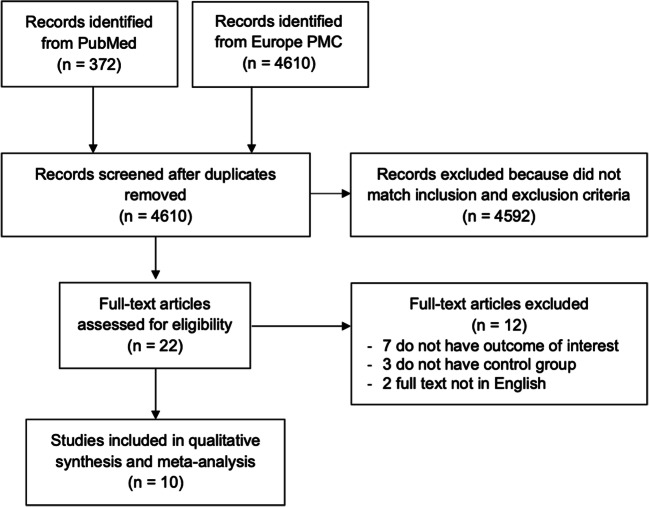
We systematically searched the PubMed and Europe PMC database using specific keywords related to our aims until November 29th, 2020. All articles published on COVID-19 and DPP-4 inhibitor were retrieved. Statistical analysis was done using Review Manager 5.4 and Comprehensive Meta-Analysis version 3 software.
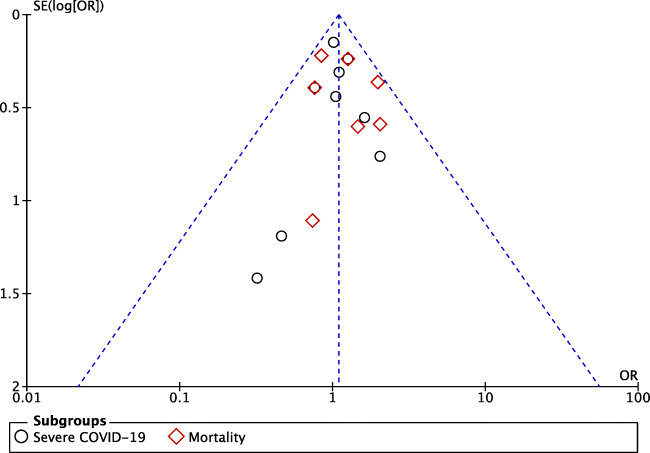
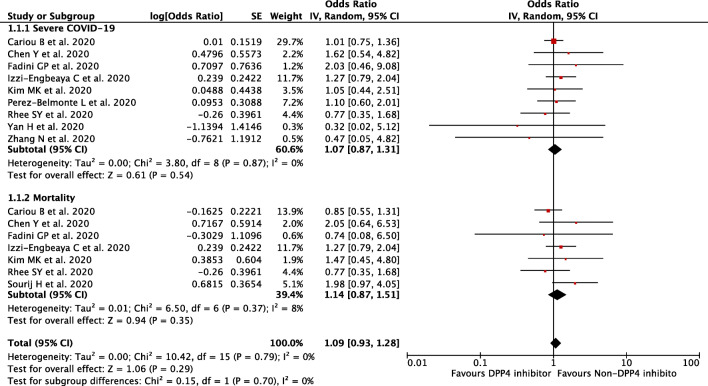
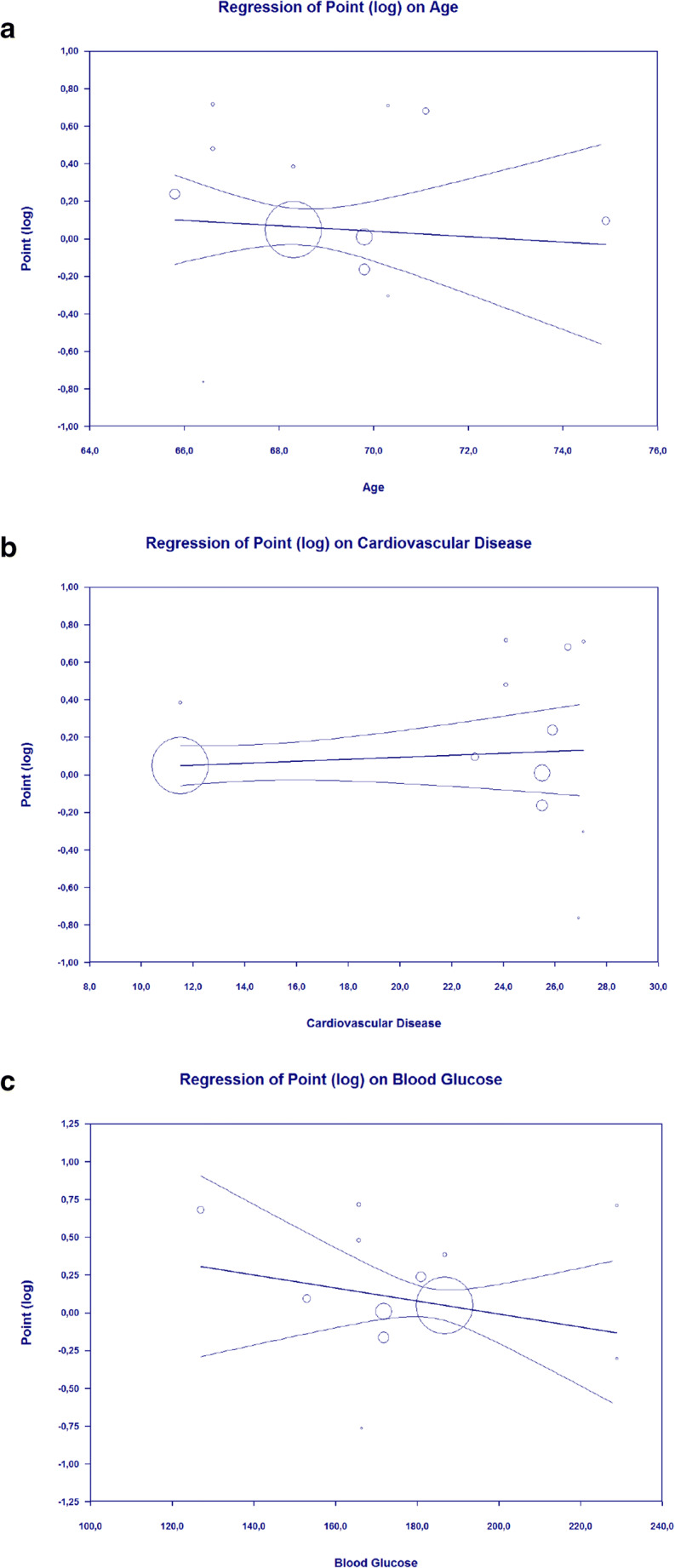
Our pooled analysis showed that DPP-4 inhibitor use was not associated with composite poor outcomes of COVID-19 [OR 1.09 (95% CI 0.93-1.28), = 0.29, = 0%, random-effect modelling], and its subgroup which comprised of severe COVID-19 [OR 1.07 (95% CI 0.87-1.31), = 0.54, = 0%, random-effect modelling], and mortality [OR 1.14 (95% CI 0.87-1.51), = 0.35, = 8%, random-effect modelling]. Meta-regression showed that the association was not influenced by age ( = 0.663), hypertension ( = 0.454), and admission blood glucose ( = 0.310). Subgroup analysis showed that the association was weaker in East Asian populations (OR 1.02) compared to European populations (OR 1.11).
DPP-4 inhibitor in diabetic patients did not alter the outcomes from COVID-19. Our study suggest that the use of DPP-4 inhibitor in COVID-19 patients with diabetes may still be continued according to the patients' need.
The online version contains supplementary material available at 10.1007/s40200-021-00777-4.
二肽基肽酶-4(DPP-4)抑制剂是糖尿病患者常用药物之一。目前,DPP-4抑制剂与2019冠状病毒病(COVID-19)结局之间的关联尚未明确。本研究旨在分析DPP-4抑制剂与COVID-19综合不良结局之间的潜在关联。
我们使用与研究目的相关的特定关键词,系统检索了PubMed和欧洲生物医学中心数据库(Europe PMC),检索截至2020年11月29日发表的所有文章。检索所有关于COVID-19和DPP-4抑制剂的文章。使用Review Manager 5.4和Comprehensive Meta-Analysis版本3软件进行统计分析。
我们的汇总分析表明,使用DPP-4抑制剂与COVID-19的综合不良结局无关[比值比(OR)为1.09(95%置信区间为0.93 - 1.28),P = 0.29,I² = 0%,随机效应模型],在其亚组分析中,包括重症COVID-19[OR为1.07(95%置信区间为0.87 - 1.31),P = 0.54,I² = 0%,随机效应模型]和死亡率[OR为1.14(95%置信区间为0.87 - 1.51),P = 0.35,I² = 8%,随机效应模型]。Meta回归分析表明,该关联不受年龄(P =0.663)、高血压(P =0.454)和入院血糖(P =0.310)的影响。亚组分析表明,与欧洲人群(OR为1.11)相比,东亚人群中该关联较弱(OR为1.02)。
糖尿病患者使用DPP-4抑制剂不会改变COVID-19的结局。我们的研究表明,对于COVID-19合并糖尿病的患者,仍可根据患者需求继续使用DPP-4抑制剂。
在线版本包含可在10.1007/s40200-021-00777-4获取的补充材料。