Cross Karissa L, Leigh Brittany A, Hatmaker E Anne, Mikaelyan Aram, Miller Asia K, Bordenstein Seth R
Department of Biological Sciences, Vanderbilt University, Nashville, Tennessee, USA.
Vanderbilt Microbiome Initiative, Vanderbilt University, Nashville, Tennessee, USA.
mSystems. 2021 Apr 6;6(2):e01342-20. doi: 10.1128/mSystems.01342-20.
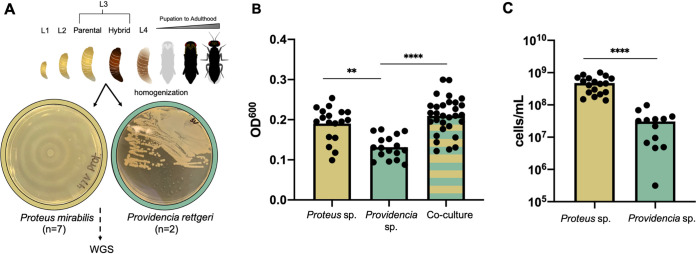
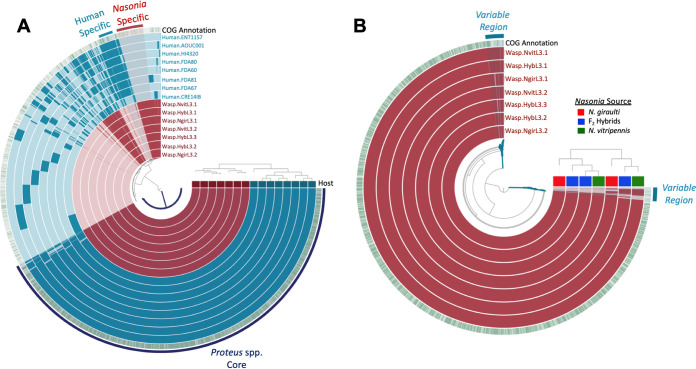
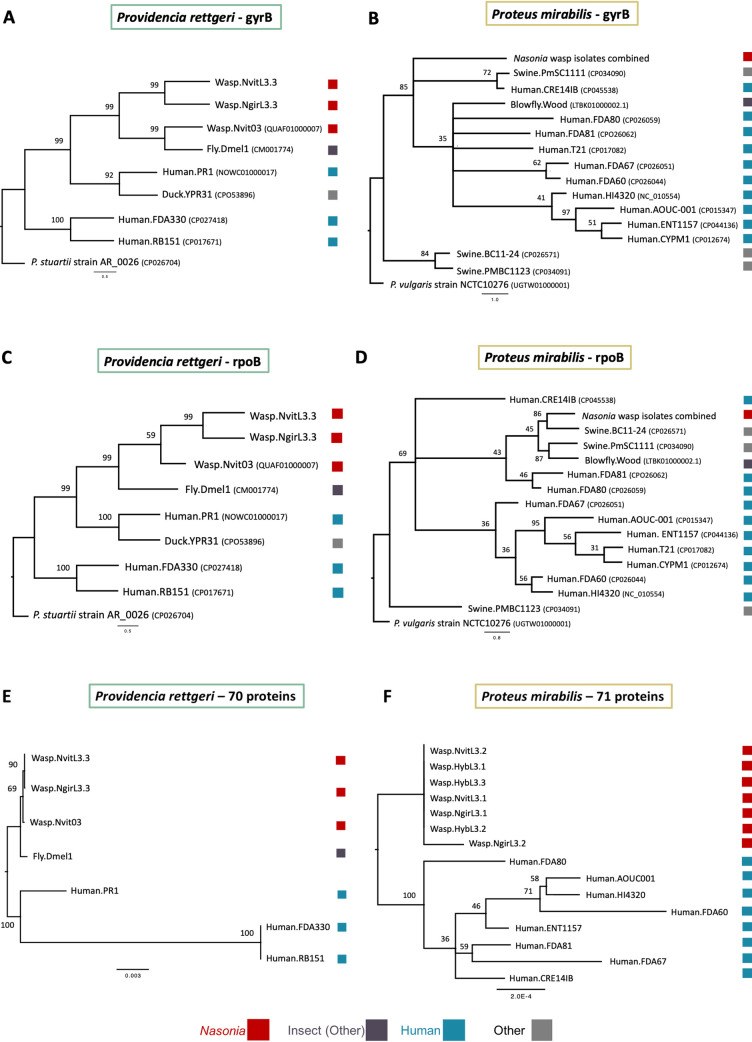
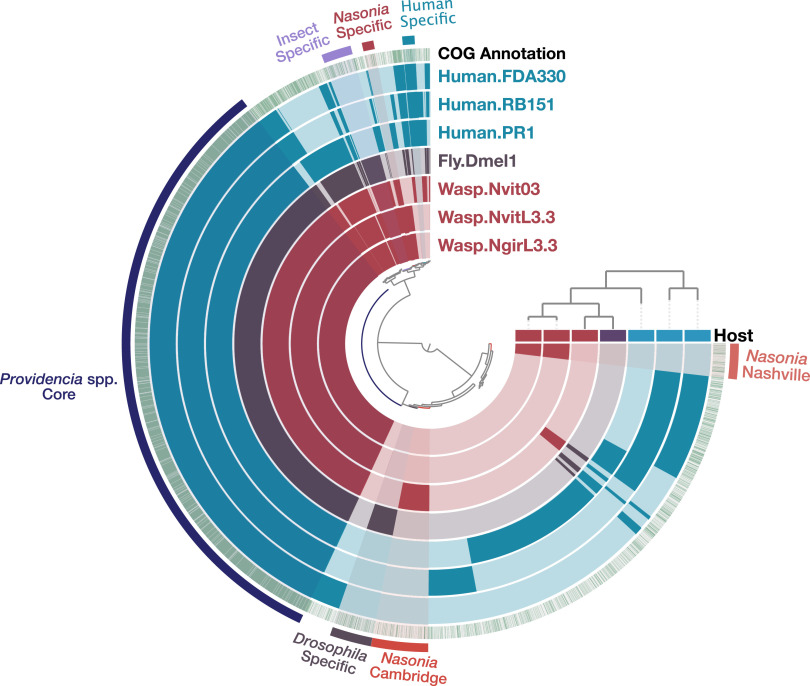
Phylosymbiosis is a cross-system trend whereby microbial community relationships recapitulate the host phylogeny. In parasitoid wasps, phylosymbiosis occurs throughout development, is distinguishable between sexes, and benefits host development and survival. Moreover, the microbiome shifts in hybrids as a rare bacterium in the microbiome becomes dominant. The larval hybrids then catastrophically succumb to bacterium-assisted lethality and reproductive isolation between the species. Two important questions for understanding phylosymbiosis and bacterium-assisted lethality in hybrids are (i) do the bacterial genomes differ from other animal isolates and (ii) are the hybrid bacterial genomes the same as those in the parental species? Here, we report the cultivation, whole-genome sequencing, and comparative analyses of the most abundant gut bacteria in larvae, and Characterization of new isolates shows forms a more robust biofilm than and that, when grown in coculture, significantly outcompetes genomes from are similar to each other and more divergent from pathogenic, human associates. from , , and their hybrid offspring are nearly identical and relatively distinct from human isolates. These results indicate that members of the larval gut microbiome within are most similar to each other, and the strain of the dominant in hybrids is resident in parental species. Holobiont interactions between shared, resident members of the wasp microbiome and the host underpin phylosymbiosis and hybrid breakdown. Animal and plant hosts often establish intimate relationships with their microbiomes. In varied environments, closely related host species share more similar microbiomes, a pattern termed phylosymbiosis. When phylosymbiosis is functionally significant and beneficial, microbial transplants between host species and host hybridization can have detrimental consequences on host biology. In the parasitoid wasp genus, which contains a phylosymbiotic gut community, both effects occur and provide evidence for selective pressures on the holobiont. Here, we show that bacterial genomes in differ from other environments and harbor genes with unique functions that may regulate phylosymbiotic relationships. Furthermore, the bacteria in hybrids are identical to those in parental species, thus supporting a hologenomic tenet that the same members of the microbiome and the host genome impact phylosymbiosis, hybrid breakdown, and speciation.
系统共生是一种跨系统趋势,即微生物群落关系重现宿主系统发育。在寄生蜂中,系统共生贯穿整个发育过程,在性别间可区分,且有利于宿主的发育和生存。此外,由于微生物群落中一种罕见细菌在杂种中占主导地位,微生物组会发生变化。然后,幼虫杂种会灾难性地死于细菌辅助致死作用,导致物种间的生殖隔离。理解杂种中的系统共生和细菌辅助致死作用的两个重要问题是:(i)细菌基因组与其他动物分离株是否不同?(ii)杂种细菌基因组与亲本物种中的基因组是否相同?在这里,我们报告了对幼虫中最丰富的肠道细菌的培养、全基因组测序和比较分析,新分离株的特征表明,其形成的生物膜比[未提及的菌株]更坚固,并且在共培养时,[提及的菌株]显著胜过[未提及的菌株]。[提及的菌株]的基因组彼此相似,与致病性人类相关菌株差异更大。来自[不同亲本物种]及其杂种后代的[提及的菌株]几乎相同,且与人类分离株相对不同。这些结果表明,[寄生蜂属]幼虫肠道微生物组的成员彼此最为相似,杂种中占主导地位的[提及的菌株]存在于亲本物种中。黄蜂微生物组中共享的常驻成员与宿主之间的全生物相互作用是系统共生和杂种衰败的基础。动植物宿主通常与其微生物组建立密切关系。在不同环境中,亲缘关系密切的宿主物种共享更相似的微生物组,这种模式称为系统共生。当系统共生在功能上具有重要意义且有益时,宿主物种间的微生物移植和宿主杂交可能会对宿主生物学产生有害影响。在含有系统共生肠道群落的寄生蜂属中,这两种影响都会发生,并为全生物的选择压力提供了证据。在这里,我们表明,[寄生蜂属]中的细菌基因组与其他环境不同,并且含有可能调节系统共生关系的独特功能基因。此外,杂种中的细菌与亲本物种中的细菌相同,从而支持了一个全基因组原则,即微生物组和宿主基因组的相同成员会影响系统共生、杂种衰败和物种形成。