Department of Medicine, Penn State University College of Medicine, Milton S. Hershey Medical Center, Hershey, Pennsylvania, United States of America.
Department of Biology, University of New Mexico, Albuquerque, New Mexico, United States of America.
PLoS One. 2021 Apr 7;16(4):e0249544. doi: 10.1371/journal.pone.0249544. eCollection 2021.
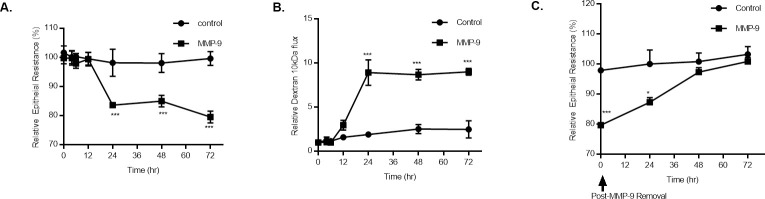
Matrix Metalloproteinase-9 (MMP-9) has been shown to play a key role in mediating inflammation and tissue damage in inflammatory bowel disease (IBD). In patients with IBD, the intestinal tight junction (TJ) barrier is compromised as characterized by an increase in intestinal permeability. MMP-9 is elevated in intestinal tissue, serum and stool of patients with IBD. Previous studies from our laboratory showed that MMP-9 causes an increase in intestinal epithelial TJ permeability and that the MMP-9 induced increase in intestinal permeability is an important pathogenic factor contributing to the development of intestinal inflammation in IBD. However, the intracellular mechanisms that mediate the MMP-9 modulation of intestinal barrier function remain unclear.
The main aim of this study was to further elucidate the molecular mechanisms involved in MMP-9 induced increase in intestinal epithelial TJ permeability using Caco-2 monolayers as an in-vitro model system.
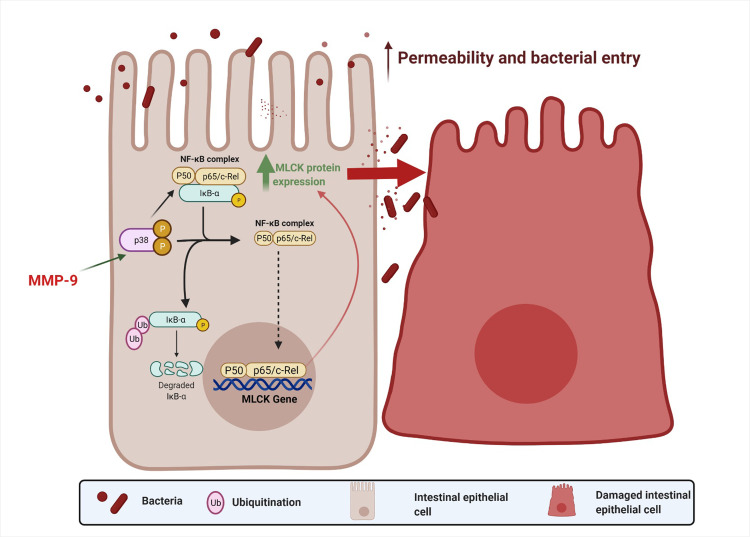
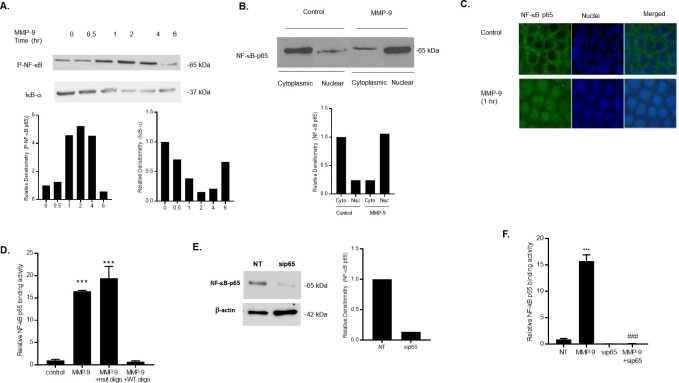
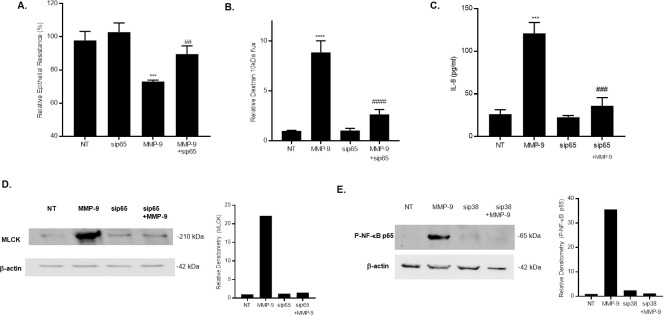
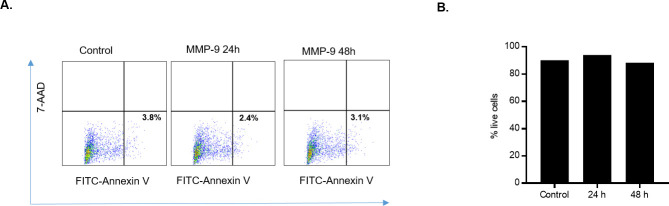
MMP-9 induced increase in Caco-2 TJ permeability was associated with activation and cytoplasmic-to-nuclear translocation of NF-κB p65. Knocking-down NF-κB p65 by siRNA transfection prevented the MMP-9 induced expression of the NF-κB target gene IL-8, myosin light chain kinase (MLCK) protein expression, and subsequently prevented the increase in Caco-2 TJ permeability. In addition, the effect of MMP-9 on Caco-2 intestinal epithelial TJ barrier function was not mediated by apoptosis or necrosis.
Our data show that the MMP-9 induced disruption of Caco-2 intestinal epithelial TJ barrier function is regulated by NF-κB pathway activation of MLCK.
基质金属蛋白酶-9(MMP-9)在介导炎症性肠病(IBD)中的炎症和组织损伤中起着关键作用。在 IBD 患者中,肠道紧密连接(TJ)屏障受损,表现为肠道通透性增加。MMP-9 在 IBD 患者的肠道组织、血清和粪便中升高。我们实验室的先前研究表明,MMP-9 导致肠道上皮 TJ 通透性增加,并且 MMP-9 诱导的肠道通透性增加是导致 IBD 肠道炎症发展的重要致病因素。然而,介导 MMP-9 调节肠道屏障功能的细胞内机制仍不清楚。
本研究的主要目的是进一步阐明 MMP-9 诱导的肠道上皮 TJ 通透性增加的分子机制,使用 Caco-2 单层作为体外模型系统。
MMP-9 诱导的 Caco-2 TJ 通透性增加与 NF-κB p65 的激活和细胞质到核内转位有关。通过 siRNA 转染敲低 NF-κB p65 可防止 MMP-9 诱导的 NF-κB 靶基因 IL-8 的表达、肌球蛋白轻链激酶(MLCK)蛋白表达增加,并随后防止 Caco-2 TJ 通透性增加。此外,MMP-9 对 Caco-2 肠道上皮 TJ 屏障功能的影响不是通过细胞凋亡或坏死介导的。
我们的数据表明,MMP-9 诱导的 Caco-2 肠道上皮 TJ 屏障功能的破坏是由 NF-κB 通路激活 MLCK 调节的。