Efimov Sergey V, Matsiyeuskaya Natallia V, Boytsova Olga V, Akhieva Lyudmila Yu, Kvasova Elena I, Harrison Francisco, Karpova Yulia S, Tikhonov Anton, Khomyakova Nadezhda F, Hardman Tim, Rossi Jean-François
State-Funded Healthcare Institution 'Emergency Hospital' of Ministry of Health of Chuvash Republic, Chuvash Republic, Cheboksary, Russia.
Healthcare Institution 'Grodno Regional Infectious Clinical Hospital', Grodno, Belarus.
Drugs Context. 2021 Mar 25;10. doi: 10.7573/dic.2020-11-1. eCollection 2021.
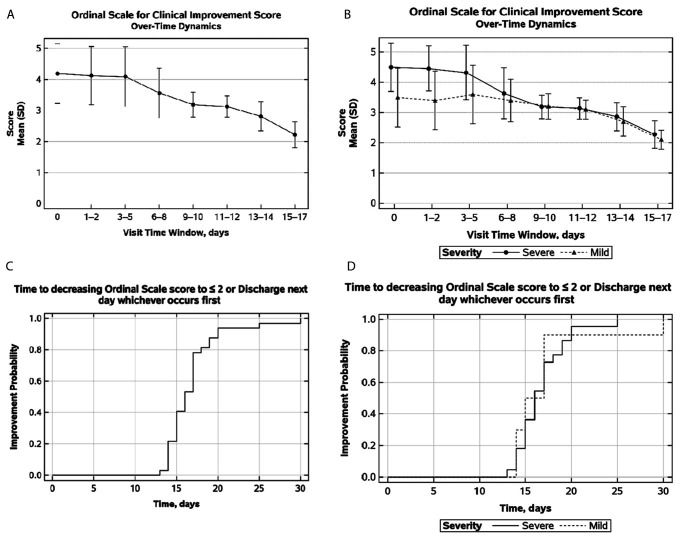
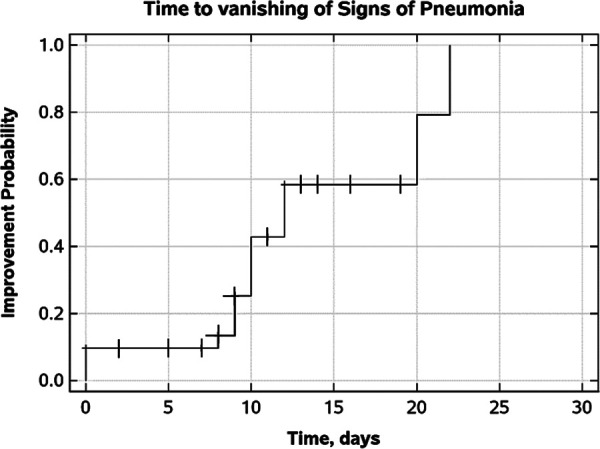
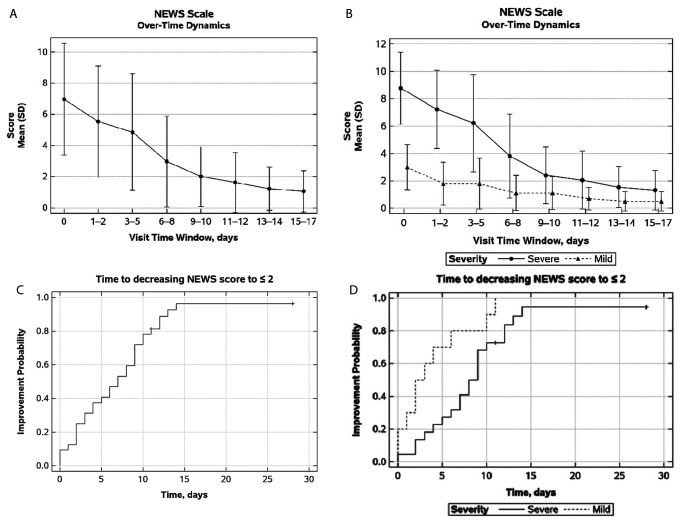
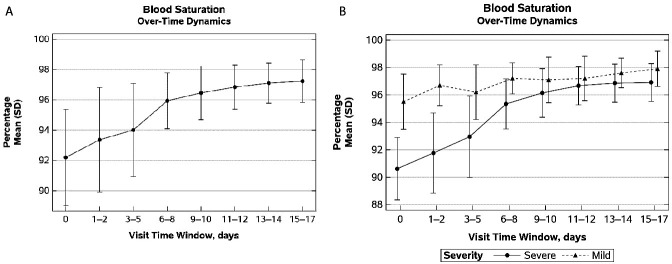
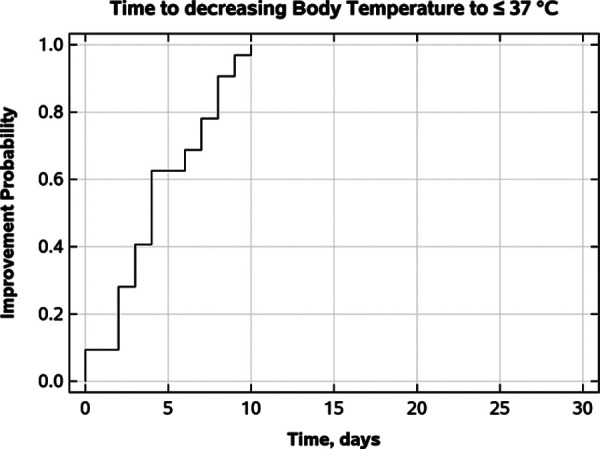
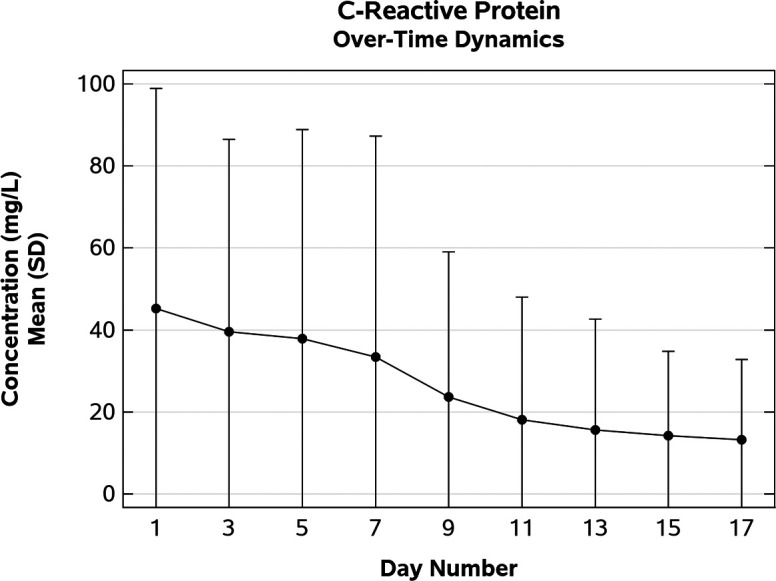
A clinical need for aetiotropic coronavirus disease (COVID-19) treatments is required. The immune modulator azoximer bromide (AZB; Polyoxidonium®) is indicated in Russia for use against acute viral infections and during remission. In this study, adults hospitalized with COVID-19 (=32) received AZB and standard of care in an open-label, multicentre, interventional study. All patients were symptomatic; 22 had severe disease (National Early Warning Score ≥5) and required mechanical ventilation or oxygen saturation (SpO) and 19 patients had co-morbidities. Patients received AZB 12 mg intravenously once daily for 3 days, then intramuscularly every other day (approximately ten injections) until discharge. The primary endpoint was the patient's clinical status (7-point Ordinal Scale; OS) on day 15 that at baseline. The mean duration of hospitalization was 20 days. All patients were alive and discharged with normal SpO with no secondary infections or delayed mortality reported by the end-of-study visit (on day 28-72). A decrease in the mean OS and National Early Warning Score values was observed following treatment with AZB. A decrease in OS score was marked in patients identified as severe. Both sets of patients achieved similar scores, which can be classified as an improvement by day 9-10; SpO levels trended to normalization over time. By day 11-12, all patients had a normal body temperature. Serum C-reactive protein levels decreased in patients with severe and mild disease. Most patients had signs of pneumonia at baseline (=27), with the majority recovering by days 10-12. No major toxicities were observed. AZB was safe and well tolerated when administered in addition to standard of care treatment for COVID-19. Further randomized, placebo-controlled studies are needed to elucidate any potential therapeutic effect in COVID-19.
需要针对病因性冠状病毒病(COVID-19)的临床治疗方法。免疫调节剂氮氧联溴化物(AZB;Polyoxidonium®)在俄罗斯被批准用于治疗急性病毒感染及缓解期。在本研究中,32名因COVID-19住院的成年人在一项开放标签、多中心、干预性研究中接受了AZB和标准治疗。所有患者均有症状;22例患有严重疾病(国家早期预警评分≥5),需要机械通气或吸氧,19例患者有合并症。患者静脉注射AZB 12 mg,每日1次,共3天,然后每隔一天肌肉注射(约十次注射)直至出院。主要终点是第15天患者的临床状态(7分序贯量表;OS)相对于基线的情况。平均住院时间为20天。所有患者均存活并出院,出院时SpO正常,在研究结束时(第28 - 72天)未报告有继发感染或延迟死亡。用AZB治疗后,观察到平均OS和国家早期预警评分值下降。在被确定为重症的患者中,OS评分显著下降。两组患者均取得了相似的评分,到第9 - 10天可归类为病情改善;SpO水平随时间趋于正常化。到第11 - 12天,所有患者体温正常。重症和轻症患者的血清C反应蛋白水平均下降。大多数患者在基线时(n = 27)有肺炎体征,大多数在第10 - 12天康复。未观察到重大毒性。在COVID-19标准治疗基础上加用AZB时,其安全性良好且耐受性佳。需要进一步进行随机、安慰剂对照研究以阐明其在COVID-19中的任何潜在治疗效果。