Yim Hyung Eun, Yoo Kee Hwan
Department of Pediatrics, Korea University Ansan Hospital, Korea University College of Medicine, Ansan, Korea.
Department of Pediatrics, Korea University Guro Hospital, Korea University College of Medicine, Seoul, Korea.
Clin Exp Pediatr. 2021 Oct;64(10):511-518. doi: 10.3345/cep.2021.00108. Epub 2021 Apr 6.
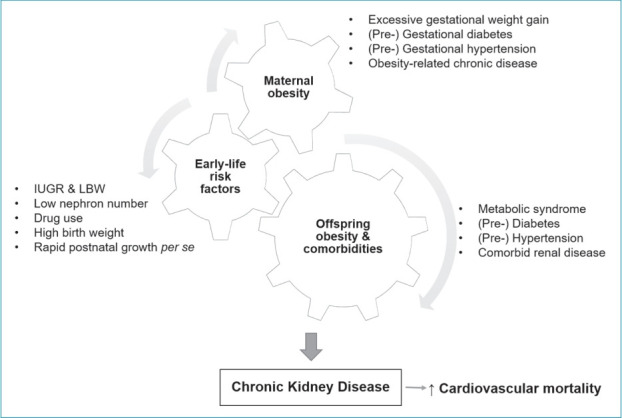
The prevalence of childhood obesity is increasing worldwide at an alarming rate. While obesity is known to increase a variety of cardiovascular and metabolic diseases, it also acts as a risk factor for the development and progression of chronic kidney disease (CKD). During childhood and adolescence, severe obesity is associated with an increased prevalence and incidence of the early stages of kidney disease. Importantly, children born to obese mothers are also at increased risk of developing obesity and CKD later in life. The potential mechanisms underlying the association between obesity and CKD include hemodynamic factors, metabolic effects, and lipid nephrotoxicity. Weight reduction via increased physical activity, caloric restriction, treatment with angiotensin-converting enzyme inhibitors, and judicious bariatric surgery can be used to control obesity and obesity-related kidney disease. Preventive strategies to halt the obesity epidemic in the healthcare community are needed to reduce the widespread deleterious consequences of obesity including CKD development and progression.
全球儿童肥胖率正以惊人的速度上升。虽然已知肥胖会增加多种心血管和代谢疾病的风险,但它也是慢性肾脏病(CKD)发生和发展的危险因素。在儿童期和青少年期,重度肥胖与肾病早期患病率和发病率的增加有关。重要的是,肥胖母亲所生的孩子在日后患肥胖症和CKD的风险也会增加。肥胖与CKD之间关联的潜在机制包括血流动力学因素、代谢影响和脂质肾毒性。通过增加体育活动、限制热量摄入、使用血管紧张素转换酶抑制剂治疗以及合理的减肥手术来减轻体重,可用于控制肥胖及与肥胖相关的肾脏疾病。医疗界需要采取预防策略来遏制肥胖流行,以减少肥胖带来的广泛有害后果,包括CKD的发生和发展。