Department of Anatomy and Neurobiology, University of Tennessee Health Science Center, College of Medicine, 855 Monroe Avenue, Wittenborg Building, Room-231, Memphis, TN, 38163, USA.
Pharmaceutical Sciences, University of Tennessee Health Science Center, Memphis, TN, 38163, USA.
Metab Brain Dis. 2021 Aug;36(6):1079-1086. doi: 10.1007/s11011-021-00728-1. Epub 2021 Apr 9.
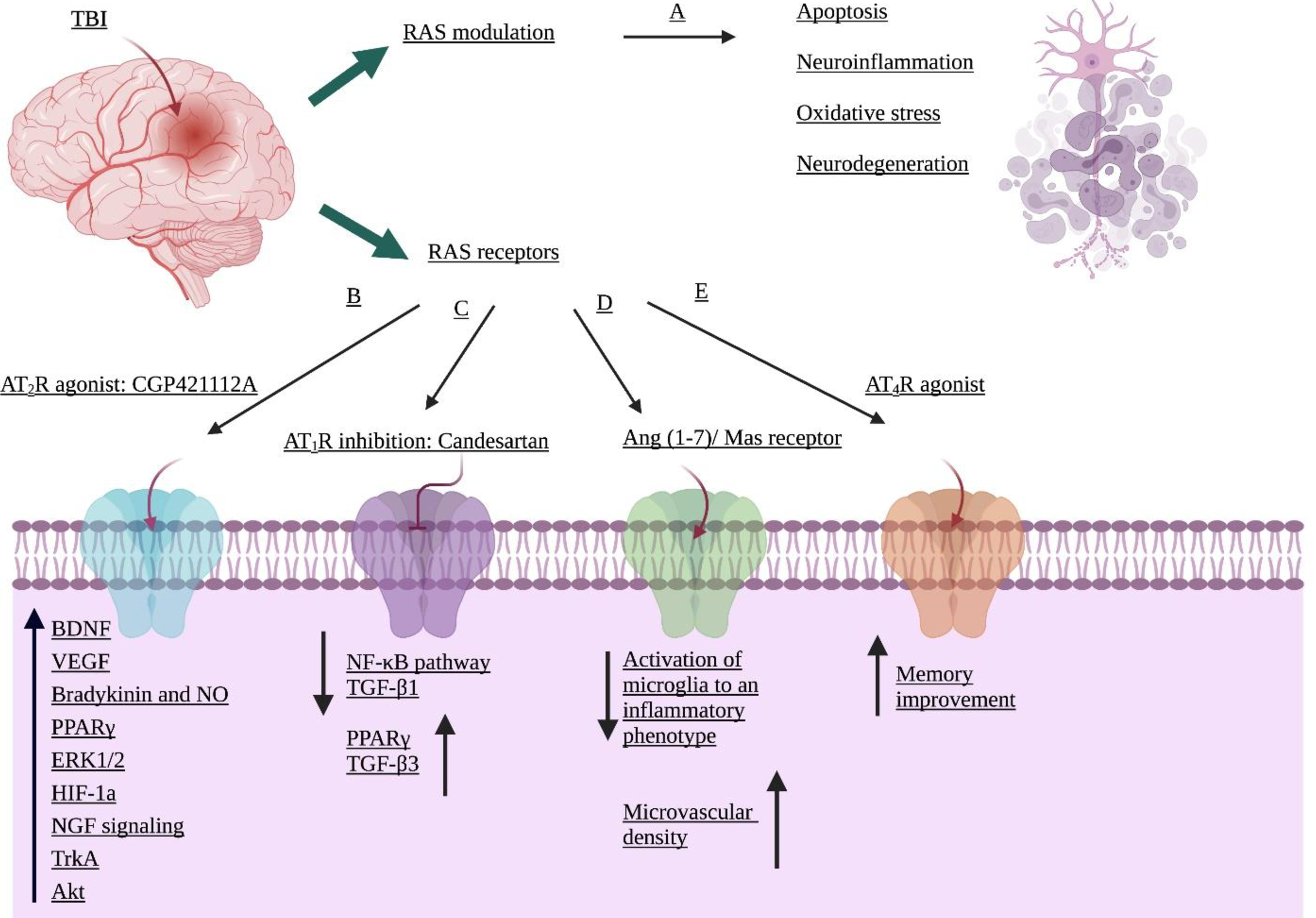
Traumatic brain injury (TBI) alters brain function and is a crucial public health concern worldwide. TBI triggers the release of inflammatory mediators (cytokines) that aggravate cerebral damage, thereby affecting clinical prognosis. The renin angiotensin system (RAS) plays a critical role in TBI pathophysiology. RAS is widely expressed in many organs including the brain. Modulation of the RAS in the brain via angiotensin type 1 (AT) and type 2 (AT) receptor signaling affects many pathophysiological processes, including TBI. ATR is highly expressed in neurons and astrocytes. The upregulation of ATR mediates the effects of angiotensin II (ANG II) including release of proinflammatory cytokines, cell death, oxidative stress, and vasoconstriction. The ATR, mainly expressed in the fetal brain during development, is also related to cognitive function. Activation of this receptor pathway decreases neuroinflammation and oxidative stress and improves overall cell survival. Numerous studies have illustrated the therapeutic potential of inhibiting ATR and activating ATR for treatment of TBI with variable outcomes. In this review, we summarize studies that describe the role of brain RAS signaling, through ATR and ATR in TBI, and its modulation with pharmacological approaches.
创伤性脑损伤(TBI)改变大脑功能,是全球范围内一个重要的公共健康关注点。TBI 会引发炎症介质(细胞因子)的释放,从而加重脑损伤,影响临床预后。肾素-血管紧张素系统(RAS)在 TBI 病理生理学中起着关键作用。RAS 在包括大脑在内的许多器官中广泛表达。通过血管紧张素 1 型(AT1)和 2 型(AT2)受体信号对大脑中的 RAS 进行调节,会影响包括 TBI 在内的许多病理生理过程。AT1 在神经元和星形胶质细胞中高度表达。AT1 的上调介导了血管紧张素 II(ANG II)的作用,包括促炎细胞因子的释放、细胞死亡、氧化应激和血管收缩。在发育过程中,主要在胎儿大脑中表达的 AT1 也与认知功能有关。该受体途径的激活可减少神经炎症和氧化应激,提高整体细胞存活率。大量研究表明,抑制 AT1 和激活 AT1 治疗 TBI 具有不同的结果,具有治疗潜力。在这篇综述中,我们总结了描述大脑 RAS 信号通过 AT1 和 AT2 在 TBI 中的作用及其通过药理学方法进行调节的研究。