Department of Neurology, Yale University School of Medicine, 950 Campbell Avenue, Building 34, New Haven, CT, 06510, USA.
Department of Veterans Affairs, Center for Neuroscience and Regeneration Research (127A), West Haven VA Medical Center, 950 Campbell Avenue, Building 34, West Haven, CT, 06516, USA.
Sci Rep. 2021 Apr 9;11(1):7838. doi: 10.1038/s41598-021-87476-5.
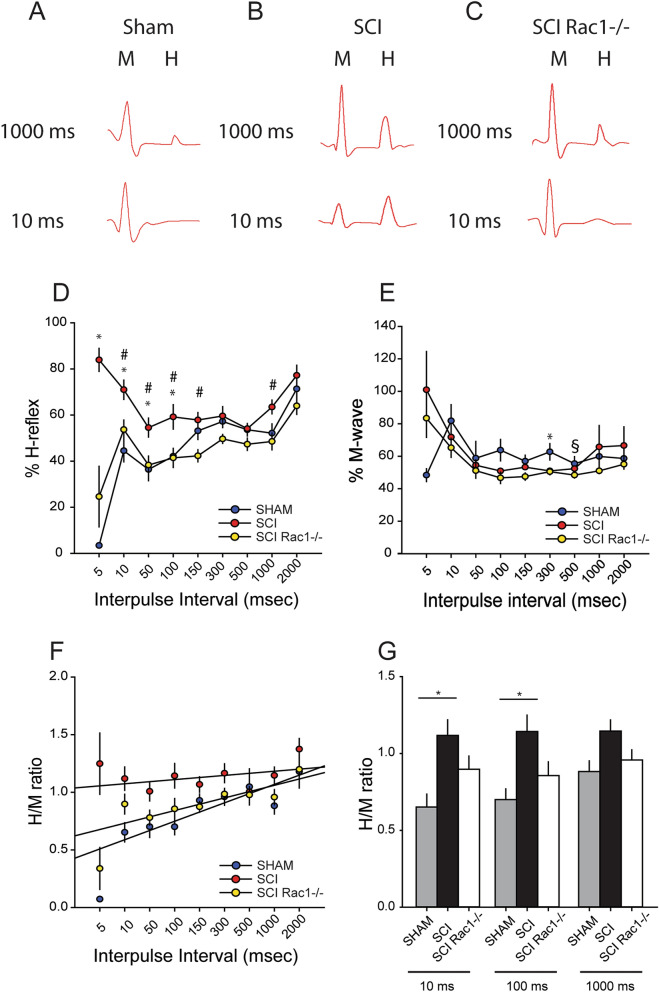
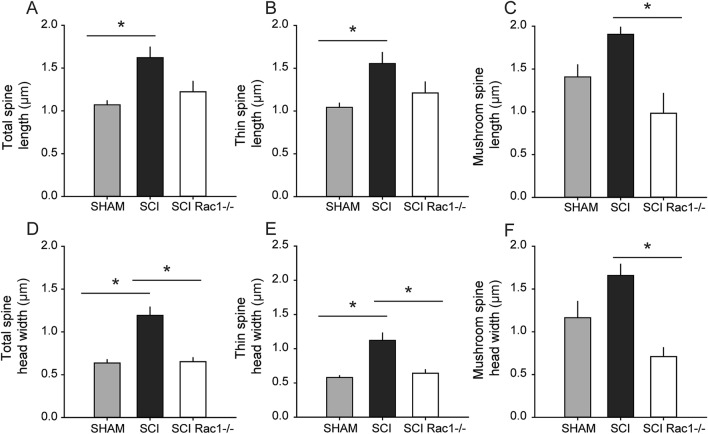
A major complication with spinal cord injury (SCI) is the development of spasticity, a clinical symptom of hyperexcitability within the spinal H-reflex pathway. We have previously demonstrated a common structural motif of dendritic spine dysgenesis associated with hyperexcitability disorders after injury or disease insults to the CNS. Here, we used an adeno-associated viral (AAV)-mediated Cre-Lox system to knockout Rac1 protein expression in motor neurons after SCI. Three weeks after AAV9-Cre delivery into the soleus/gastrocnemius of Rac1-"floxed" adult mice to retrogradely infect spinal alpha-motor neurons, we observed significant restoration of RDD and reduced H-reflex excitability in SCI animals. Additionally, viral-mediated Rac1 knockdown reduced presence of dendritic spine dysgenesis on motor neurons. In control SCI animals without Rac1 knockout, we continued to observe abnormal dendritic spine morphology associated with hyperexcitability disorder, including an increase in mature, mushroom dendritic spines, and an increase in overall spine length and spine head size. Taken together, our results demonstrate that viral-mediated disruption of Rac1 expression in ventral horn motor neurons can mitigate dendritic spine morphological correlates of neuronal hyperexcitability, and reverse hyperreflexia associated with spasticity after SCI. Finally, our findings provide evidence of a putative mechanistic relationship between motor neuron dendritic spine dysgenesis and SCI-induced spasticity.
脊髓损伤 (SCI) 的一个主要并发症是痉挛的发生,痉挛是脊髓 H 反射通路过度兴奋的一种临床症状。我们之前已经证明,在中枢神经系统损伤或疾病后,兴奋性障碍与树突棘发育不良存在共同的结构模式。在这里,我们使用腺相关病毒 (AAV) 介导的 Cre-Lox 系统在 SCI 后敲除运动神经元中的 Rac1 蛋白表达。在 AAV9-Cre 递送至 Rac1-"floxed"成年小鼠的比目鱼肌/跟腱以逆行感染脊髓α运动神经元 3 周后,我们观察到 SCI 动物的 RDD 显著恢复和 H 反射兴奋性降低。此外,病毒介导的 Rac1 敲低减少了运动神经元上树突棘发育不良的存在。在没有 Rac1 敲除的对照 SCI 动物中,我们继续观察到与兴奋性障碍相关的异常树突棘形态,包括成熟蘑菇状树突棘的增加,以及总体棘突长度和棘突头部尺寸的增加。总之,我们的结果表明,病毒介导的运动神经元腹角 Rac1 表达的破坏可以减轻神经元过度兴奋的树突棘形态相关性,并逆转 SCI 后痉挛相关的反射亢进。最后,我们的研究结果提供了运动神经元树突棘发育不良与 SCI 诱导痉挛之间存在潜在机制关系的证据。