Department of Medical Oncology, The First Affiliated Hospital of Xi'an Jiaotong University, No. 277 West Yanta Road of Xi'an, Xi'an, 710061, People's Republic of China.
Breast Cancer. 2021 Jul;28(4):792-805. doi: 10.1007/s12282-021-01247-8. Epub 2021 Apr 9.
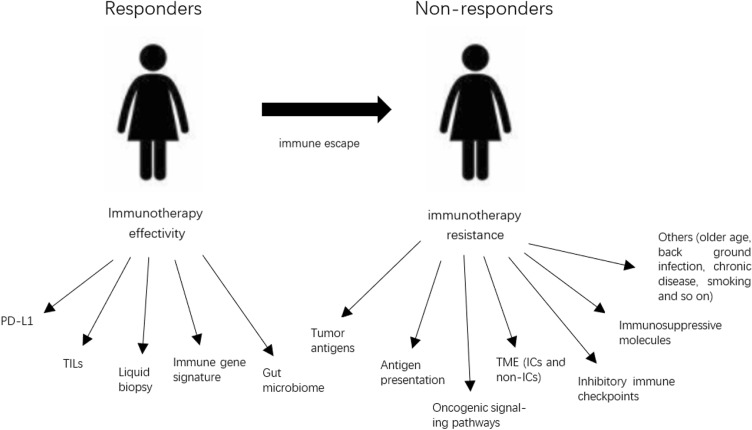
Breast cancer is a commonly diagnosed female cancer in the world. Triple-negative breast cancer (TNBC) is the most dangerous and biologically aggressive subtype in breast cancer which has a high mortality, high rates of relapse and poor prognosis, representing approximately 15-20% of breast cancers. TNBC has unique and special biological molecular characteristics and higher immunogenicity than other breast cancer types. On the basis of molecular features, TNBC is divided into different subtypes and gets various treatments. Especially, immunotherapy becomes a promising and effective treatment to TNBC. However, not all of the TNBC patients are sensitive to immunotherapy, the need of selecting the patients suitable for immunotherapy is imperative. In this review, we discussed recent discoveries about the immune-related factors of TNBC, including tumor-infiltrating lymphocytes (TILs), programmed death-ligand protein-1 (PD-L1), immune gene signatures, some other emerging biomarkers for immunotherapy effectivity and promising biomarkers for immunotherapy resistance. In addition, we summarized the features of these biomarkers contributing to predict the prognosis and effect of immunotherapy. We hope we can provide some helps or evidences to clinical immunotherapy and combined treatment for TNBC patients.
乳腺癌是全球常见的女性癌症。三阴性乳腺癌(TNBC)是乳腺癌中最危险和生物学侵袭性最强的亚型,死亡率高、复发率高、预后差,约占乳腺癌的 15-20%。TNBC 具有独特而特殊的生物学分子特征,比其他乳腺癌类型具有更高的免疫原性。基于分子特征,TNBC 分为不同的亚型,并得到不同的治疗。特别是,免疫疗法成为 TNBC 一种有前途和有效的治疗方法。然而,并非所有 TNBC 患者都对免疫疗法敏感,因此迫切需要选择适合免疫疗法的患者。在这篇综述中,我们讨论了 TNBC 的免疫相关因素的最新发现,包括肿瘤浸润淋巴细胞(TILs)、程序性死亡配体蛋白-1(PD-L1)、免疫基因特征、一些其他新兴的免疫治疗效果生物标志物和有前途的免疫治疗耐药生物标志物。此外,我们总结了这些生物标志物的特征,有助于预测免疫治疗的预后和效果。我们希望能为 TNBC 患者的临床免疫治疗和联合治疗提供一些帮助或证据。