Zhao Yingying, Wang Shuanglin, Song Xiaopeng, Yuan Junliang, Qi Dong, Gu Xiaohuan, Yin Michael Yaoyao, Han Zhou, Zhu Yanbing, Liu Zhandong, Zhang Yongbo, Wei Ling, Wei Zheng Zachory
Beijing Clinical Research Institute, Beijing, China.
Department of Anesthesiology, Emory University School of Medicine, Atlanta, GA, United States.
Front Cell Neurosci. 2021 Mar 26;15:627682. doi: 10.3389/fncel.2021.627682. eCollection 2021.
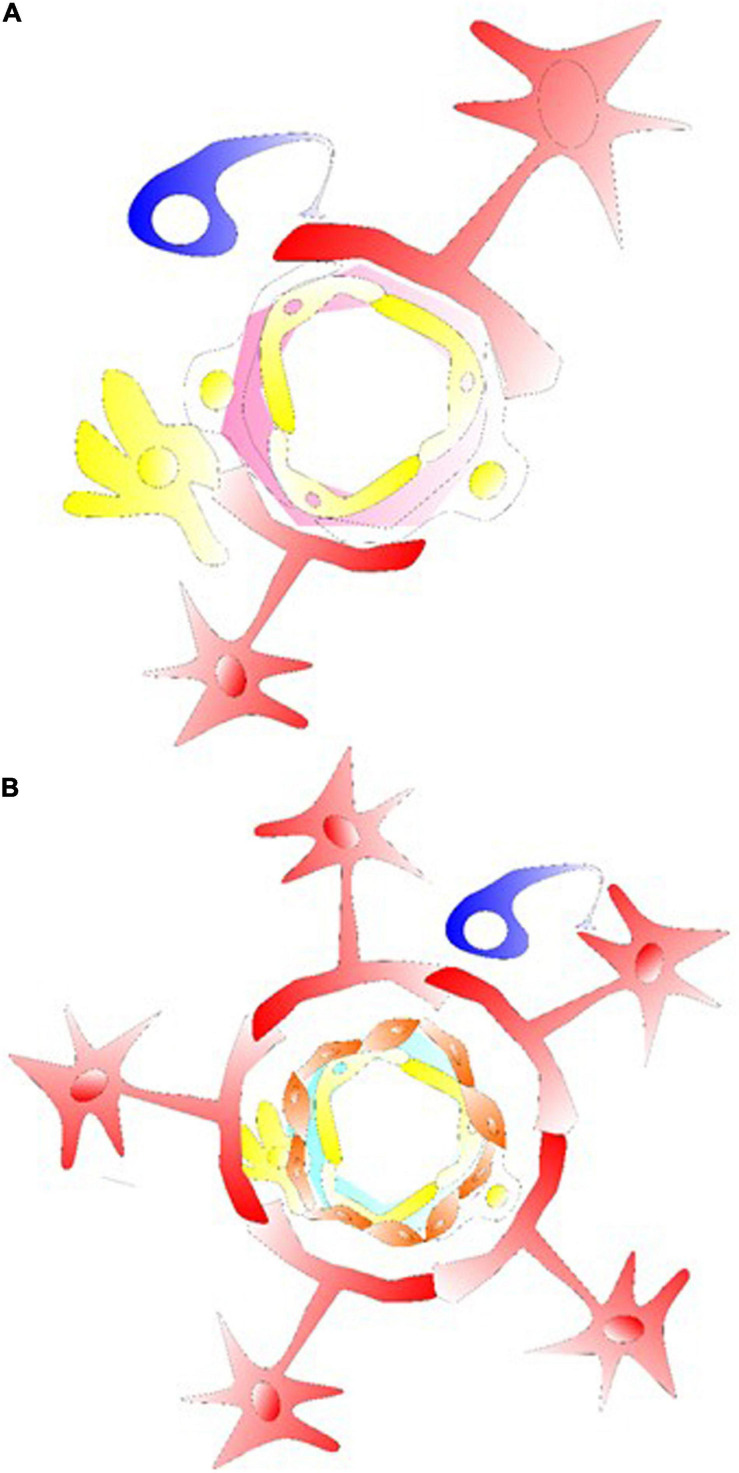
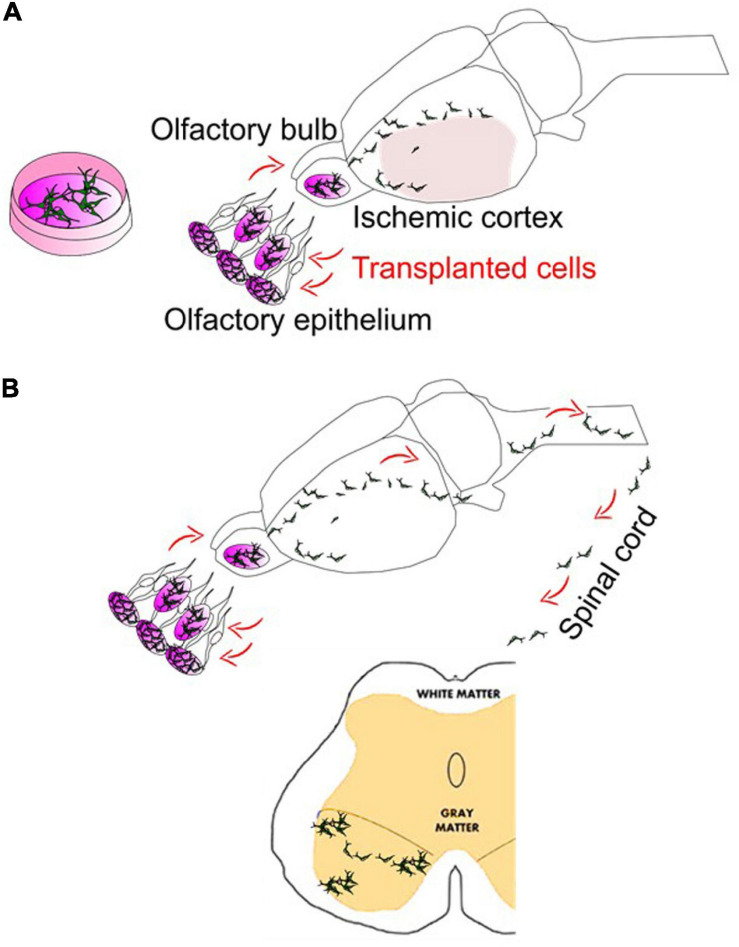
Neurodevelopmental and neurodegenerative diseases (NDDs) with severe neurological/psychiatric symptoms, such as cerebrovascular pathology in AD, CAA, and chronic stroke, have brought greater attention with their incidence and prevalence having markedly increased over the past few years. Causes of the significant neuropathologies, especially those observed in neurological diseases in the CNS, are commonly believed to involve multiple factors such as an age, a total environment, genetics, and an immunity contributing to their progression, neuronal, and vascular injuries. We primarily focused on the studies of glial involvement/dysfunction in part with the blood-brain barrier (BBB) and the neurovascular unit (NVU) changes, and the vascular mechanisms, which have been both suggested as critical roles in chronic stroke and many other NDDs. It has been noted that glial cells including astrocytes (which outnumber other cell types in the CNS) essentially contribute more to the BBB integrity, extracellular homeostasis, neurotransmitter release, regulation of neurogenic niches in response to neuroinflammatory stimulus, and synaptic plasticity. In a recent study for NDDs utilizing cellular and molecular biology and genetic and pharmacological tools, the role of reactive astrocytes (RACs) and gliosis was demonstrated, able to trigger pathophysiological/psychopathological detrimental changes during the disease progression. We speculate, in particular, the BBB, the NVU, and changes of the astrocytes (potentially different populations from the RACs) not only interfere with neuronal development and synaptogenesis, but also generate oxidative damages, contribute to beta-amyloid clearances and disrupted vasculature, as well as lead to neuroinflammatory disorders. During the past several decades, stem cell therapy has been investigated with a research focus to target related neuro-/vascular pathologies (cell replacement and repair) and neurological/psychiatric symptoms (paracrine protection and homeostasis). Evidence shows that transplantation of neurogenic or vasculogenic cells could be achieved to pursue differentiation and maturation within the diseased brains as expected. It would be hoped that, via regulating functions of astrocytes, astrocytic involvement, and modulation of the BBB, the NVU and astrocytes should be among major targets for therapeutics against NDDs pathogenesis by drug and cell-based therapies. The non-invasive strategies in combination with stem cell transplantation such as the well-tested intranasal deliveries for drug and stem cells by our and many other groups show great translational potentials in NDDs. Neuroimaging and clinically relevant analyzing tools need to be evaluated in various NDDs brains.
具有严重神经/精神症状的神经发育和神经退行性疾病(NDDs),如阿尔茨海默病(AD)、脑淀粉样血管病(CAA)和慢性中风中的脑血管病变,在过去几年中其发病率和患病率显著增加,已引起了更多关注。人们普遍认为,这些严重神经病理学的病因,尤其是在中枢神经系统(CNS)神经疾病中观察到的病因,涉及多种因素,如年龄、整体环境、遗传和免疫,这些因素会促进疾病进展、导致神经元和血管损伤。我们主要关注神经胶质细胞参与/功能障碍的研究,部分涉及血脑屏障(BBB)和神经血管单元(NVU)的变化以及血管机制,这些在慢性中风和许多其他NDDs中都被认为起着关键作用。值得注意的是,包括星形胶质细胞(在中枢神经系统中数量超过其他细胞类型)在内的神经胶质细胞对血脑屏障的完整性、细胞外稳态、神经递质释放、响应神经炎症刺激对神经源性微环境的调节以及突触可塑性起着至关重要的作用。在最近一项利用细胞和分子生物学以及遗传和药理学工具对NDDs进行的研究中,证实了反应性星形胶质细胞(RACs)和胶质增生的作用,它们能够在疾病进展过程中引发病理生理/精神病理方面的有害变化。我们特别推测,血脑屏障、神经血管单元以及星形胶质细胞的变化(可能与反应性星形胶质细胞不同的群体)不仅会干扰神经元发育和突触形成,还会产生氧化损伤、促进β-淀粉样蛋白清除和破坏血管系统,以及导致神经炎症紊乱。在过去几十年中,人们一直在研究干细胞疗法,其研究重点是针对相关的神经/血管病理学(细胞替代和修复)以及神经/精神症状(旁分泌保护和稳态)。有证据表明,可以实现神经源性或血管源性细胞的移植,使其在患病大脑中按预期进行分化和成熟。人们希望,通过调节星形胶质细胞的功能、星形胶质细胞的参与以及对血脑屏障、神经血管单元和星形胶质细胞的调节,它们应成为药物和基于细胞的疗法对抗NDDs发病机制的主要治疗靶点。我们和许多其他团队对药物和干细胞进行的经过充分测试的鼻内给药等与干细胞移植相结合的非侵入性策略,在NDDs中显示出巨大的转化潜力。需要在各种NDDs大脑中评估神经影像学和临床相关分析工具。