Abramavicius Silvijus, Petersen Asbjørn G, Renaltan Nirthika S, Prat-Duran Judit, Torregrossa Roberta, Stankevicius Edgaras, Whiteman Matthew, Simonsen Ulf
Department of Biomedicine, Pulmonary and Cardiovascular Pharmacology, Aarhus University, Aarhus, Denmark.
Institute of Physiology and Pharmacology, Lithuanian University of Health Sciences, Kaunas, Lithuania.
Front Pharmacol. 2021 Mar 26;12:613989. doi: 10.3389/fphar.2021.613989. eCollection 2021.
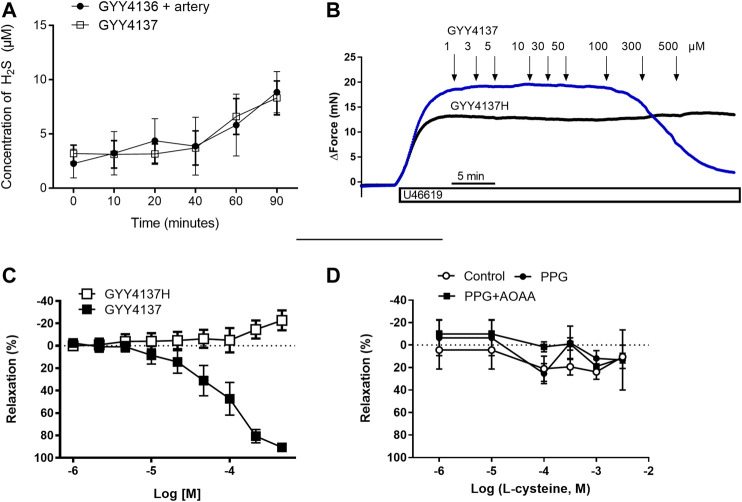
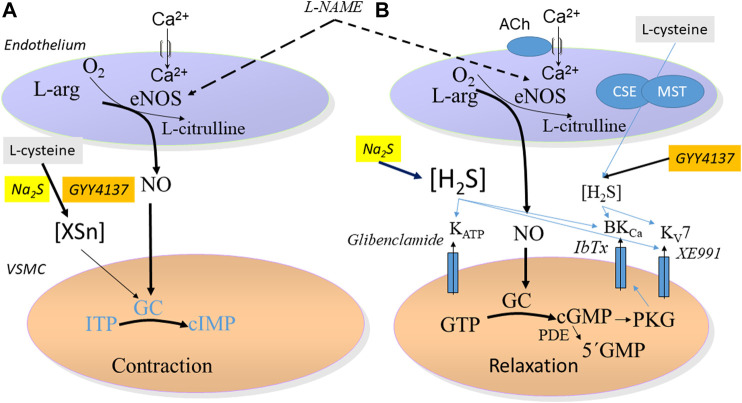
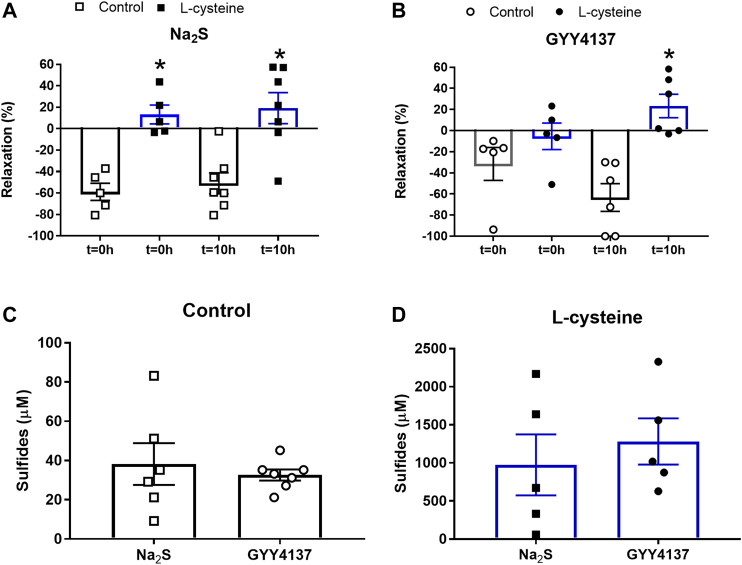
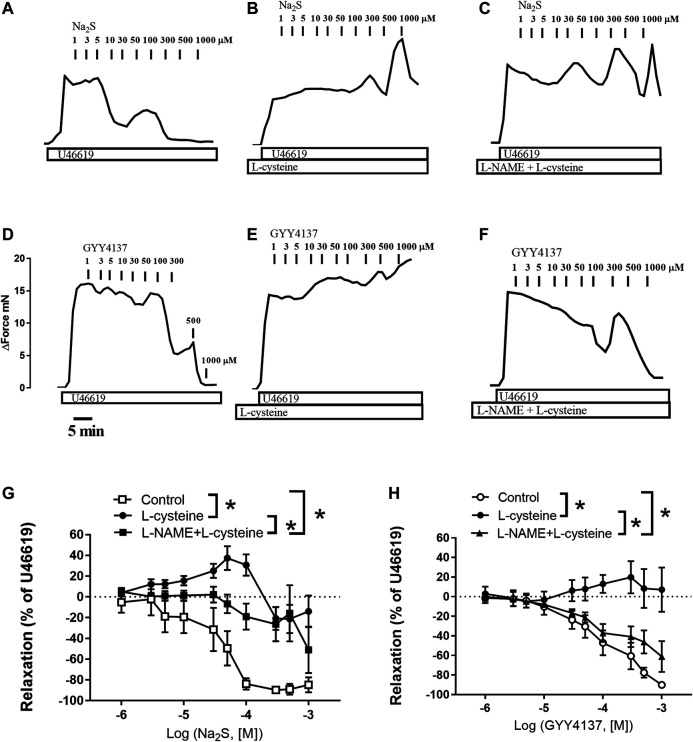
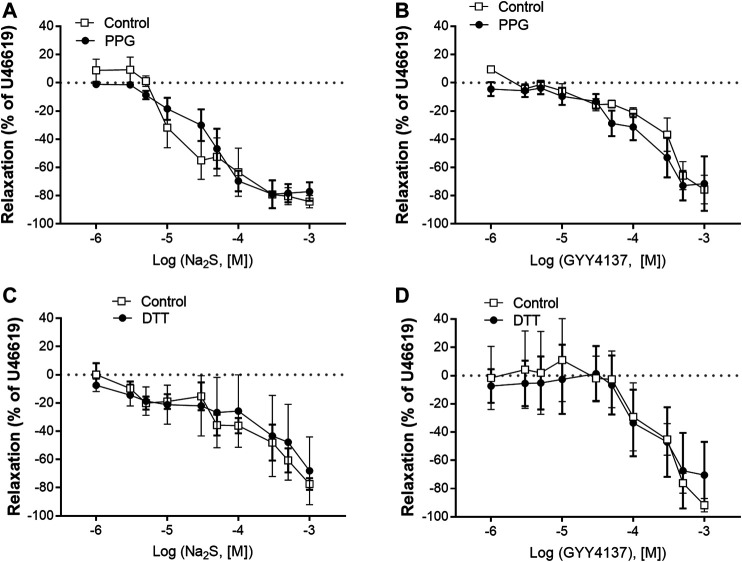
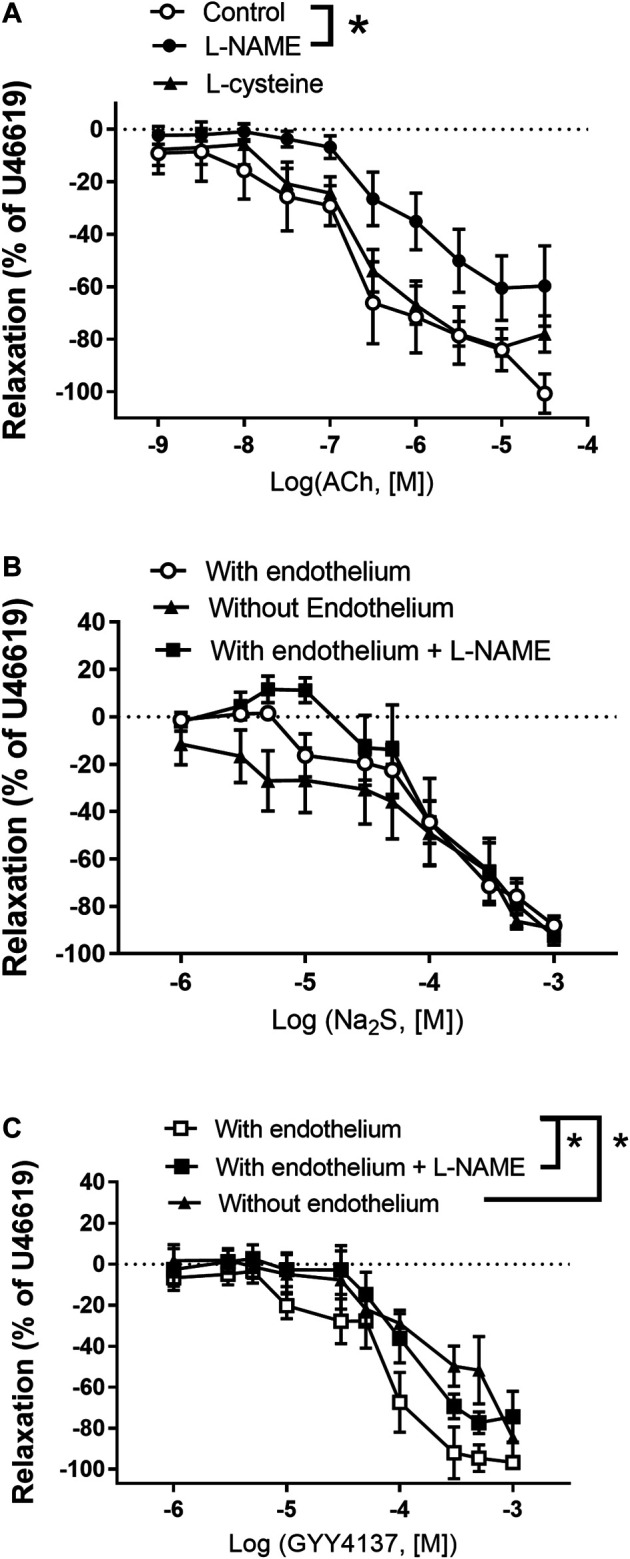
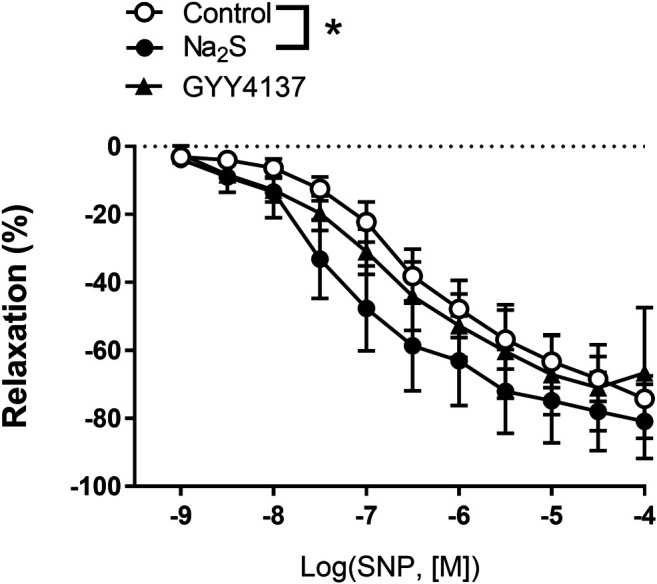
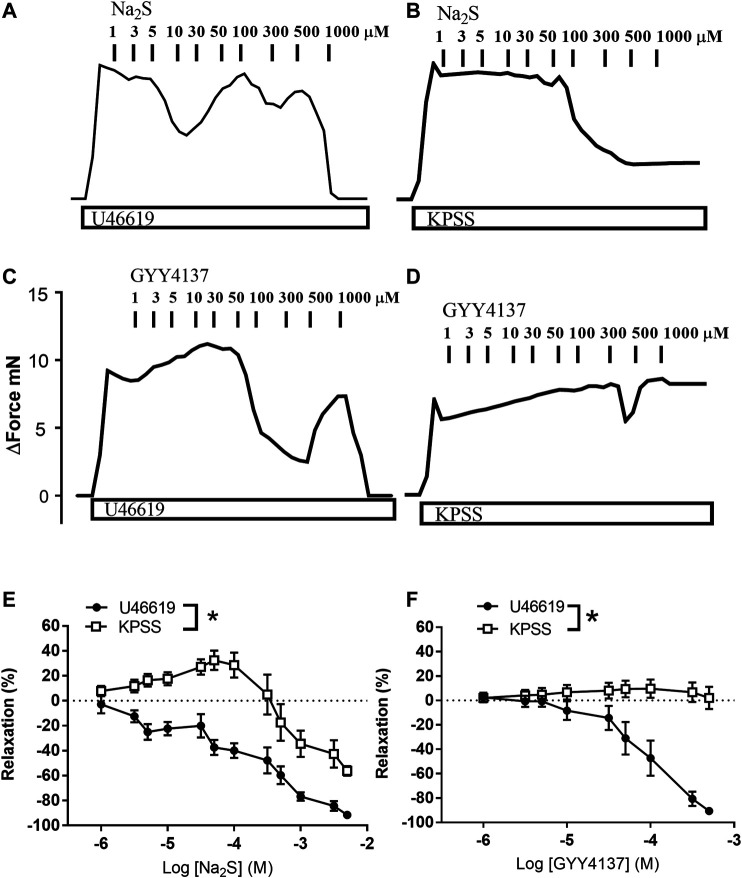
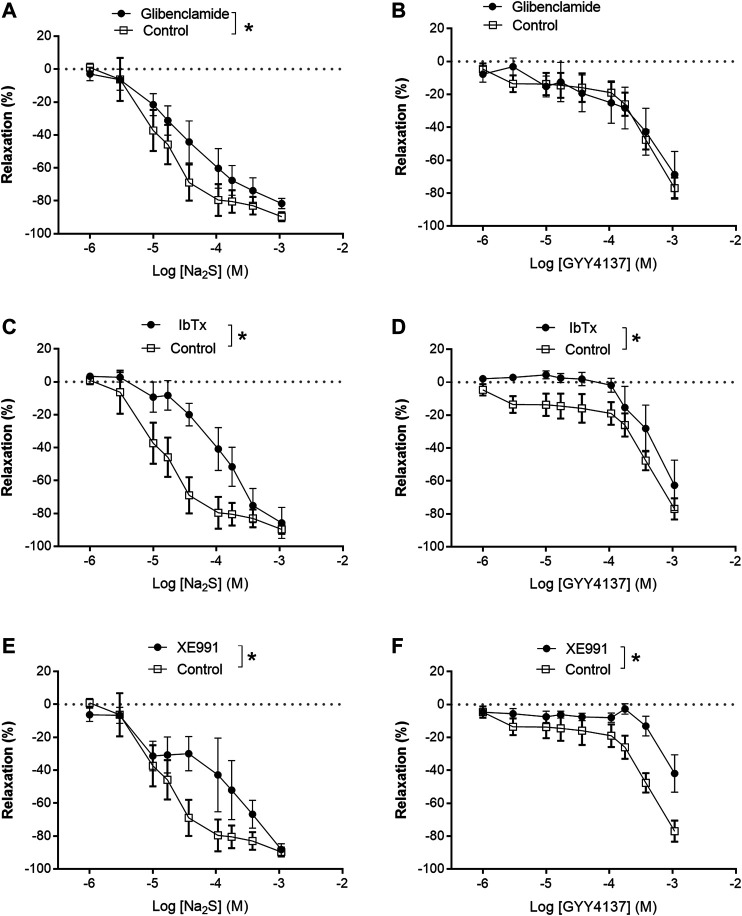
Donors of HS may be beneficial in treating cardiovascular diseases where the plasma levels of HS are decreased. Therefore, we investigated the mechanisms involved in relaxation of small arteries induced by GYY4137 [(4-methoxyphenyl)-morpholin-4-yl-sulfanylidene-sulfido-λ5-phosphane;morpholin-4-ium], which is considered a slow-releasing HS donor. Sulfides were measured by use of 5,5'-dithiobis-(2-nitro benzoic acid), and small rat mesenteric arteries with internal diameters of 200-250 µm were mounted in microvascular myographs for isometric tension recordings. GYY4137 produced similar low levels of sulfides in the absence and the presence of arteries. In U46619-contracted small mesenteric arteries, GYY4137 (10-10 M) induced concentration-dependent relaxations, while a synthetic, sulfur-free, GYY4137 did not change the vascular tone. L-cysteine (10-10 M) induced only small relaxations reaching 24 ± 6% at 10 M. Premixing L-cysteine (10 M) with NaS and GYY4137 decreased NaS relaxation and abolished GYY4137 relaxation, an effect prevented by an nitric oxide (NO) synthase inhibitor, L-NAME (N-nitro-L-arginine methyl ester). In arteries without endothelium or in the presence of L-NAME, relaxation curves for GYY4137 were rightward shifted. High extracellular K concentrations decreased NaS and abolished GYY4137 relaxation suggesting potassium channel-independent mechanisms are also involved NaS relaxation while potassium channel activation is pivotal for GYY4137 relaxation in small arteries. Blockers of large-conductance calcium-activated (BK) and voltage-gated type 7 (K7) potassium channels also inhibited GYY4137 relaxations. The present findings suggest that L-cysteine by reaction with NaS and GYY4137 and formation of sulfides, inhibits relaxations by these compounds. The low rate of release of HS species from GYY4137 is reflected by the different sensitivity of these relaxations towards high K concentration and potassium channel blockers compared with NaS. The perspective is that the rate of release of sulfides plays an important for the effects of HS salt vs. donors in small arteries, and hence for a beneficial effect of GYY4137 for treatment of cardiovascular disease.
在血浆中硫酸乙酰肝素(HS)水平降低的心血管疾病治疗中,HS供体可能有益。因此,我们研究了GYY4137[(4-甲氧基苯基)-吗啉-4-基-硫亚基-硫代-λ5-膦;吗啉-4-鎓]诱导小动脉舒张的机制,GYY4137被认为是一种缓释HS供体。使用5,5'-二硫代双(2-硝基苯甲酸)测量硫化物,将内径为200-250μm的大鼠肠系膜小动脉安装在微血管肌动描记器中进行等长张力记录。在有无动脉存在的情况下,GYY4137产生的硫化物水平相似。在U46619收缩的肠系膜小动脉中,GYY4137(10-10M)诱导浓度依赖性舒张,而一种合成的、无硫的GYY4137不改变血管张力。L-半胱氨酸(10-10M)在10M时仅诱导小幅度舒张,达到24±6%。将L-半胱氨酸(10M)与NaS和GYY4137预混合可降低NaS舒张并消除GYY4137舒张,一氧化氮(NO)合酶抑制剂L-NAME(N-硝基-L-精氨酸甲酯)可阻止这种效应。在无内皮的动脉或存在L-NAME的情况下,GYY4137的舒张曲线向右移动。高细胞外钾浓度降低NaS舒张并消除GYY4137舒张,提示钾通道非依赖性机制也参与NaS舒张,而钾通道激活对小动脉中GYY4137舒张至关重要。大电导钙激活(BK)和电压门控7型(K7)钾通道阻滞剂也抑制GYY4137舒张。目前的研究结果表明,L-半胱氨酸与NaS和GYY4137反应并形成硫化物,可抑制这些化合物的舒张作用。与NaS相比,这些舒张对高钾浓度和钾通道阻滞剂的不同敏感性反映了GYY4137释放HS的速率较低。研究观点是,硫化物的释放速率对HS盐与供体在小动脉中的作用很重要,因此对GYY4137治疗心血管疾病的有益作用也很重要。