University of Strathclyde, Glasgow, UK.
Consulting Geologist, Panama, Panama.
Environ Geochem Health. 2021 Oct;43(10):4265-4282. doi: 10.1007/s10653-021-00898-y. Epub 2021 Apr 11.
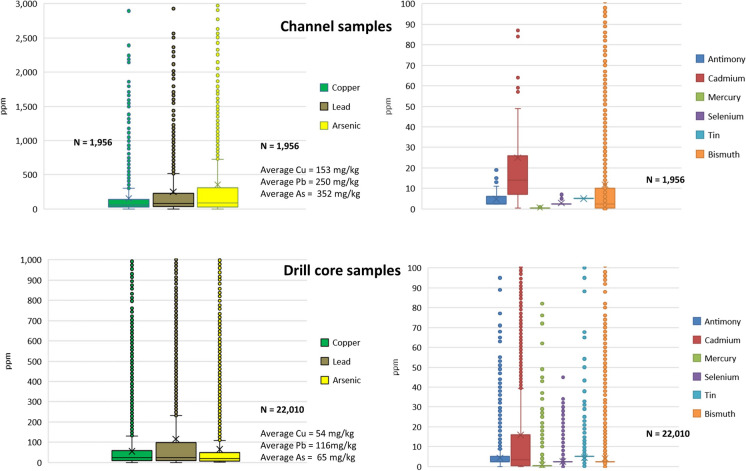
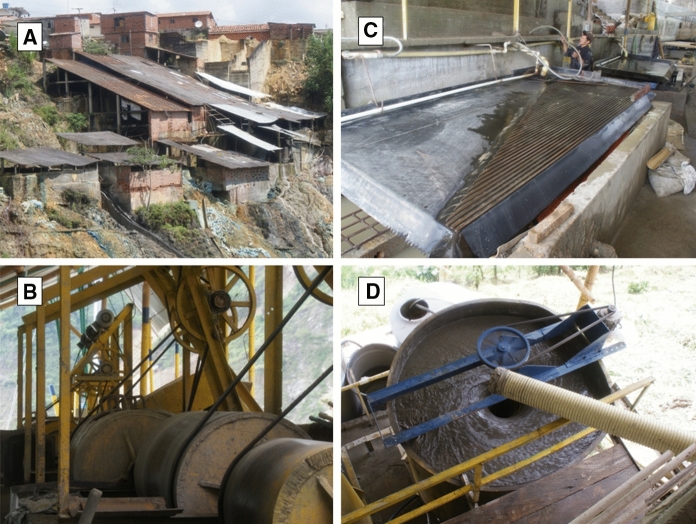
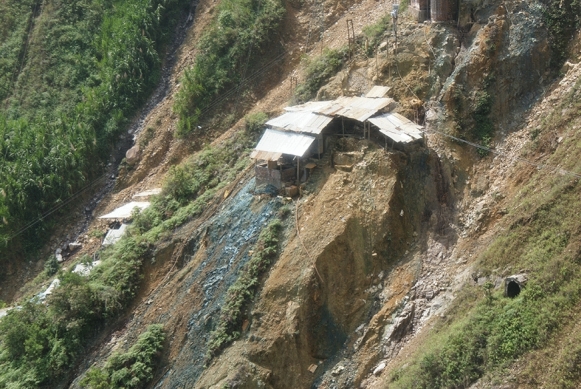
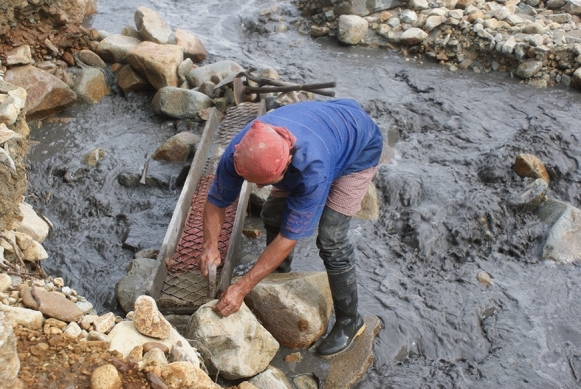
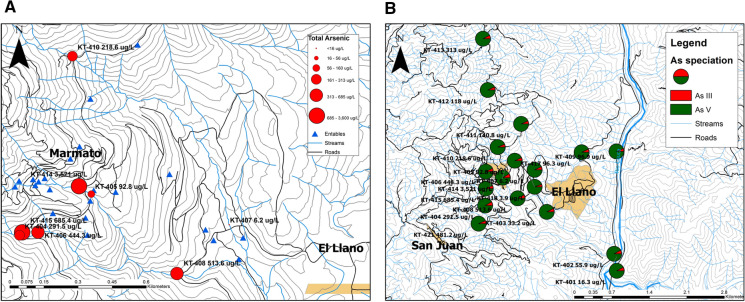
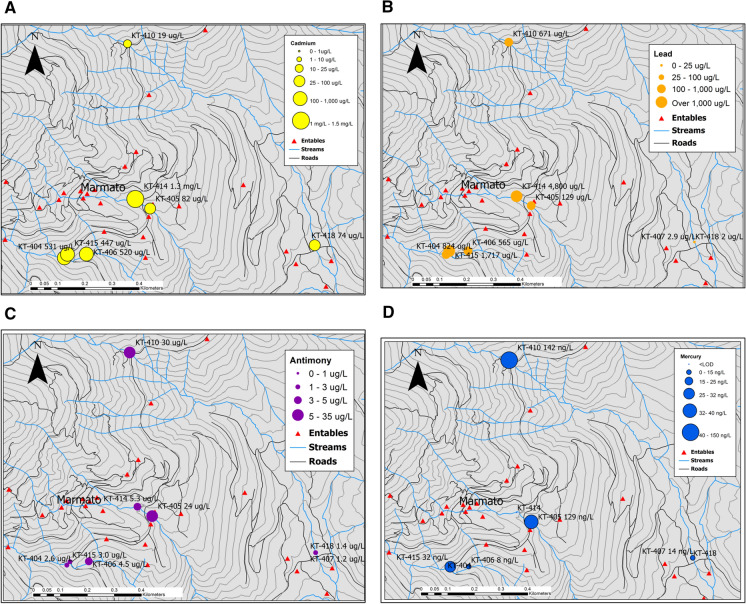
Marmato, Colombia, has been an important centre of gold mining since before the first Spanish colonizers arrived in 1536. The Marmato deposit is hosted in a dacite and andesite porphyry stock as sheeted sulphide-rich veinlet systems. The district is currently experiencing a surge in both major mining projects and artisanal mining, driven by sustained high gold prices. Ore from small-scale and artisanal gold mining is processed in numerous small mills (entables) around Marmato, which impact surface water quality through the discharge of milled waste rock slurry, highly alkaline cyanide-treated effluent, and high dissolved metal loads. To investigate the impact of artisanal mining and ore processing, water samples were collected in January 2012 from streams around Marmato. The average dissolved metal concentrations in impacted streams were Zn, 78 mg L; Pb, 0.43 mg L; Cu, 403 µg L Cd, 255 µg L; As, 235 µg L; Ni, 67 µg L; Co, 55 µg L; Sb, 7 µg L; and Hg, 42 ng L, exceeding World Health Organization drinking water guidelines. In addition, arsenic speciation was conducted in-situ and indicated that 91-95% of inorganic arsenic species is in the form of As(V). Spatial analysis of the data suggests that entables processing ore for artisanal miners are the main contributor to water pollution, with high sediment loads, alkalinity and elevated concentrations of dissolved arsenic, cadmium, mercury and lead, caused by the processing of gold-bearing sulphides in the entables. Geochemical data from surface water were compared to a comprehensive data set of whole rock analyses from drill core and channel samples from the deposit, indicating that the deposit is significantly enriched in gold, silver, lead, zinc, arsenic, antimony, and cadmium compared to crustal averages, which is reflected in the surface water geochemistry. However, elevated mercury levels in surface water cannot be explained by enrichment of mercury in the deposit and strongly suggest that mercury is being added to concentrates during ore processing to amalgamate fine gold.
哥伦比亚的马马托一直是金矿开采的重要中心,早在 1536 年第一批西班牙殖民者到来之前就已经如此。马马托矿床赋存于英安质和安山质斑岩库中,呈片状富硫化物细脉系统。由于持续的高金价,该地区目前正在经历大型采矿项目和手工采矿的激增。来自小规模和手工采金的矿石在马马托周围的众多小型磨坊(entables)中加工,这些磨坊通过排放磨碎的废石泥浆、高碱性氰化物处理的废水和高溶解金属负荷来影响地表水水质。为了调查手工采矿和矿石加工的影响,于 2012 年 1 月从马马托周围的溪流中采集了水样。受影响溪流中平均溶解金属浓度为 Zn,78mg/L;Pb,0.43mg/L;Cu,403μg/L;Cd,255μg/L;As,235μg/L;Ni,67μg/L;Co,55μg/L;Sb,7μg/L;Hg,42ng/L,超过世界卫生组织饮用水指南。此外,还进行了砷形态分析,表明 91-95%的无机砷形态以 As(V)的形式存在。数据分析的空间分析表明,entables 处理矿石用于手工矿工是水污染的主要贡献者,由于 entables 中含硫化物的金矿石加工,导致沉积物负荷高、碱性高和溶解砷、镉、汞和铅浓度升高。地表水的地球化学数据与矿床钻孔岩心和河道样本的全岩分析综合数据集进行了比较,表明与地壳平均值相比,矿床中明显富含金、银、铅、锌、砷、锑和镉,这反映在地表水中的地球化学特征中。然而,地表水汞含量升高不能用矿床中汞的富集来解释,这强烈表明在矿石加工过程中汞被添加到精矿中以合并细金。