Department of Orthopedics, Hand Surgery Division, Balgrist University Hospital Zurich, Switzerland.
J Hand Surg Eur Vol. 2021 Jul;46(6):626-631. doi: 10.1177/17531934211004459. Epub 2021 Apr 12.
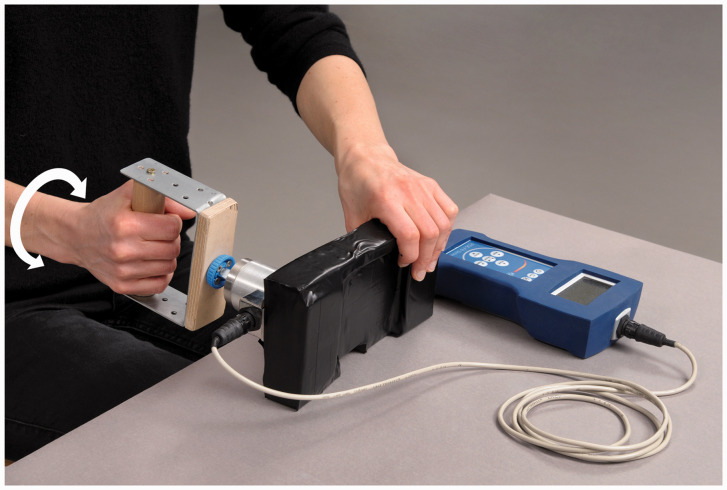
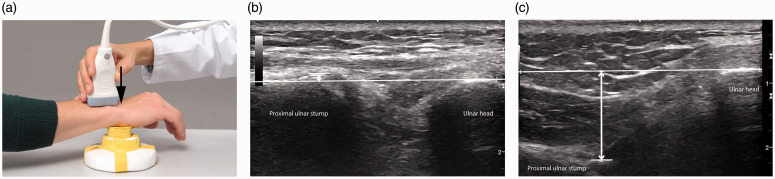
The Sauvé-Kapandji procedure is an established treatment option for distal radioulnar joint dysfunction. We retrospectively analysed 36 patients following Sauvé-Kapandji procedure between 1997 and 2013. Fifteen patients were available for a follow-up after a mean of 13 years (range 6 to 23). Six patients needed revision surgery because of ulnar stump instability. Radiographs and sonography were performed to quantify the instability of the proximal ulnar stump. These showed a radioulnar convergence of 8 mm without weight and 2 mm while lifting 1 kg. Sonographically, the proximal ulnar stump dislocated by 8 mm to the volar side while applying pressure to the palm, compared with 4 mm on the contralateral side. Sonographically measured ulnar stump instability showed a positive strong correlation with the Disabilities of the Arm, Shoulder and Hand questionnaire and Patient-Reported Wrist Evaluations and a negative strong correlation with grip strength and supination torque. Because of the high incidence of revision surgery due to instability of the proximal ulnar stump, we restrict the use of the Sauvé-Kapandji procedure only to very selected cases. IV.
Sauvé-Kapandji 手术是治疗桡尺远侧关节功能障碍的一种成熟治疗选择。我们回顾性分析了 1997 年至 2013 年间接受 Sauvé-Kapandji 手术的 36 例患者。15 例患者在平均 13 年后(6 至 23 年)获得随访。6 例患者因尺骨残端不稳定而需要进行翻修手术。影像学和超声检查用于定量近端尺骨残端的不稳定性。结果显示,在不承重的情况下,桡尺骨夹角为 8mm,在提起 1kg 重物时为 2mm。超声检查显示,与对侧相比,当手掌受压时,尺骨残端向掌侧移位 8mm。超声测量的尺骨残端不稳定性与上肢功能障碍问卷(Disabilities of the Arm, Shoulder and Hand questionnaire)、患者报告腕关节评估(Patient-Reported Wrist Evaluations)呈正强相关,与握力和旋后扭矩呈负强相关。由于近端尺骨残端不稳定导致翻修手术的发生率较高,我们仅将 Sauvé-Kapandji 手术限制用于非常特定的病例。IV 级。