Department of Anesthesiology, Pharmacology, Physiology & Neuroscience, Rutgers, The State University of New Jersey, New Jersey Medical School, Newark, NJ, 07103, USA.
Department of Anatomy, School of Medicine, Sun Yat-sen University, Guangzhou, Guangdong, 510080, China.
Transl Psychiatry. 2021 Apr 14;11(1):220. doi: 10.1038/s41398-021-01337-3.
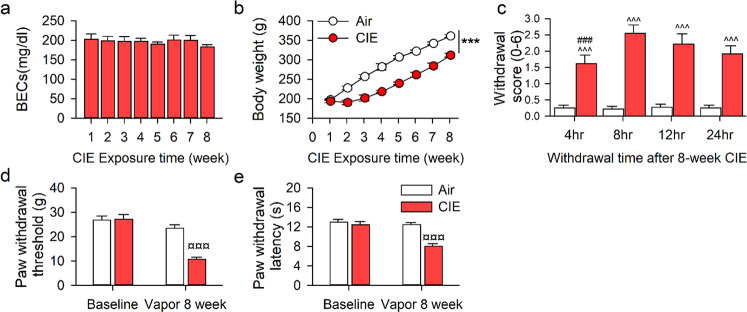
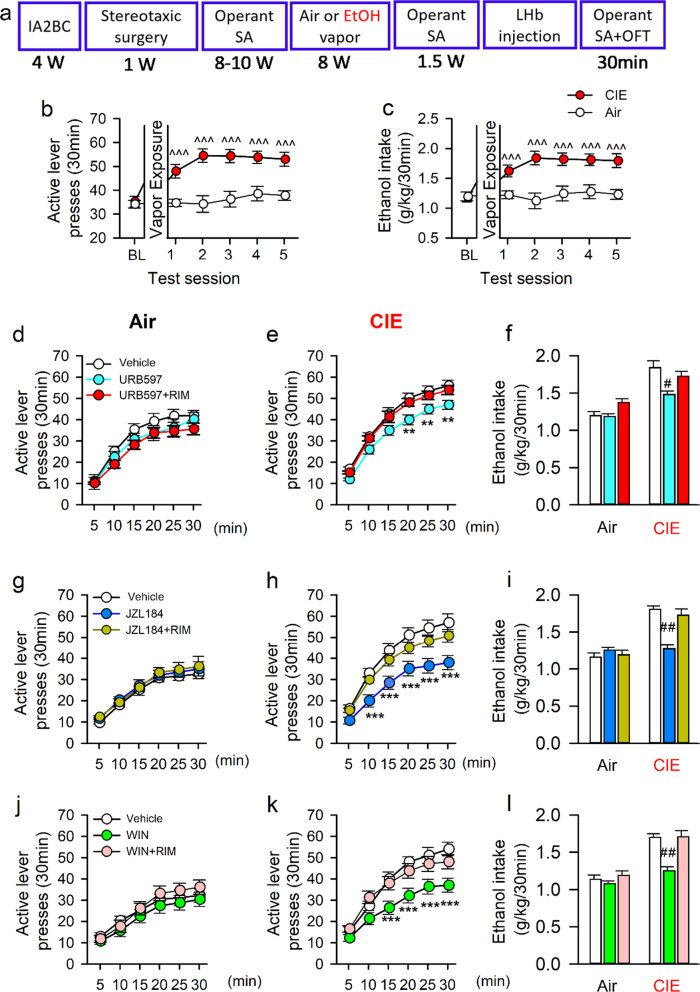
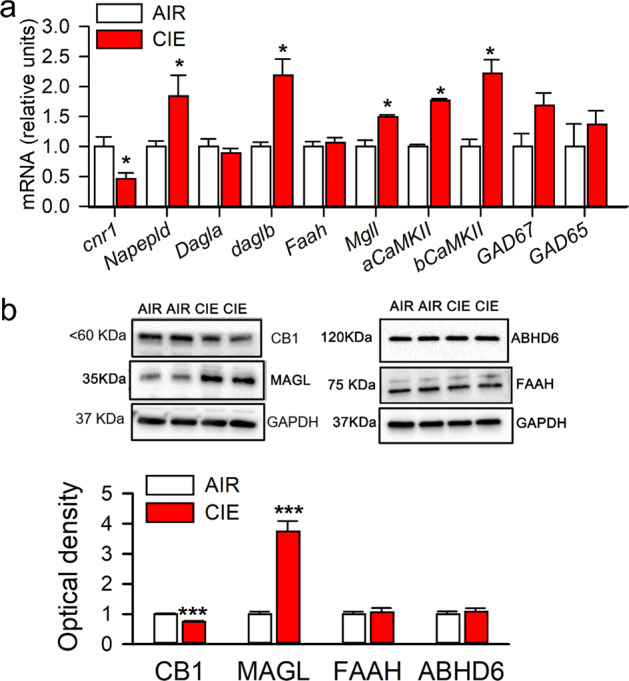
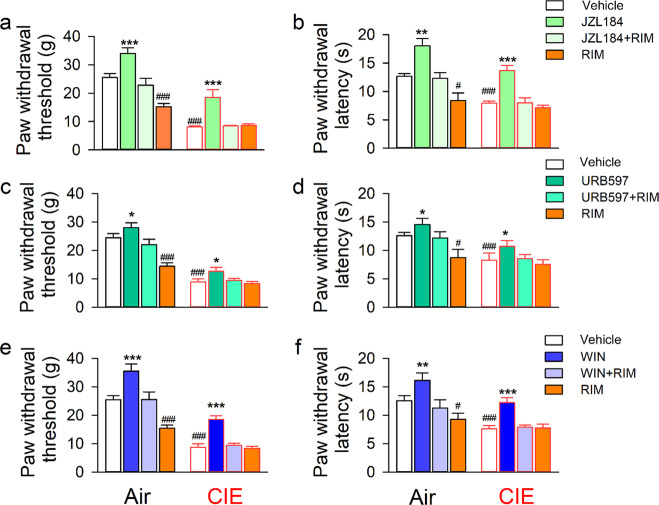
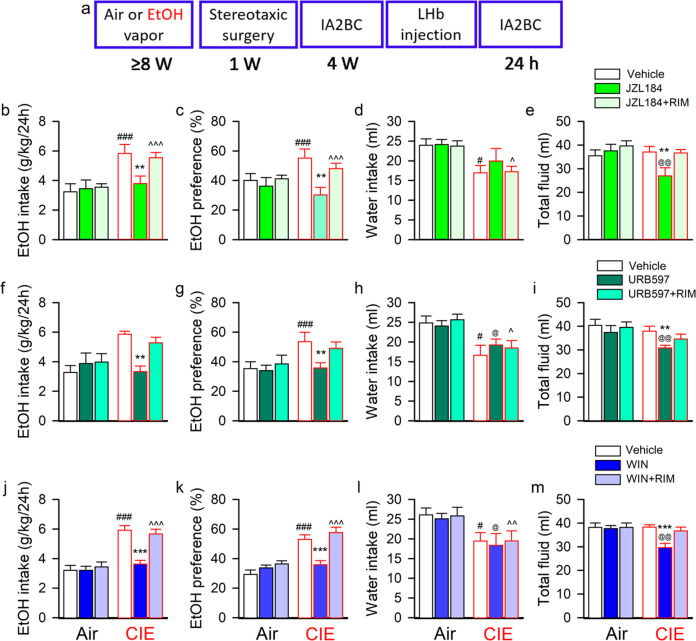
Hyperalgesia, which often occurs in people suffering from alcohol use disorder, may drive excessive drinking and relapse. Emerging evidence suggests that the lateral habenula (LHb) may play a significant role in this condition. Previous research suggests that endocannabinoid signaling (eCBs) is involved in drug addiction and pain, and that the LHb contains core components of the eCBs machinery. We report here our findings in rats subjected to chronic ethanol vapor exposure. We detected a substantial increase in endocannabinoid-related genes, including Mgll and Daglb mRNA levels, as well as monoacylglycerol lipase (MAGL) protein levels, as well as a decrease in Cnr1 mRNA and type-1 cannabinoid receptor (CB1R) protein levels, in the LHb of ethanol-exposed rats. Also, rats withdrawing from ethanol exposure displayed hypersensitivity to mechanical and thermal nociceptive stimuli. Conversely, intra-LHb injection of the MAGL inhibitor JZL184, the fatty acid amide hydrolase inhibitor URB597, or the CB1R agonist WIN55,212-2 produced an analgesic effect, regardless of ethanol or air exposure history, implying that alcohol exposure does not change eCB pain responses. Intra-LHb infusion of the CB1R inverse agonist rimonabant eliminated the analgesic effect of these chemicals. Rimonabant alone elicited hyperalgesia in the air-, but not ethanol-exposed animals. Moreover, intra-LHb JZL184, URB597, or WIN55,212-2 reduced ethanol consumption in both homecages and operant chambers in rats exposed to ethanol vapor but not air. These findings suggest that LHb eCBs play a pivotal role in nociception and facilitating LHb eCBs may attenuate pain in drinkers.
痛觉过敏,常发生在患有酒精使用障碍的人群中,可能导致过度饮酒和复发。新出现的证据表明,外侧缰核(LHb)在这种情况下可能起着重要作用。先前的研究表明,内源性大麻素信号(eCBs)参与药物成瘾和疼痛,而 LHb 包含 eCBs 机械的核心组成部分。我们在这里报告我们在慢性乙醇蒸气暴露的大鼠中的发现。我们检测到内源性大麻素相关基因的大量增加,包括 Mgll 和 Daglb mRNA 水平,以及单酰基甘油脂肪酶(MAGL)蛋白水平,以及 Cnr1 mRNA 和 1 型大麻素受体(CB1R)蛋白水平的降低,在乙醇暴露的大鼠的 LHb 中。此外,从乙醇暴露中戒断的大鼠对机械和热伤害性刺激表现出超敏反应。相反,LHb 内注射 MAGL 抑制剂 JZL184、脂肪酸酰胺水解酶抑制剂 URB597 或 CB1R 激动剂 WIN55,212-2 产生镇痛作用,无论是否有乙醇或空气暴露史,这意味着酒精暴露不会改变 eCB 疼痛反应。LHb 内注射 CB1R 反向激动剂利莫那班消除了这些化学物质的镇痛作用。利莫那班单独在空气暴露的动物中引起痛觉过敏,但在乙醇暴露的动物中没有。此外,LHb 内 JZL184、URB597 或 WIN55,212-2 减少了暴露于乙醇蒸气但未暴露于空气的大鼠在其笼中和操作室中的乙醇消耗。这些发现表明,LHb eCBs 在伤害感受中起着关键作用,促进 LHb eCBs 可能减轻饮酒者的疼痛。