De Nigris Valeria, Prattichizzo Francesco, Iijima Hiroaki, Ceriello Antonio
Institut d'Investigación Biomédiques August Pi i Sunyer, Barcelona, Spain.
IRCCS MultiMedica, Milan, Italy.
Diabetes Metab Syndr Obes. 2021 Apr 6;14:1519-1531. doi: 10.2147/DMSO.S302621. eCollection 2021.
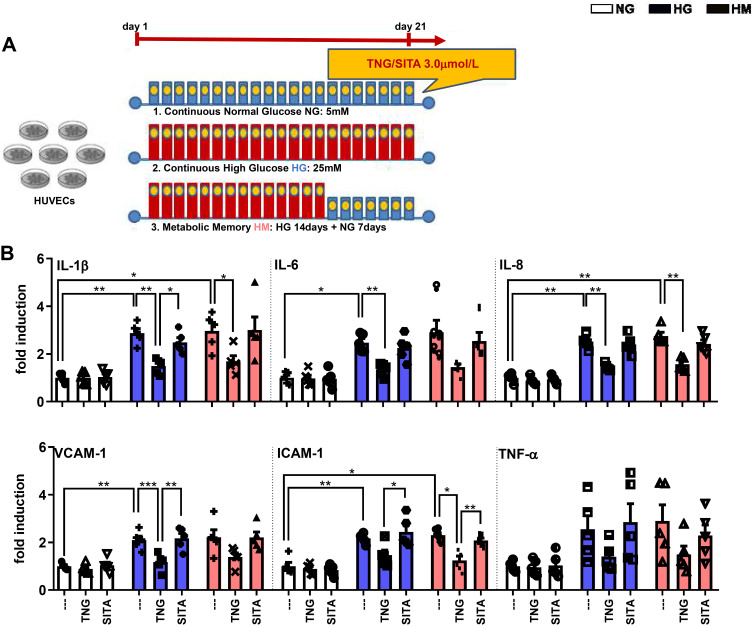
We explored the anti-inflammatory role of the DPP-4 inhibitor teneligliptin, using sitagliptin as comparator, in different in vitro models of low-grade inflammation (LGI), evaluating the hyperglycemia-induced endothelial inflammation, the macrophage polarization, and the endothelium-macrophage interaction.
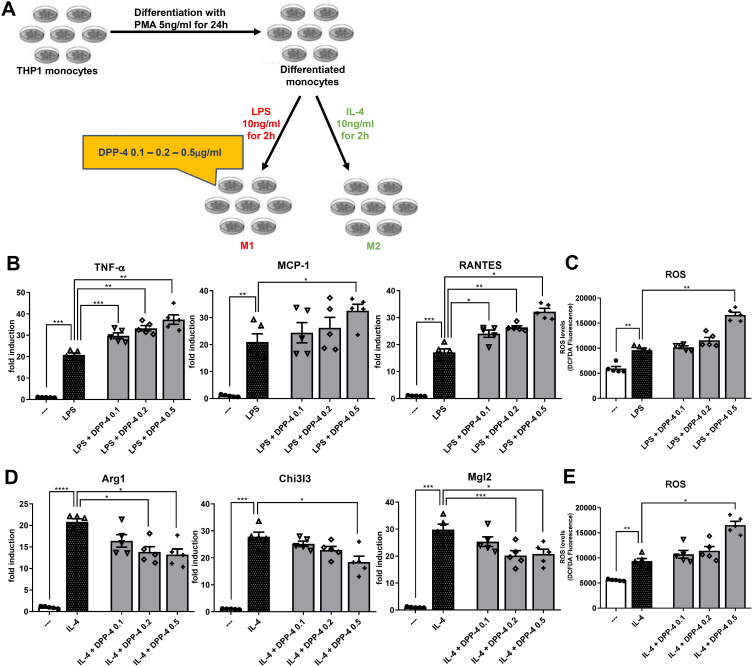
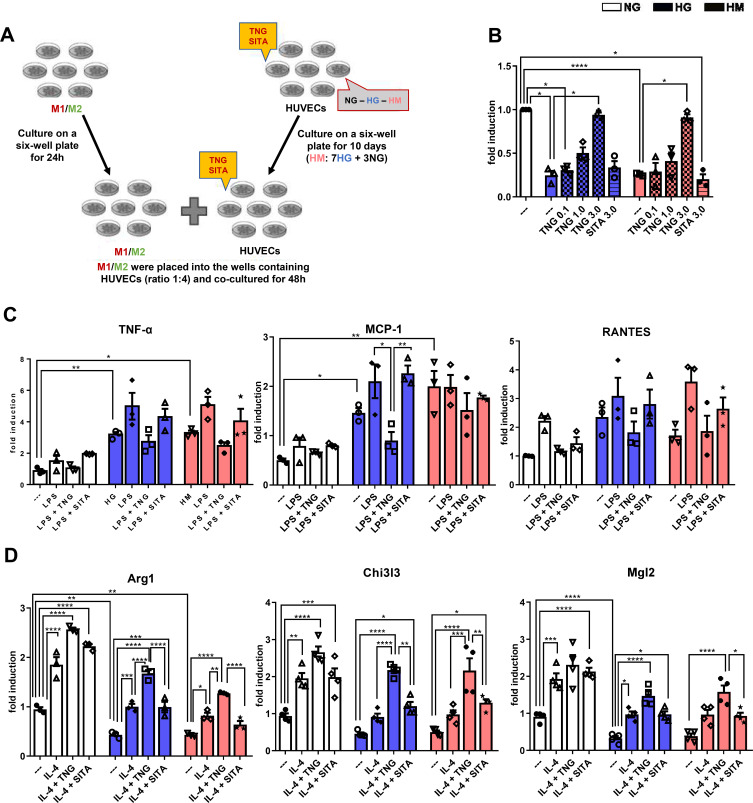
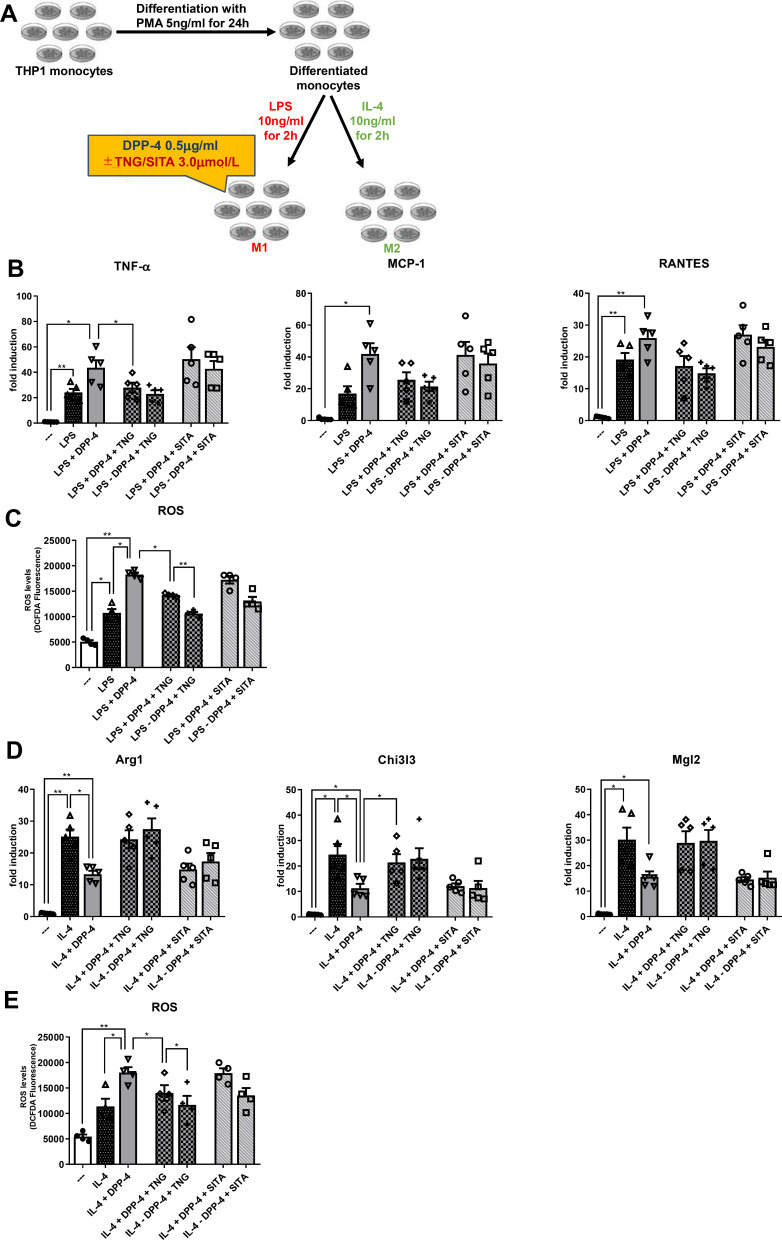
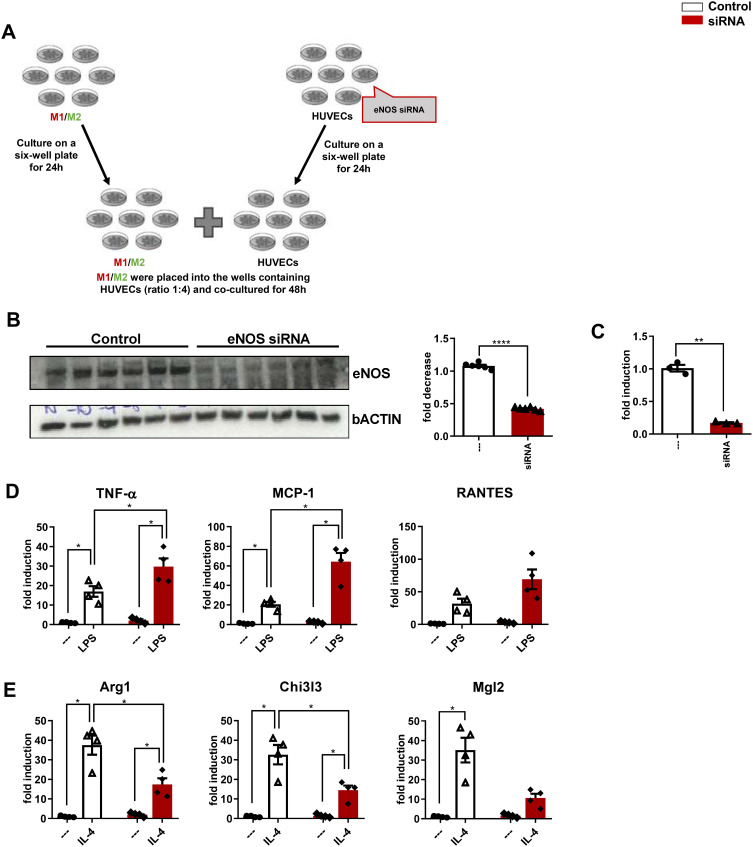
The effects of DPP-4 and its inhibitors on macrophage polarization were evaluated in THP-1 cells by measuring mRNA expression of M1-M2 markers. HUVEC cells were used to analyze the effects of DPP-4 inhibitors on endothelial inflammation under normal and high glucose conditions. To evaluate the link between eNO and M1-M2 polarization, HUVECs were transfected with eNOS siRNA and co-cultured with THP-1 cells. The effects of DPP-4 inhibitors on macrophage polarization and eNO content were evaluated in a co-culture model of differentiated THP-1 cells + HUVECs under normal glucose (NG), high glucose (HG) and high metabolic memory (HM) conditions.
DPP-4 regulated M1/M2 macrophage polarization. Teneligliptin reduced M1 and enhanced M2 macrophage phenotype under DPP-4 stimulation, and attenuated hyperglycemia-induced endothelial inflammation. In THP-1 cells co-cultured with eNOS depleted HUVECs, M1 markers were enhanced, while M2 reduced, indicating an important role of eNO in polarization to M2 phenotype. In the co-culture model with HUVECs exposed to HG and HM, teneligliptin reduced M1 and enhanced M2 population, by increasing eNO levels. The anti-inflammatory effects of sitagliptin were not observed in these LGI models.
Teneligliptin, but not sitagliptin, has anti-inflammatory effects in the various LGI models, by promoting a switch from M1 toward M2 phenotype and by decreasing hyperglycaemia-induced endothelial inflammation, suggesting that effects for LGI are different among DPP-4 inhibitors.
我们以西他列汀作为对照,在不同的低度炎症(LGI)体外模型中探究二肽基肽酶-4(DPP-4)抑制剂替格列汀的抗炎作用,评估高血糖诱导的内皮炎症、巨噬细胞极化以及内皮-巨噬细胞相互作用。
通过测量M1-M2标志物的mRNA表达,在THP-1细胞中评估DPP-4及其抑制剂对巨噬细胞极化的影响。使用人脐静脉内皮细胞(HUVEC)分析DPP-4抑制剂在正常和高糖条件下对内皮炎症的影响。为了评估内皮型一氧化氮合酶(eNO)与M1-M2极化之间的联系,用eNOS小干扰RNA转染HUVEC,并与THP-1细胞共培养。在正常葡萄糖(NG)、高糖(HG)和高代谢记忆(HM)条件下,在分化的THP-1细胞+HUVEC的共培养模型中评估DPP-4抑制剂对巨噬细胞极化和eNO含量的影响。
DPP-4调节M1/M2巨噬细胞极化。替格列汀在DPP-4刺激下减少M1并增强M2巨噬细胞表型,并减轻高血糖诱导的内皮炎症。在与eNOS缺失的HUVEC共培养的THP-1细胞中,M1标志物增强,而M2减少,表明eNO在向M2表型极化中起重要作用。在HUVEC暴露于HG和HM的共培养模型中,替格列汀通过增加eNO水平减少M1并增加M2群体。在这些LGI模型中未观察到西他列汀的抗炎作用。
替格列汀而非西他列汀在各种LGI模型中具有抗炎作用,通过促进从M1向M2表型的转变以及减少高血糖诱导的内皮炎症,表明DPP-4抑制剂对LGI的作用不同。