Department of Biomedical and Chemical Engineering and Sciences, Florida Institute of Technology, Melbourne, FL, USA.
BMC Biol. 2021 Apr 15;19(1):75. doi: 10.1186/s12915-021-01008-1.
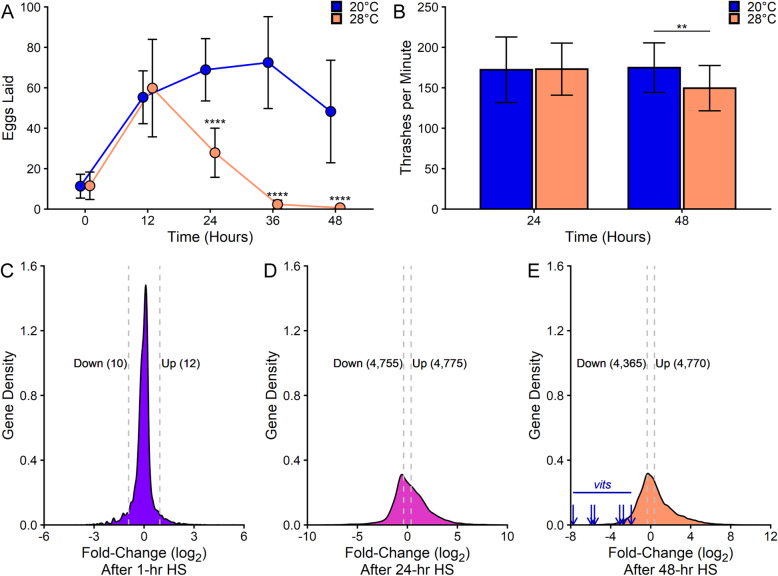
Temperature influences biology at all levels, from altering rates of biochemical reactions to determining sustainability of entire ecosystems. Although extended exposure to elevated temperatures influences organismal phenotypes important for human health, agriculture, and ecology, the molecular mechanisms that drive these responses remain largely unexplored. Prolonged, mild temperature stress (48 h at 28 °C) has been shown to inhibit reproduction in Caenorhabditis elegans without significantly impacting motility or viability.
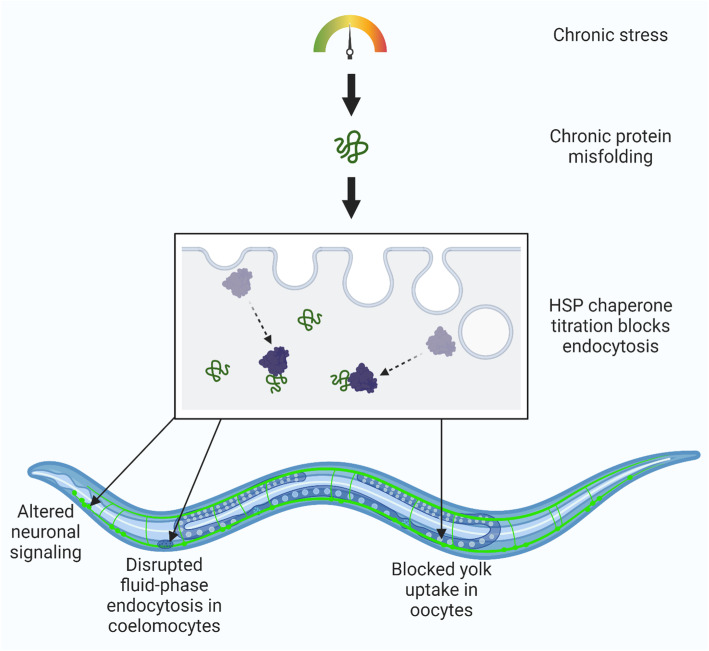
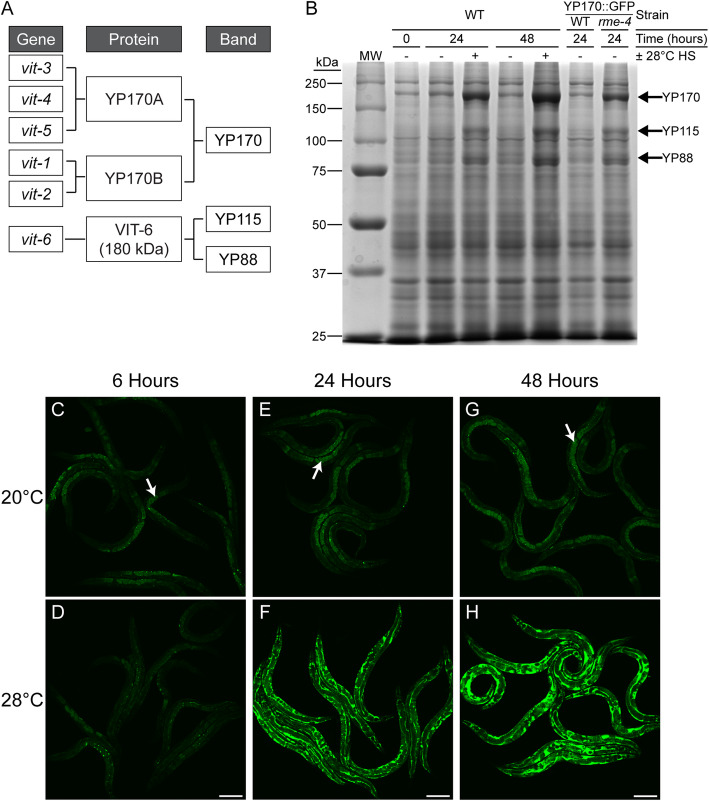
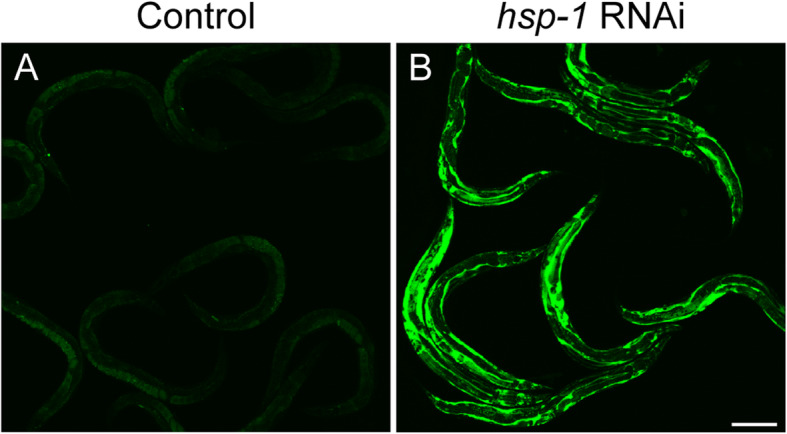
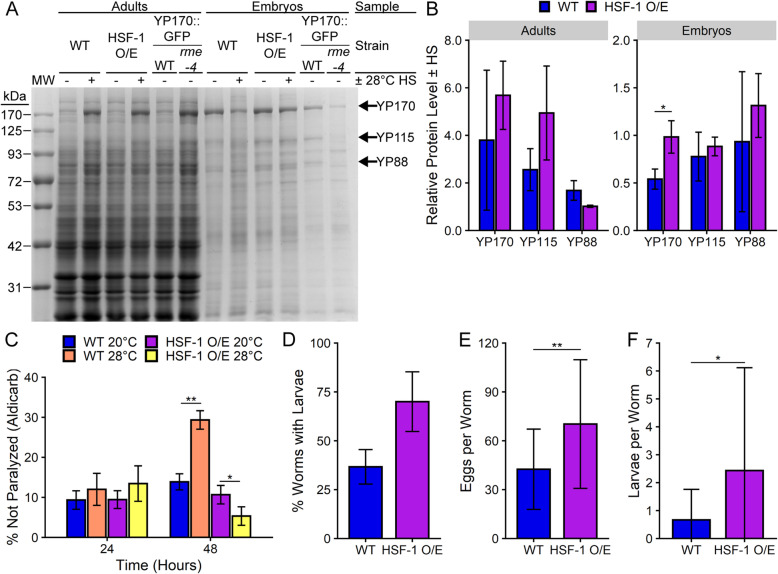
Analysis of molecular responses to chronic stress using RNA-seq uncovers dramatic effects on the transcriptome that are fundamentally distinct from the well-characterized, acute heat shock response (HSR). While a large portion of the genome is differentially expressed ≥ 4-fold after 48 h at 28 °C, the only major class of oogenesis-associated genes affected is the vitellogenin gene family that encodes for yolk proteins (YPs). Whereas YP mRNAs decrease, the proteins accumulate and mislocalize in the pseudocoelomic space as early as 6 h, well before reproduction declines. A trafficking defect in a second, unrelated fluorescent reporter and a decrease in pre-synaptic neuronal signaling indicate that the YP mislocalization is caused by a generalized defect in endocytosis. Molecular chaperones are involved in both endocytosis and refolding damaged proteins. Decreasing levels of the major HSP70 chaperone, HSP-1, causes similar YP trafficking defects in the absence of stress. Conversely, increasing chaperone levels through overexpression of the transcription factor HSF-1 rescues YP trafficking and restores neuronal signaling.
These data implicate chaperone titration during chronic stress as a molecular mechanism contributing to endocytic defects that influence multiple aspects of organismal physiology. Notably, HSF-1 overexpression improves recovery of viable offspring after exposure to stress. These findings provide important molecular insights into understanding organismal responses to temperature stress as well as phenotypes associated with chronic protein misfolding.
温度在各个层面上影响着生物学,从改变生化反应的速率到决定整个生态系统的可持续性。虽然长时间暴露在高温下会影响到对人类健康、农业和生态至关重要的生物体表型,但驱动这些反应的分子机制在很大程度上仍未得到探索。延长的温和温度应激(在 28°C 下持续 48 小时)已被证明会抑制秀丽隐杆线虫的繁殖,而不会显著影响其运动能力或活力。
使用 RNA-seq 分析对慢性应激的分子反应,揭示了对转录组的巨大影响,这些影响与特征明显的急性热休克反应(HSR)截然不同。虽然在 28°C 下持续 48 小时后,基因组的很大一部分表达差异≥4 倍,但受影响的主要卵发生相关基因家族仅为卵黄蛋白基因家族,该家族编码卵黄蛋白(YPs)。尽管 YP mRNAs 减少,但蛋白质在繁殖开始下降之前很早就开始在假体腔空间中积累和错误定位,最早在 6 小时时就可以观察到这种情况。第二个不相关的荧光报告基因的运输缺陷和前突触神经元信号的减少表明,YP 的错误定位是由内吞作用的普遍缺陷引起的。分子伴侣参与内吞作用和重折叠受损蛋白。主要 HSP70 伴侣 HSP-1 的水平降低会在没有应激的情况下导致类似的 YP 运输缺陷。相反,通过过度表达转录因子 HSF-1 增加伴侣蛋白的水平可挽救 YP 运输并恢复神经元信号。
这些数据表明,慢性应激过程中的伴侣蛋白滴定是导致影响生物体生理多个方面的内吞缺陷的分子机制之一。值得注意的是,HSF-1 的过表达可改善暴露于应激后存活后代的恢复。这些发现为理解生物体对温度应激的反应以及与慢性蛋白质错误折叠相关的表型提供了重要的分子见解。