Department of Vascular Surgery and Vascular Medicine, Dupuytren University Hospital, Limoges, France.
CHU Limoges, IRD, U1094 Tropical Neuroepidemiology, Institute of Epidemiology and Tropical Neurology, GEIST, INSERM, Univ. Limoges, Limoges, France.
Sci Rep. 2021 Apr 15;11(1):8296. doi: 10.1038/s41598-021-87862-z.
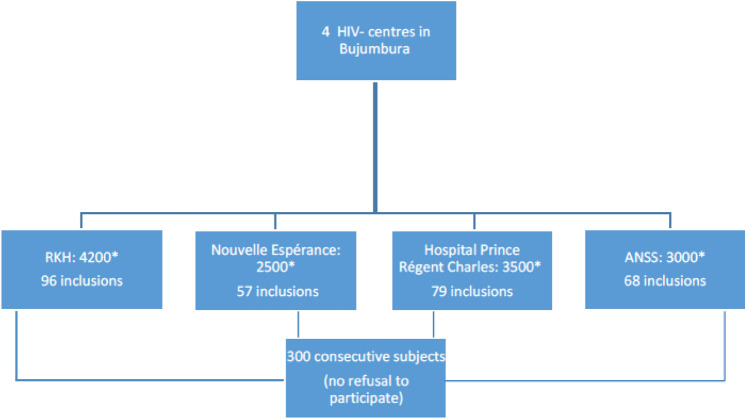
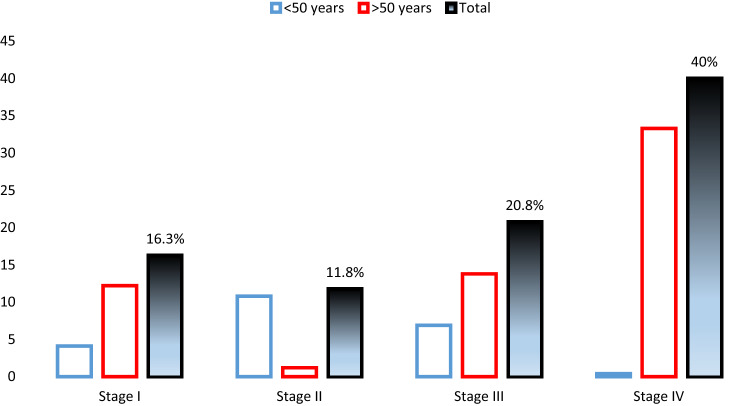
Chronic disease of people living with human immunodeficiency virus (HIV) infection are now approaching those of the general population. Previous, in vitro studies shown that HIV causes arterial injuries resulting in inflammation and atherosclerosis but direct relationship between HIV infection clinical stages and lower extremity arterial disease (LEAD) remain controversial. No study assessed, with an accurate method, both the prevalence of LEAD and the influence of HIV severity on LEAD in HIV outpatients in Central Africa. A cross-sectional study was conducted among 300 HIV-infected outpatients, aged ≥ 40 years in Bujumbura, Burundi. All patients underwent ankle-brachial index (ABI) measurement and LEAD was diagnosed by ABI ≤ 0.9. The prevalence of LEAD was 17.3% (CI 95% 13.2-22.1). The mean age was 49.6 ± 7.1 years. On multivariable analysis, factors associated with LEAD were hypertension (OR = 2.42; 95% CI 1.10-5.80), and stage IV HIV clinical infection (OR = 4.92, 95% CI 1.19-20.36). This is the first study performed on a large HIV population in Central Africa, reporting high LEAD prevalence. It underlines the influence of HIV infection on peripheral atherosclerosis at latest clinical stages and the need for LEAD screening in HIV-infected patients.
慢性疾病的艾滋病毒(HIV)感染者现在正接近一般人群。之前的体外研究表明,HIV 会导致动脉损伤,从而引发炎症和动脉粥样硬化,但 HIV 感染的临床阶段与下肢动脉疾病(LEAD)之间的直接关系仍存在争议。没有研究评估过,使用准确的方法,在中部非洲的 HIV 门诊患者中,LEAD 的患病率以及 HIV 严重程度对 LEAD 的影响。本研究是在布琼布拉的 300 名年龄≥40 岁的 HIV 感染门诊患者中进行的一项横断面研究。所有患者均接受踝臂指数(ABI)测量,ABI≤0.9 诊断为 LEAD。LEAD 的患病率为 17.3%(95%CI 95% 13.2-22.1)。平均年龄为 49.6±7.1 岁。多变量分析显示,LEAD 的相关因素是高血压(OR=2.42;95%CI 1.10-5.80)和 HIV 临床感染 4 期(OR=4.92;95%CI 1.19-20.36)。这是在中部非洲的 HIV 大人群中进行的第一项研究,报告了较高的 LEAD 患病率。它强调了 HIV 感染对晚期临床外周动脉粥样硬化的影响,以及对 HIV 感染患者进行 LEAD 筛查的必要性。