Department of Biology, Zoology Unit, Universidad Autónoma de Madrid, Madrid, Spain.
Department of Forest and Environmental Engineering and Management, Universidad Politécnica de Madrid, Madrid, Spain.
Sci Rep. 2021 Apr 15;11(1):8266. doi: 10.1038/s41598-021-87905-5.
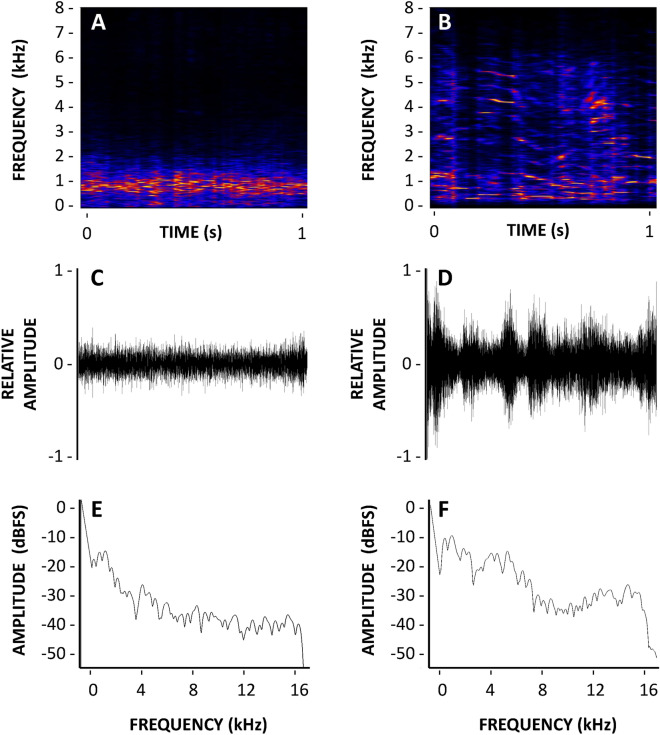
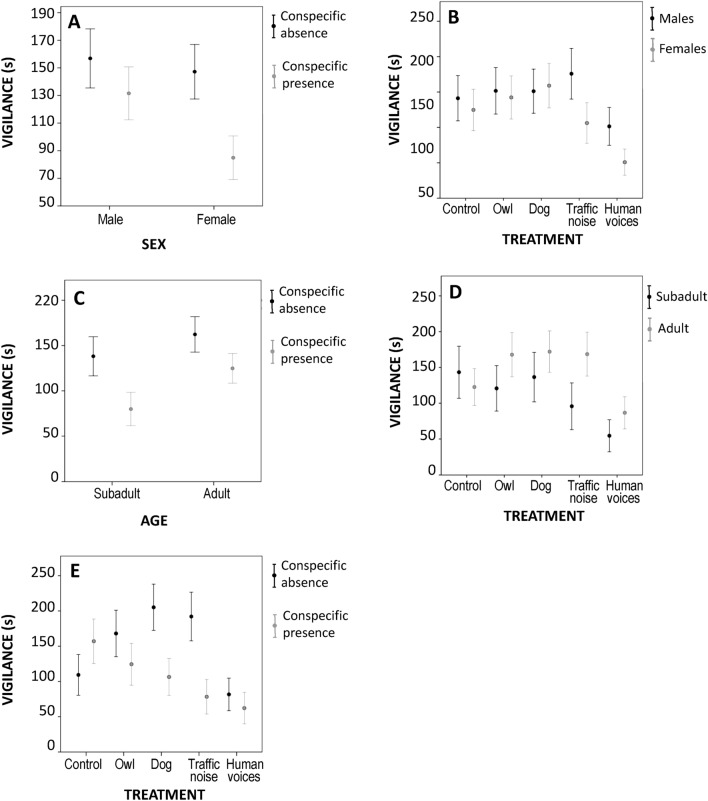
Prey species assess the risk of threat using visual, olfactory, and acoustic cues from their habitat. Thus, they modify their behavior in order to avoid encounters with competitors, predators, and human disturbances that endanger their fitness. European mink (Mustela lutreola) is a critically endangered species that can be preyed upon by larger carnivores and displaced by dominant conspecifics to areas of lower quality, e.g., near to more anthropized localities which may be noisier. In this study, the behavioral responses of 24 European mink were evaluated by conducting an experiment in which the presence of a conspecific competitor was simulated with a visual cue (mirror) and the presence of predators (terrestrial and aerial) with odorous cues. Additionally, they were also exposed to potential sources of anthropic disturbance with acoustic cues (road traffic noise and human voices). Our results showed that European mink were hidden for longer periods of time due to the presence of conspecifics and being exposed to the fecal odors of a terrestrial predator such as dog, but especially when they were exposed to anthropic noises. In the presence of a conspecific, the females and the subadults were the ones who remained hidden for the longest time. As well, they were hidden for longer periods of time due to the presence of conspecifics but in combination with dog feces and anthropic sounds did not induce variations in the response, as both by themselves already triggered an increase in the time they spent hiding. The vigilance model showed the effects of the same factors as the hiding model, but with antagonistic effects in the case of vigilance time which decreased during anthropic noises exposition. Finally, we want to highlight that European mink showed an innate response favorable to all three types of threats, but attention should be focused on human disturbances-as they trigger the most extreme responses-which may affect the rate of survival of this threatened species.
被捕食者通过其栖息地的视觉、嗅觉和听觉线索来评估威胁的风险。因此,它们会改变行为以避免与竞争对手、捕食者和人类干扰发生接触,这些干扰会危及它们的适应性。欧洲貂(Mustela lutreola)是一种极度濒危的物种,可能会被更大的食肉动物捕食,并被同种优势个体排挤到质量较低的区域,例如靠近更加人为化的地方,这些地方可能会更加嘈杂。在这项研究中,通过进行一项实验来评估 24 只欧洲貂的行为反应,实验中通过视觉线索(镜子)模拟同种竞争的存在,通过嗅觉线索模拟捕食者(陆地和空中)的存在。此外,它们还暴露于潜在的人为干扰源,如听觉线索(道路交通噪音和人声)。我们的研究结果表明,由于同种个体的存在以及暴露于陆地捕食者(如狗)的粪便气味,欧洲貂会躲藏更长时间,但当它们暴露于人为噪音时,躲藏时间会更长。在有同种个体存在的情况下,雌性和亚成体躲藏的时间最长。同样,由于同种个体的存在,再加上狗的粪便和人为声音,它们躲藏的时间也会更长,但这些因素本身已经引发了躲藏时间的增加,因此不会引起反应的变化。警戒模型显示了与隐藏模型相同的因素的影响,但在警戒时间方面存在拮抗作用,即在人为噪音暴露期间警戒时间会减少。最后,我们想强调的是,欧洲貂表现出对所有三种威胁类型的先天反应,但应重点关注人类干扰——因为它们会引发最极端的反应——这可能会影响到这种受威胁物种的存活率。