Wang Runze, Xu Yuerong, Zhang Wei, Fang Yexian, Yang Tiqun, Zeng Di, Wei Ting, Liu Jing, Zhou Haijia, Li Yan, Huang Zhan-Peng, Zhang Mingming
Department of Cardiology, Tangdu Hospital, The Fourth Military Medical University, Xi'an, China.
Department of Hematology, Tangdu Hospital, The Fourth Military Medical University, Xi'an, China.
Front Cell Dev Biol. 2021 Apr 1;9:650666. doi: 10.3389/fcell.2021.650666. eCollection 2021.
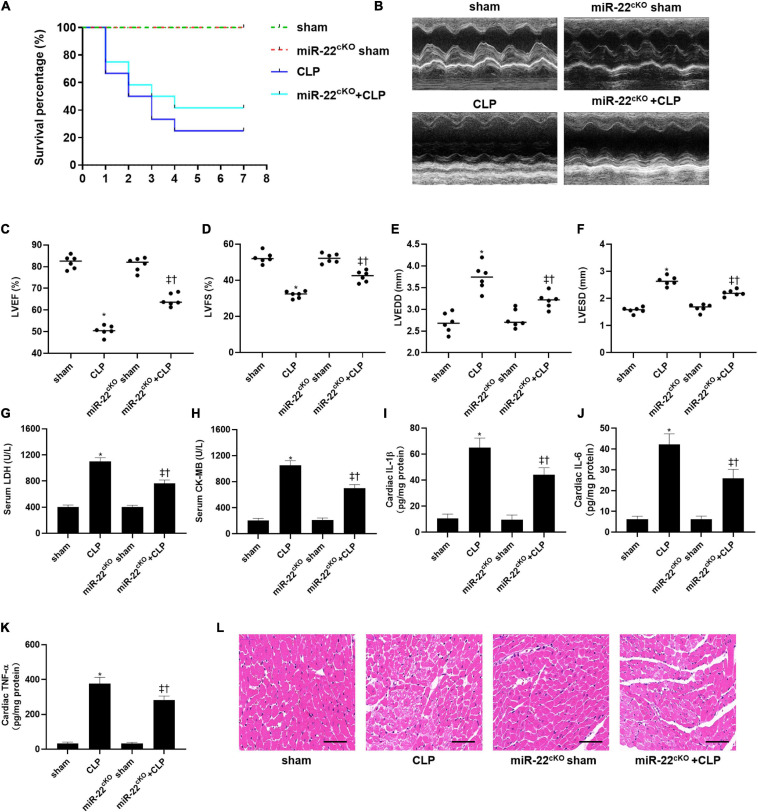
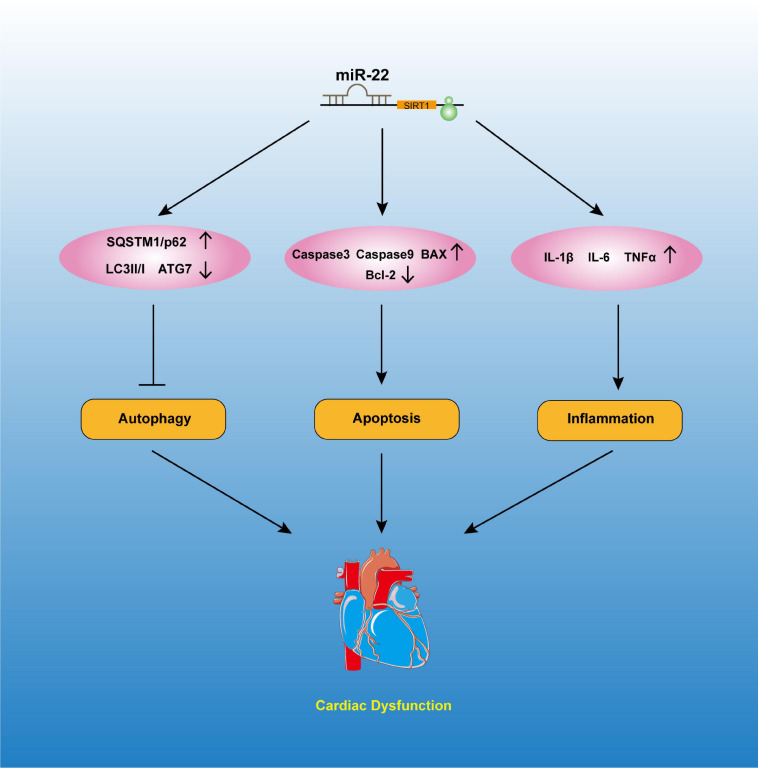
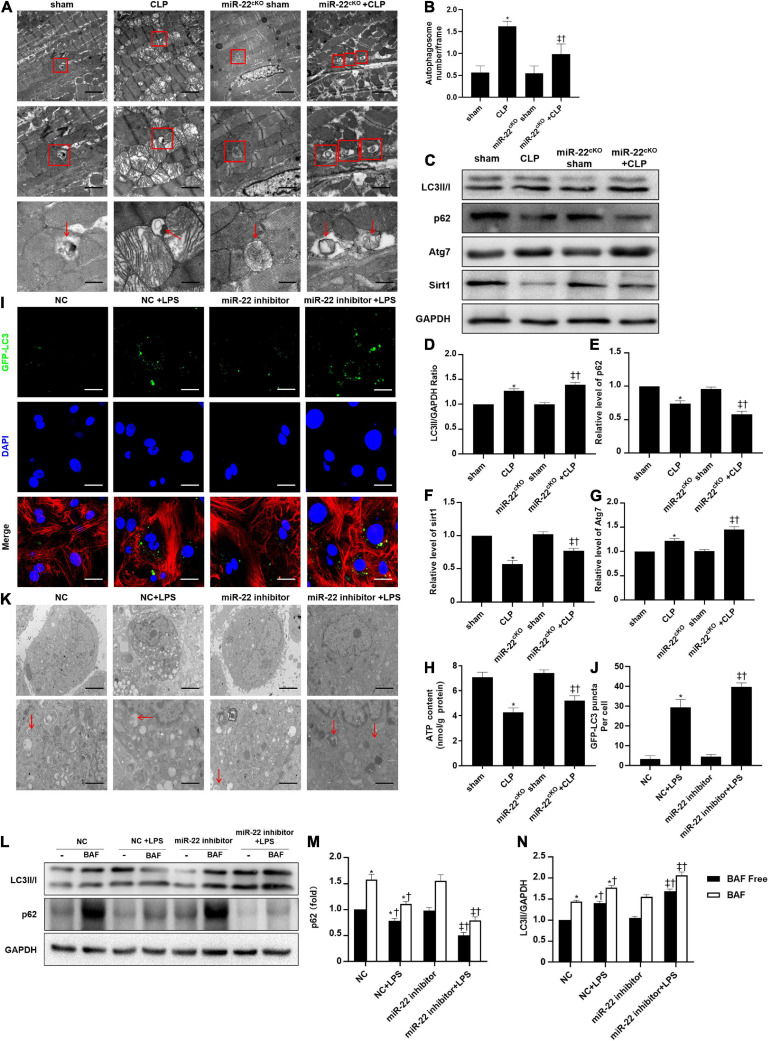
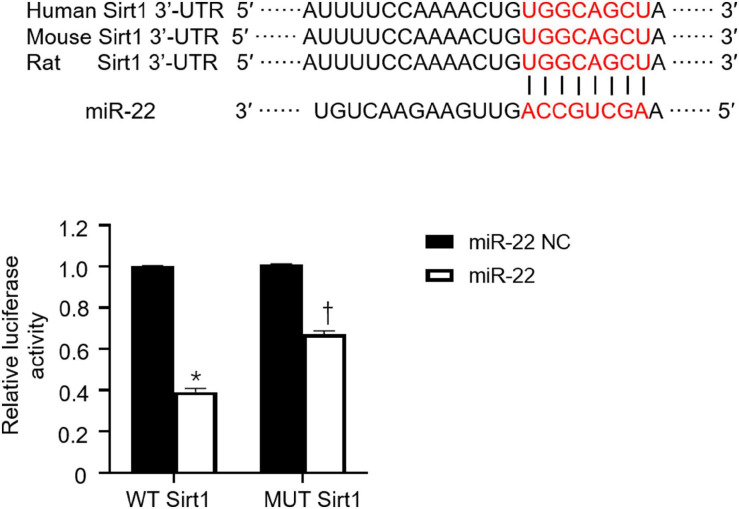
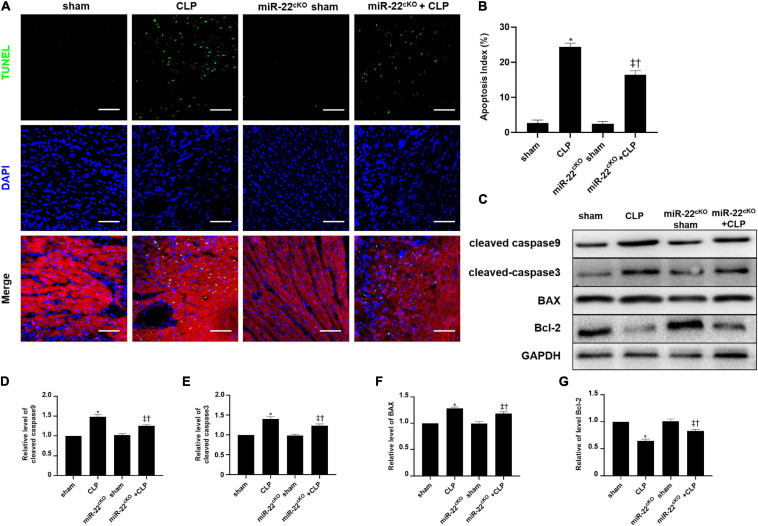
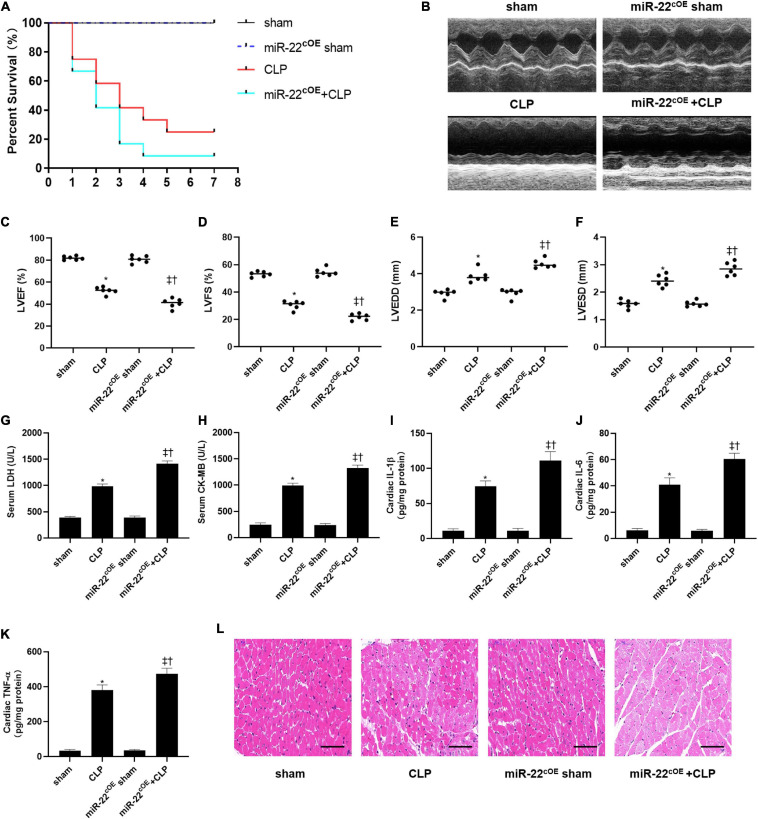
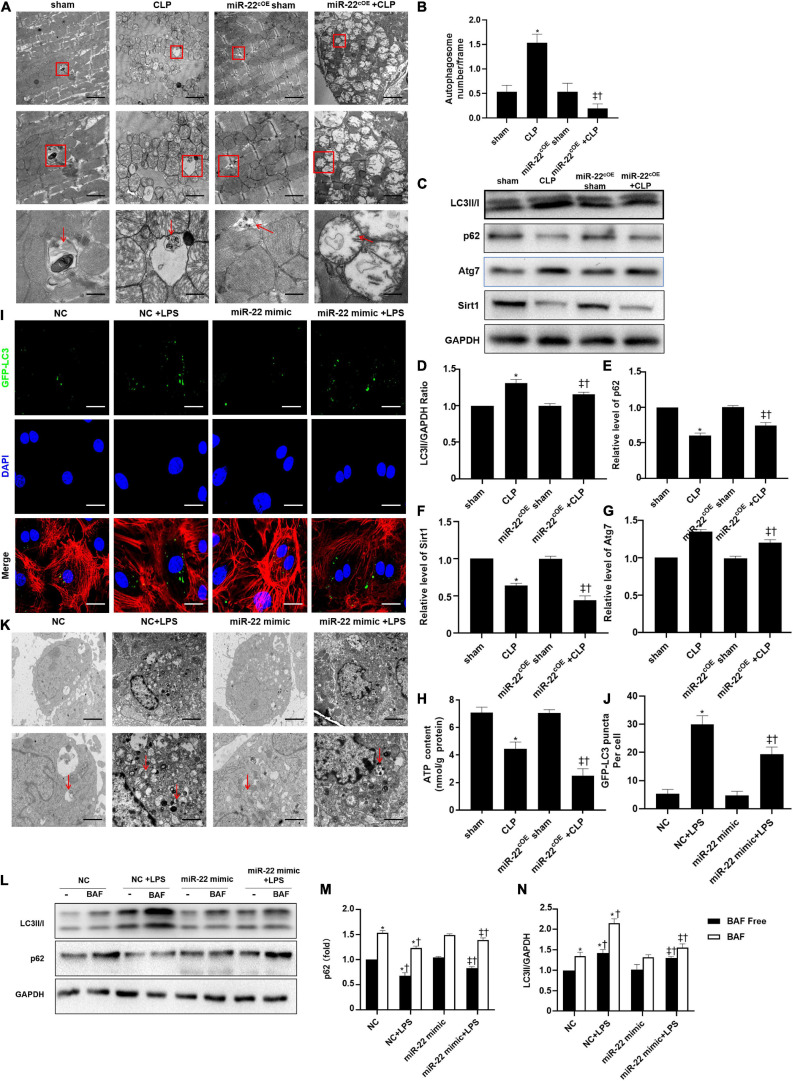
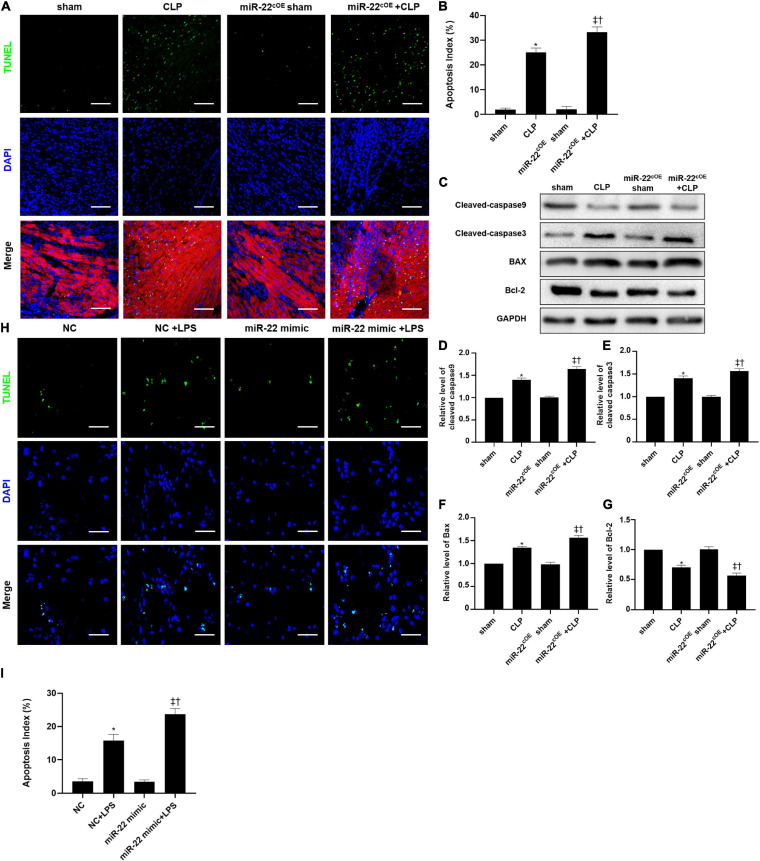
High morbidity and mortality are the most typical characteristics of septic cardiomyopathy. We aimed to reveal the role of miR-22 in septic cardiomyopathy and to explore the underlying mechanisms. miR-22 cardiac-specific knockout (miR-22) mice and miR-22 cardiac-specific transgenic (miR-22) mice were subjected to a cecal ligation and puncture (CLP) operation, while a sham operation was used in the control group. The echocardiogram results suggested that miR-22 CLP mice cardiac dysfunction was alleviated. The serum LDH and CK-MB were reduced in the miR-22 CLP mice. As expected, there was reduced apoptosis, increased autophagy and alleviated mitochondrial dysfunction in the miR-22 CLP mice, while it had contrary role in the miR-22 group. Inhibiting miR-22 promoted autophagy by increasing the LC3II/GAPDH ratio and decreasing the p62 level. Additionally, culturing primary cardiomyocytes with lipopolysaccharide (LPS) simulated sepsis-induced cardiomyopathy . Inhibiting miR-22 promoted autophagic flux confirmed by an increased LC3II/GAPDH ratio and reduced p62 protein level under bafilomycin A1 conditions. Knocking out miR-22 may exert a cardioprotective effect on sepsis by increasing autophagy and decreasing apoptosis via sirt1. Our results revealed that targeting miR-22 may become a new strategy for septic cardiomyopathy treatment.
高发病率和死亡率是脓毒症性心肌病最典型的特征。我们旨在揭示miR-22在脓毒症性心肌病中的作用,并探索其潜在机制。对miR-22心脏特异性敲除(miR-22-/-)小鼠和miR-22心脏特异性转基因(miR-22Tg)小鼠进行盲肠结扎和穿刺(CLP)手术,而对照组进行假手术。超声心动图结果表明,miR-22-/- CLP小鼠的心脏功能障碍得到缓解。miR-22-/- CLP小鼠的血清乳酸脱氢酶(LDH)和肌酸激酶同工酶(CK-MB)降低。正如预期的那样,miR-22-/- CLP小鼠的细胞凋亡减少,自噬增加,线粒体功能障碍减轻,而在miR-22Tg组中则具有相反的作用。抑制miR-22可通过增加LC3II/GAPDH比值和降低p62水平来促进自噬。此外,用脂多糖(LPS)培养原代心肌细胞可模拟脓毒症诱导的心肌病。在巴弗洛霉素A1条件下,抑制miR-22可促进自噬流,表现为LC3II/GAPDH比值增加和p62蛋白水平降低。敲除miR-22可能通过增加自噬和经由sirt1减少细胞凋亡,对脓毒症发挥心脏保护作用。我们的结果表明,靶向miR-22可能成为脓毒症性心肌病治疗的新策略。