Zhou Yilu, Hill Charlotte, Yao Liudi, Li Juanjuan, Hancock David, Downward Julian, Jones Mark G, Davies Donna E, Ewing Rob M, Skipp Paul, Wang Yihua
Biological Sciences, Faculty of Environmental and Life Sciences, University of Southampton, Southampton, United Kingdom.
Institute for Life Sciences, University of Southampton, Southampton, United Kingdom.
Front Mol Biosci. 2021 Mar 19;8:595712. doi: 10.3389/fmolb.2021.595712. eCollection 2021.
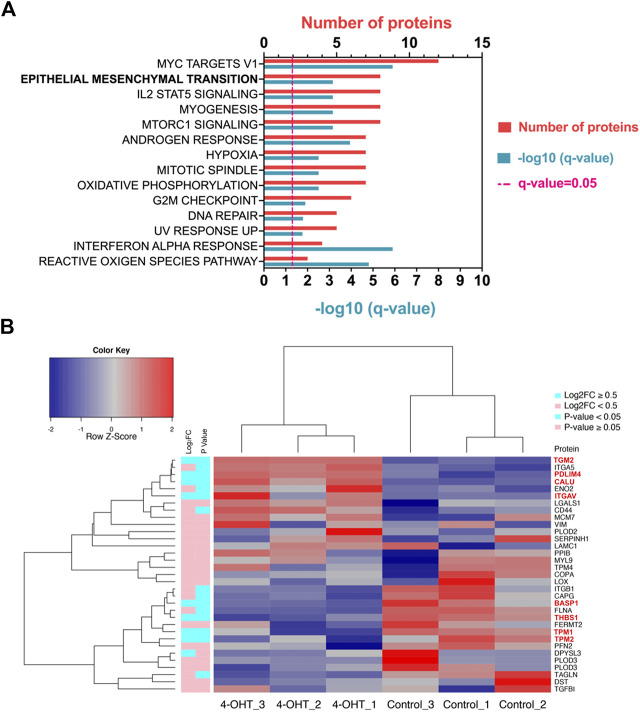
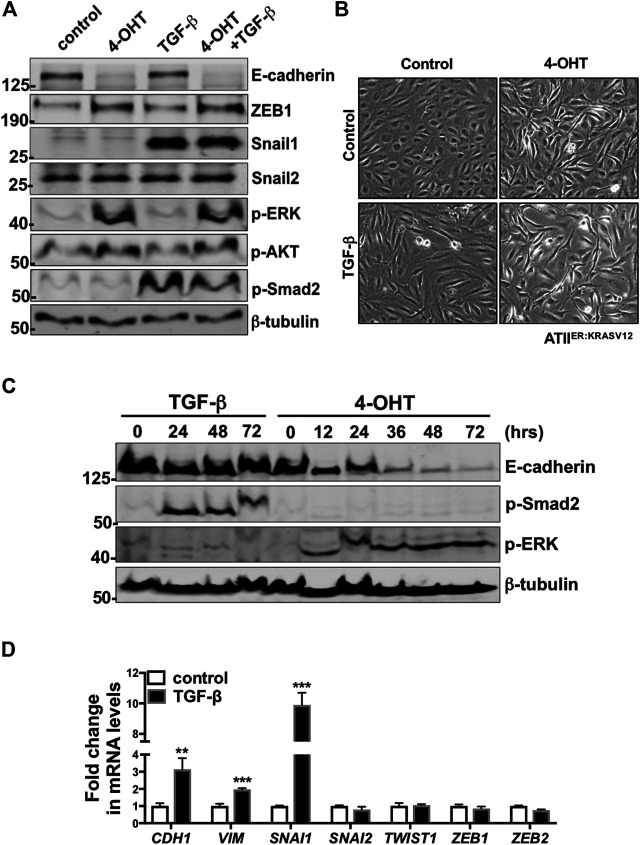
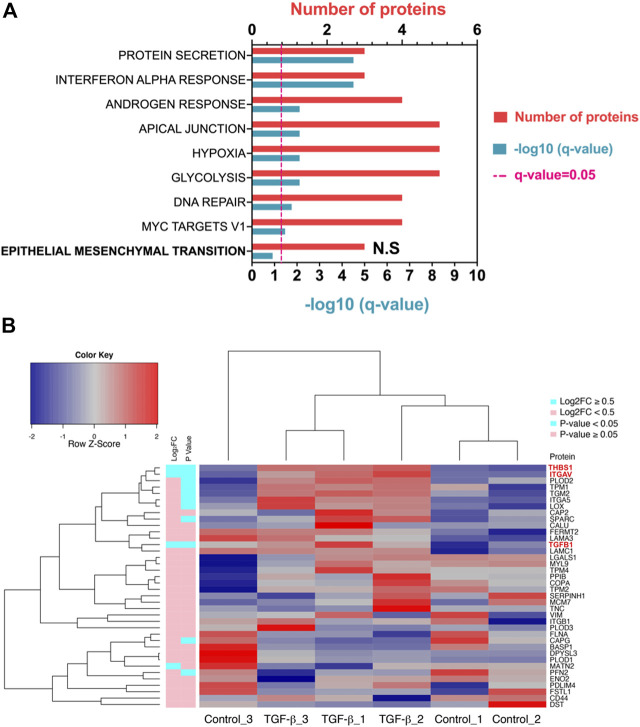
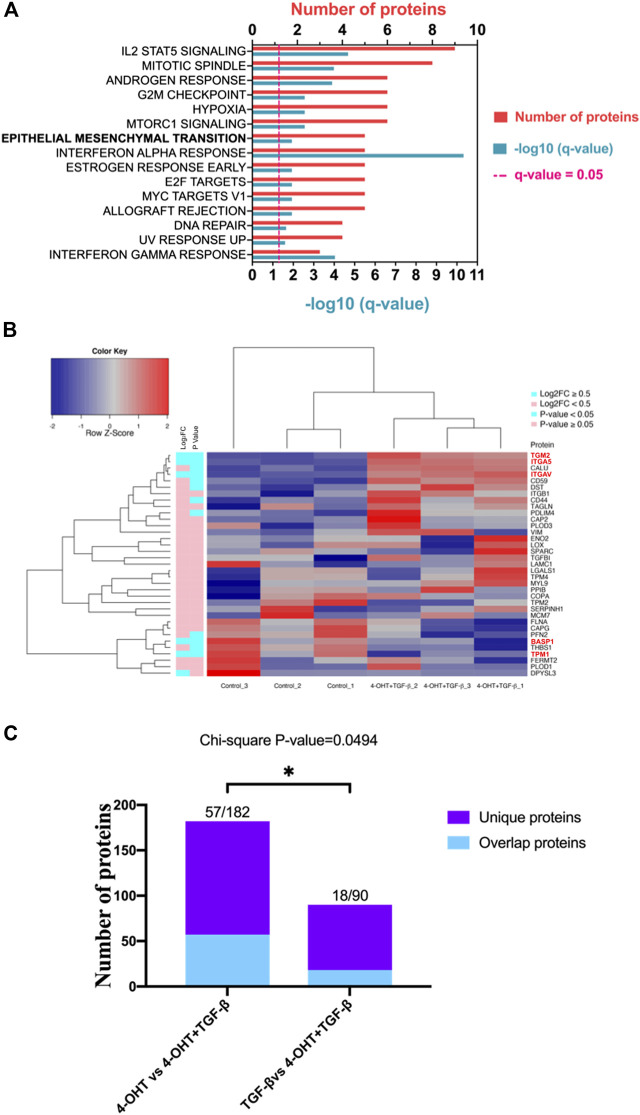
Alveolar type II (ATII) epithelial cells function as stem cells, contributing to alveolar renewal, repair and cancer. Therefore, they are a highly relevant model for studying a number of lung diseases, including acute injury, fibrosis and cancer, in which signals transduced by RAS and transforming growth factor (TGF)-β play critical roles. To identify downstream molecular events following RAS and/or TGF-β activation, we performed proteomic analysis using a quantitative label-free approach (LC-HDMS) to provide in-depth proteome coverage and estimates of protein concentration in absolute amounts. Data are available via ProteomeXchange with identifier PXD023720. We chose ATII as an experimental cell line in which RAS is activated by adding 4-hydroxytamoxifen (4-OHT). Proteomic analysis of ATII cells treated with 4-OHT or TGF-β demonstrated that RAS activation induces an epithelial-mesenchymal transition (EMT) signature. In contrast, under the same conditions, activation of TGF-β signaling alone only induces a partial EMT. EMT is a dynamic and reversible biological process by which epithelial cells lose their cell polarity and down-regulate cadherin-mediated cell-cell adhesion to gain migratory properties, and is involved in embryonic development, wound healing, fibrosis and cancer metastasis. Thus, these results could help to focus research on the identification of processes that are potentially driving EMT-related human disease.
肺泡Ⅱ型(ATII)上皮细胞具有干细胞功能,对肺泡更新、修复及癌症形成都有作用。因此,它们是研究多种肺部疾病的高度相关模型,这些疾病包括急性损伤、纤维化和癌症,其中RAS和转化生长因子(TGF)-β转导的信号起着关键作用。为了确定RAS和/或TGF-β激活后的下游分子事件,我们采用无标记定量方法(LC-HDMS)进行蛋白质组分析,以提供深入的蛋白质组覆盖范围并以绝对量估计蛋白质浓度。数据可通过ProteomeXchange获取,标识符为PXD023720。我们选择ATII作为实验细胞系,通过添加4-羟基他莫昔芬(4-OHT)激活其中的RAS。对用4-OHT或TGF-β处理的ATII细胞进行蛋白质组分析表明,RAS激活诱导上皮-间质转化(EMT)特征。相比之下,在相同条件下,仅TGF-β信号激活仅诱导部分EMT。EMT是一个动态且可逆的生物学过程,上皮细胞通过该过程失去细胞极性并下调钙黏蛋白介导的细胞间黏附以获得迁移特性,并且参与胚胎发育、伤口愈合、纤维化和癌症转移。因此,这些结果有助于将研究重点聚焦于识别可能驱动与EMT相关的人类疾病的过程。