Tuomola Kati, Mäki-Kihniä Nina, Valros Anna, Mykkänen Anna, Kujala-Wirth Minna
Department of Production Animal Medicine, Research Centre for Animal Welfare, University of Helsinki, Helsinki, Finland.
Independent Researcher, Pori, Finland.
Front Vet Sci. 2021 Mar 31;8:651160. doi: 10.3389/fvets.2021.651160. eCollection 2021.
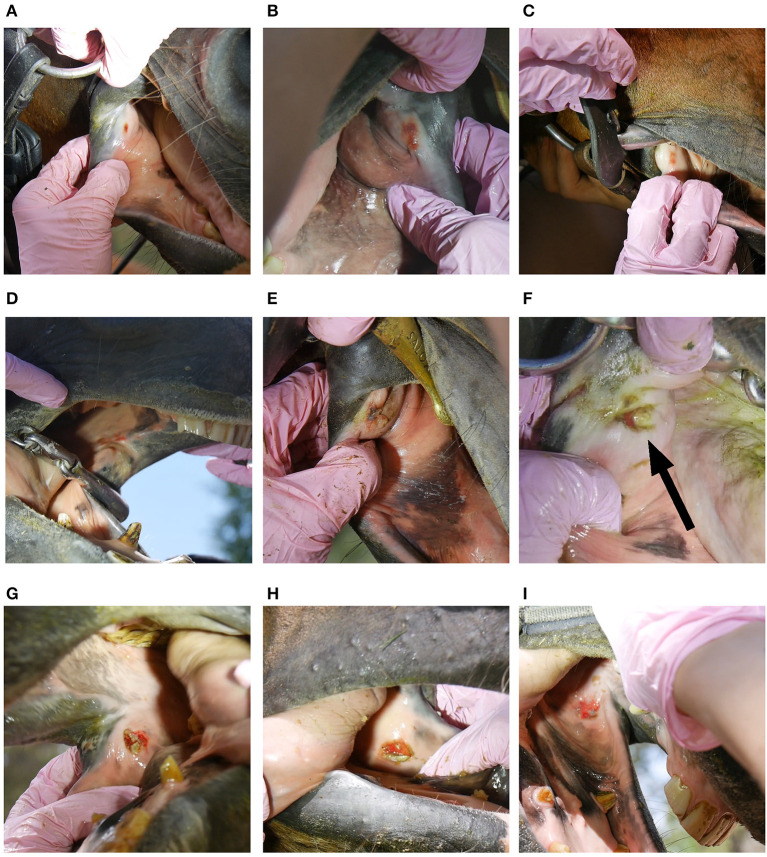
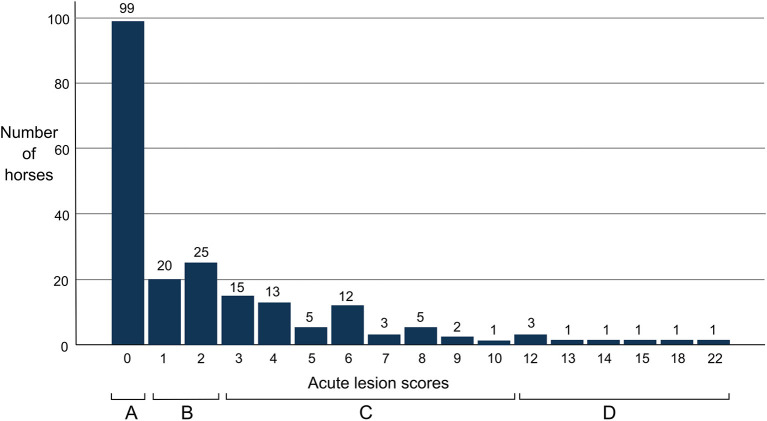
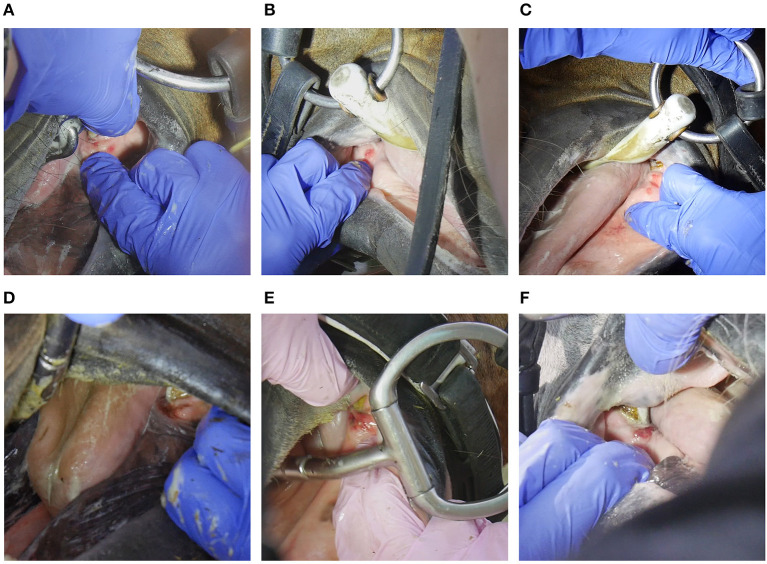
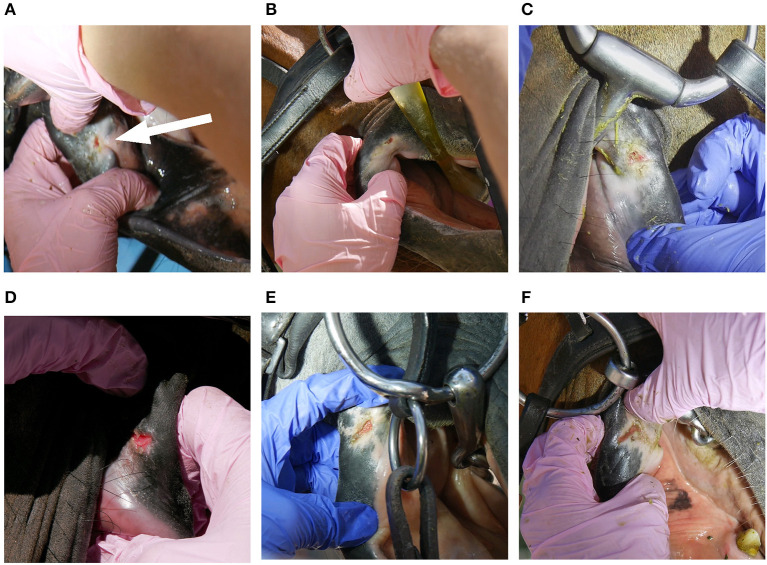
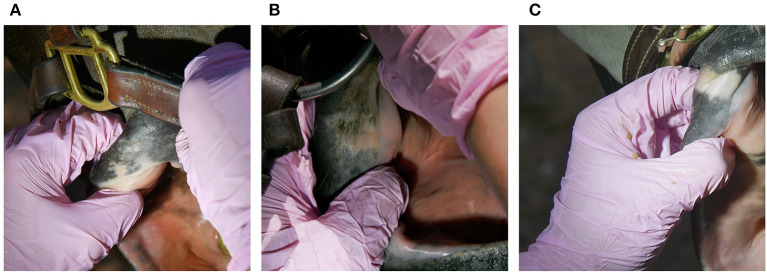
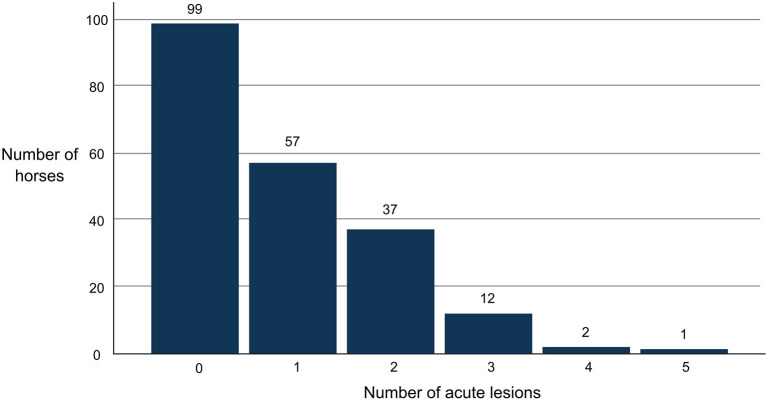
Bit-related oral lesions are common and may impair horse welfare. The aim of this study was to investigate the prevalence of oral lesions and their risk factors in a sample of Finnish event horses. The rostral part of the oral cavity (the bit area) of 208 event horses (127 warmbloods, 52 coldbloods, and 29 ponies) was examined in a voluntary inspection after the last competition phase, i.e., the cross-country test. Acute lesions were observed in 52% (109/208) of the horses. The lesion status was graded as no acute lesions for 48% (99/208), mild for 22% (45/208), moderate for 26% (55/208) and severe for 4% (9/208) of the horses. The inner lip commissure was the most common lesion location observed in 39% (81/208) of the horses. A multivariable logistic regression model with data of 174 horses was applied to risk factor analysis. Horses wearing thin (10-13 mm) (OR 3.5, CI 1.4-8.7) or thick (18-22 mm) (OR 3.4, CI 1.4-8.0) bits had a higher risk of moderate/severe lesion status than horses wearing middle-sized (14-17 mm) bits ( = 0.003). Breed was associated with moderate/severe lesion status ( = 0.02). The risk was higher for warmbloods (reference group) and coldbloods (OR 2.0, CI 0.88-4.7) compared with ponies (OR 0.2, CI 0.04-0.87). Mares were at higher risk of moderate/severe lesion status (OR 2.2, CI 1.1-4.5) than geldings (reference group) ( = 0.03). Bar lesions were more common in horses with unjointed bits (40%, 8/20) than with basic double-jointed (10%, 5/52), formed double-jointed (8%, 6/78) or single-jointed bits (5%, 2/40) (Fisher's exact test, = 0.002). The results of this study suggest that thin and thick bits and mare sex should be considered risk factors for mouth lesions. In addition, in this sample ponies had smaller risk for lesions than other horse breeds. We encourage adopting bit area monitoring as a new routine by horse handlers and as a welfare measure by competition organizers for randomly drawn horses.
与衔铁相关的口腔病变很常见,可能会损害马匹的健康。本研究的目的是调查芬兰三项赛用马样本中口腔病变的患病率及其风险因素。在最后一个比赛阶段(即越野赛)结束后的自愿检查中,对208匹三项赛用马(127匹温血马、52匹冷血马和29匹矮种马)口腔的前部(衔铁区域)进行了检查。52%(109/208)的马匹出现急性病变。病变状态分级为:48%(99/208)的马匹无急性病变,22%(45/208)的马匹为轻度病变,26%(55/208)的马匹为中度病变,4%(9/208)的马匹为重度病变。内唇联合处是最常见的病变部位,在39%(81/208)的马匹中观察到。将174匹马的数据应用于多变量逻辑回归模型进行风险因素分析。佩戴薄(10 - 13毫米)(OR 3.5,CI 1.4 - 8.7)或厚(18 - 22毫米)衔铁的马匹,与佩戴中等尺寸(14 - 17毫米)衔铁的马匹相比,出现中度/重度病变状态的风险更高(P = 0.003)。品种与中度/重度病变状态相关(P = 0.02)。与矮种马(OR 0.2,CI 0.04 - 0.87)相比,温血马(参照组)和冷血马出现中度/重度病变状态的风险更高(OR 2.0,CI 0.88 - 4.7)。母马出现中度/重度病变状态的风险高于去势公马(参照组)(OR 2.2,CI 1.1 - 4.5)(P = 0.03)。在无关节衔铁的马匹中,颊部病变比基本双关节衔铁(10%,5/52)、改良双关节衔铁(8%,6/78)或单关节衔铁(5%,2/40)的马匹更常见(Fisher精确检验,P = 0.002)。本研究结果表明,薄衔铁、厚衔铁和母马性别应被视为口腔病变的风险因素。此外,在这个样本中,矮种马出现病变的风险比其他马种小。我们鼓励马匹饲养者将衔铁区域监测作为一项新的常规操作,并鼓励比赛组织者将其作为一项福利措施应用于随机抽取的马匹。