The Hatter Cardiovascular Institute, Institute of Cardiovascular Science, University College London, 67 Chenies Mews, London, WC1E 6HX, UK.
Section of Physiology, Department of Molecular Medicine, Institute for Basic Medical Sciences, University of Oslo, Oslo, Norway.
Cardiovasc Res. 2022 Mar 16;118(4):1115-1125. doi: 10.1093/cvr/cvab139.
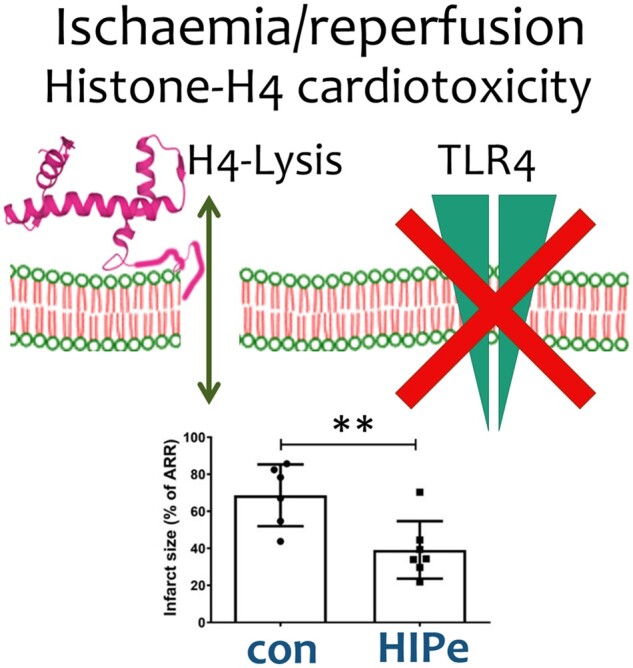
Acute myocardial infarction causes lethal cardiomyocyte injury during ischaemia and reperfusion (I/R). Histones have been described as important Danger Associated Molecular Proteins (DAMPs) in sepsis. The objective of this study was to establish whether extracellular histone release contributes to myocardial infarction.
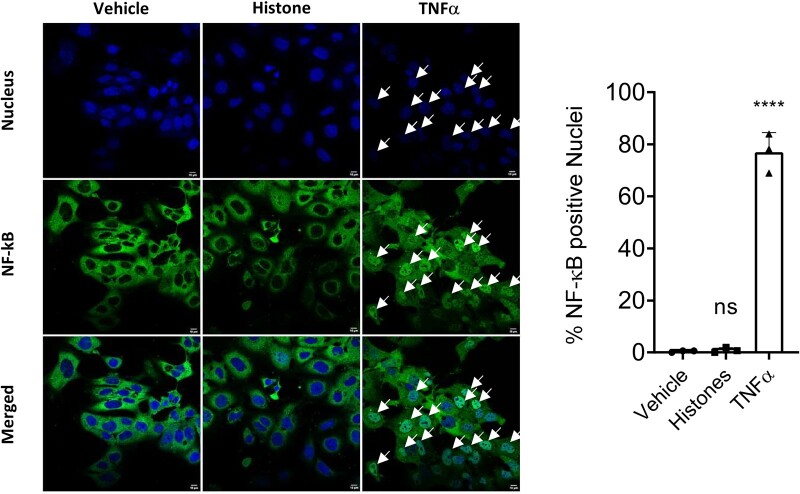
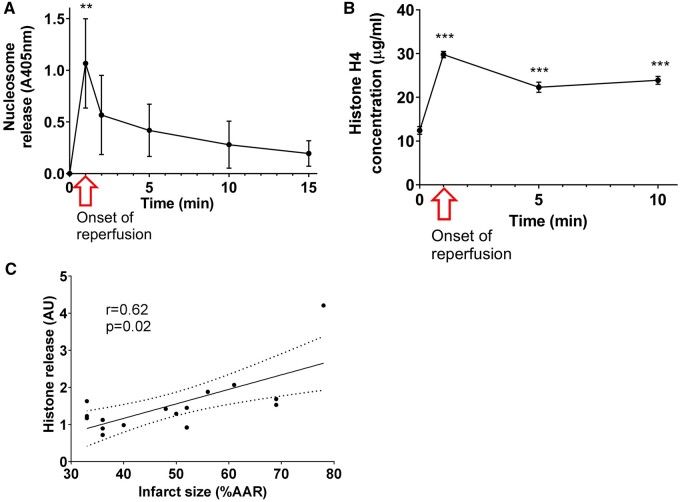
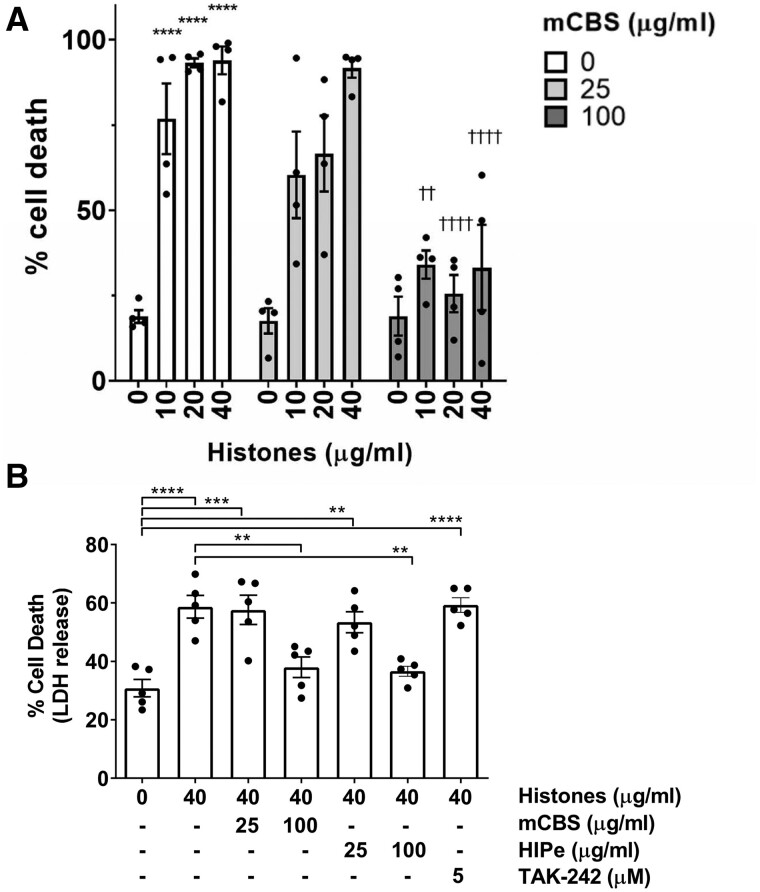
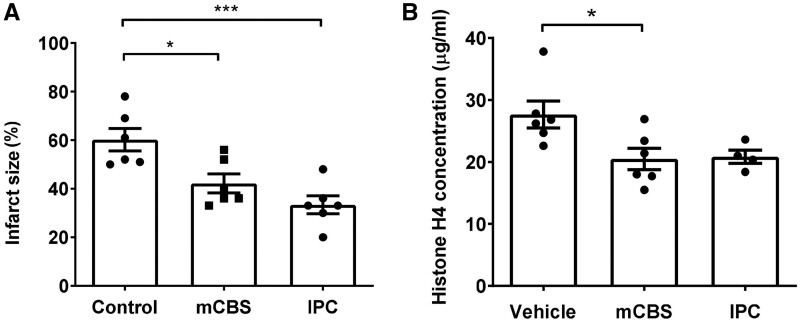
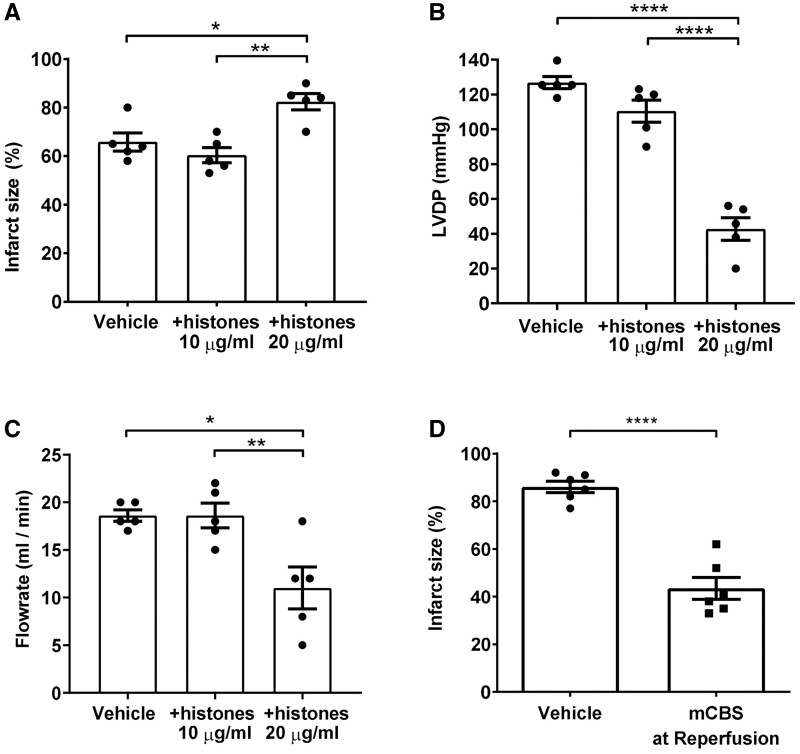
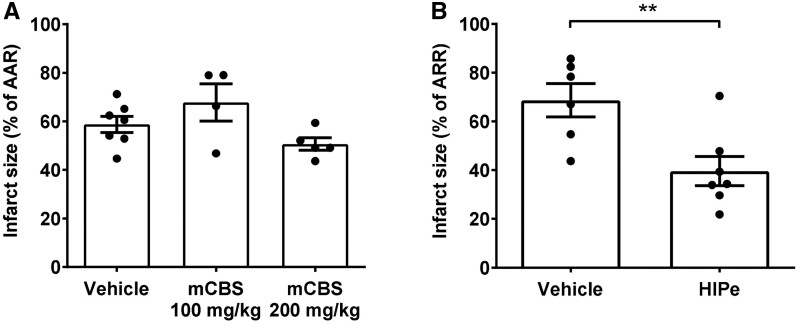
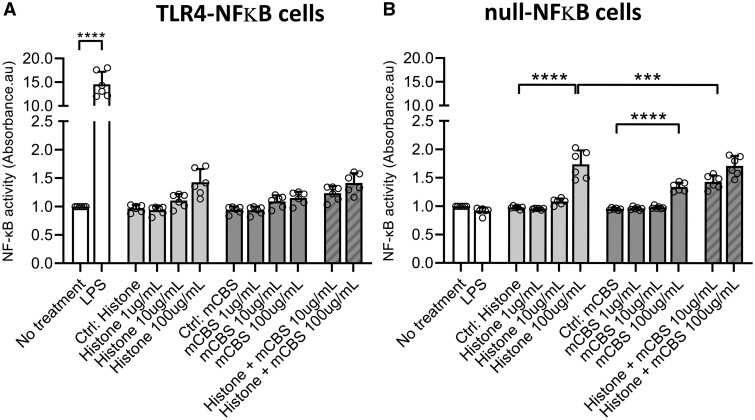
Isolated, perfused rat hearts were subject to I/R. Nucleosomes and histone-H4 release was detected early during reperfusion. Sodium-β-O-Methyl cellobioside sulfate (mCBS), a newly developed histone-neutralizing compound, significantly reduced infarct size whilst also reducing the detectable levels of histones. Histones were directly toxic to primary adult rat cardiomyocytes in vitro. This was prevented by mCBS or HIPe, a recently described, histone-H4 neutralizing peptide, but not by an inhibitor of TLR4, a receptor previously reported to be involved in DAMP-mediated cytotoxicity. Furthermore, TLR4-reporter HEK293 cells revealed that cytotoxicity of histone H4 was independent of TLR4 and NF-κB. In an in vivo rat model of I/R, HIPe significantly reduced infarct size.
Histones released from the myocardium are cytotoxic to cardiomyocytes, via a TLR4-independent mechanism. The targeting of extracellular histones provides a novel opportunity to limit cardiomyocyte death during I/R injury of the myocardium.
在缺血再灌注(I/R)期间,急性心肌梗死导致致命的心肌细胞损伤。组蛋白已被描述为脓毒症中重要的危险相关分子蛋白(DAMPs)。本研究的目的是确定细胞外组蛋白释放是否导致心肌梗死。
分离并灌注大鼠心脏,使其经历 I/R。在再灌注早期检测到核小体和组蛋白-H4 的释放。新型组蛋白中和化合物β-O-甲基纤维二糖苷硫酸盐(mCBS)可显著减少梗死面积,同时降低组蛋白的可检测水平。组蛋白在体外对原代成年大鼠心肌细胞具有直接毒性。mCBS 或 HIPe(最近描述的组蛋白-H4 中和肽)可预防这种情况,但 TLR4 抑制剂不能预防,TLR4 是先前报道参与 DAMPs 介导的细胞毒性的受体。此外,TLR4 报告基因 HEK293 细胞表明组蛋白 H4 的细胞毒性不依赖于 TLR4 和 NF-κB。在 I/R 的大鼠体内模型中,HIPe 显著减少了梗死面积。
心肌释放的组蛋白通过 TLR4 非依赖性机制对心肌细胞具有细胞毒性。靶向细胞外组蛋白为限制心肌 I/R 损伤期间心肌细胞死亡提供了新的机会。