Sun Xueshan, Zhen Xuemei, Hu Xiaoqian, Li Yuanyuan, Gu ShuYan, Gu Yuxuan, Zhao Zixuan, Yang Wei, Dong Hengjin
Center for Health Policy Studies, School of Public Health, Zhejiang University School of Medicine, Zijingang Campus, Rd 866 Yuhang, Xihu District, Hangzhou, Zhejiang, China.
School of Health Care Management, Shandong University, 44 Wenhuaxi Rd., Jinan, Shandong, China.
Cost Eff Resour Alloc. 2021 Apr 20;19(1):22. doi: 10.1186/s12962-021-00275-7.
To estimate the cost -utility of imrecoxib compared with diclofenac, as well as the addition of a proton pump inhibitor to both two treatment strategies, for patients with osteoarthritis, from a Chinese healthcare perspective.
A Markov model was built. Costs of managing osteoarthritis and initial adverse events were collected from a Medical Database which collected information from 170 hospitals. Other parameters were obtained from the literature. Subgroup analyses were conducted for people at high risk of gastrointestinal or cardiovascular adverse events. Deterministic and probabilistic sensitivity analyses were performed.
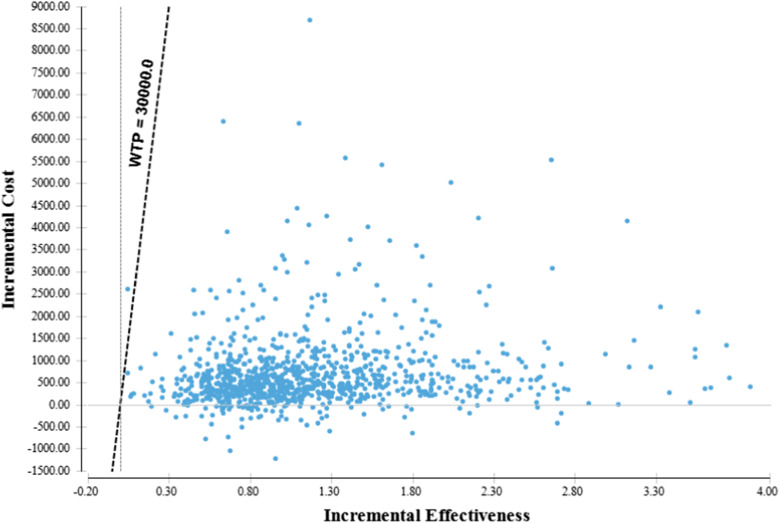
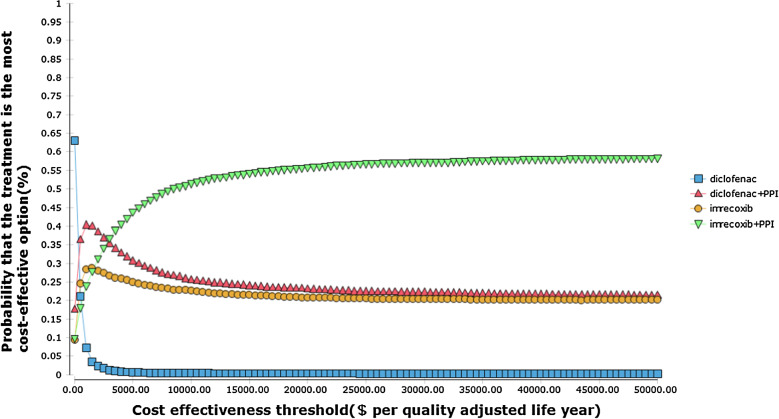
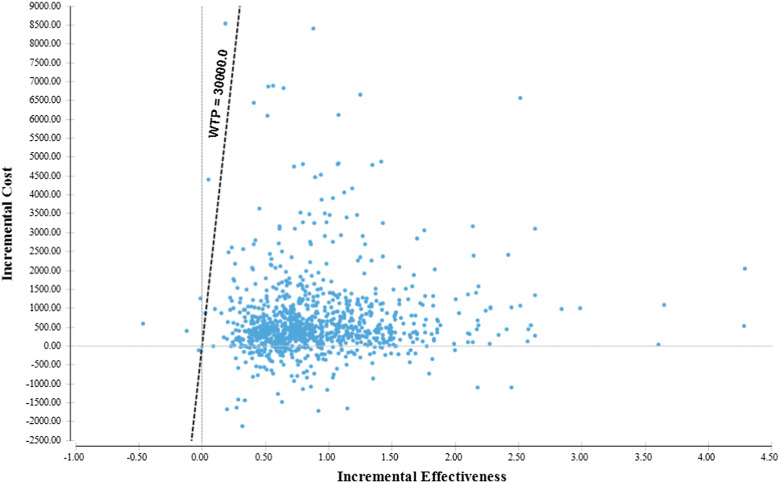
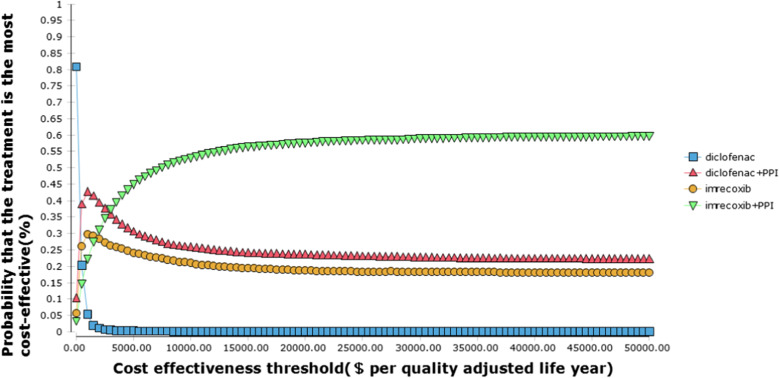
Imrecoxib was highly cost-effective than diclofenac (the ICER was $401.58 and $492.77 in patients at low and high gastrointestinal and cardiovascular risk, respectively). The addition of a proton pump inhibitor was more cost -effective compared with single drug for both treatment strategies. Findings remained robust to sensitivity analyses. 59.04% and 57.16% probability for the co-prescription of imrecoxib and a proton pump inhibitor to be the most cost-effective strategy in all patients considered using the cost-effectiveness threshold of $30,000.
The addition of a proton pump inhibitor to both imrecoxib and diclofenac was advised. Imrecoxib provides a valuable option for patients with osteoarthritis. Uncertainties existed in the model, and the suggestions can be adopted with caution.
从中国医疗保健角度出发,评估艾瑞昔布与双氯芬酸相比的成本效益,以及在两种治疗策略中添加质子泵抑制剂对骨关节炎患者的影响。
构建马尔可夫模型。从一个收集了170家医院信息的医学数据库中收集骨关节炎管理成本和初始不良事件成本。其他参数从文献中获取。对胃肠道或心血管不良事件高风险人群进行亚组分析。进行确定性和概率性敏感性分析。
艾瑞昔布比双氯芬酸具有更高的成本效益(在胃肠道和心血管低风险及高风险患者中,增量成本效果比分别为401.58美元和492.77美元)。对于两种治疗策略,添加质子泵抑制剂比单一药物更具成本效益。敏感性分析结果依然稳健。在使用30,000美元的成本效益阈值时,在所有考虑的患者中,艾瑞昔布与质子泵抑制剂联合用药成为最具成本效益策略的概率分别为59.04%和57.16%。
建议在艾瑞昔布和双氯芬酸治疗中均添加质子泵抑制剂。艾瑞昔布为骨关节炎患者提供了一个有价值的选择。模型存在不确定性,建议谨慎采用。