Panina Svetlana B, Pei Jingqi, Kirienko Natalia V
Department of BioSciences, Rice University, Houston, TX, USA.
Cancer Metab. 2021 Apr 21;9(1):17. doi: 10.1186/s40170-021-00253-w.
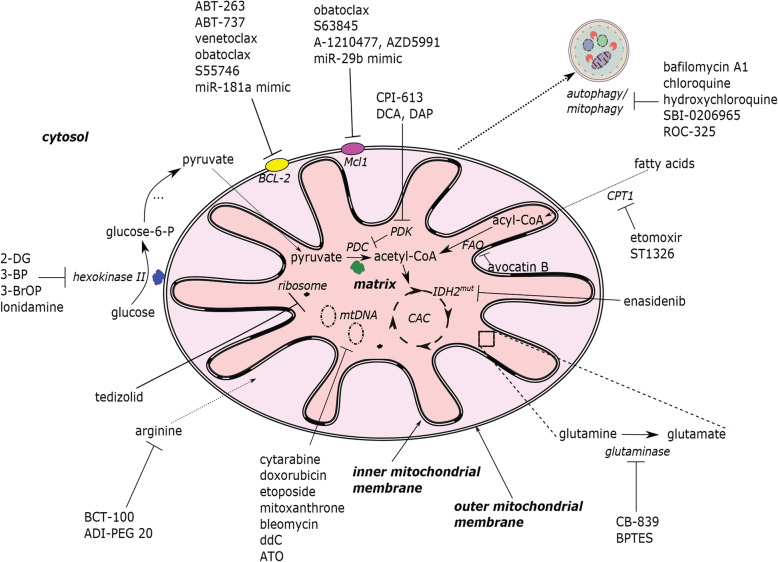
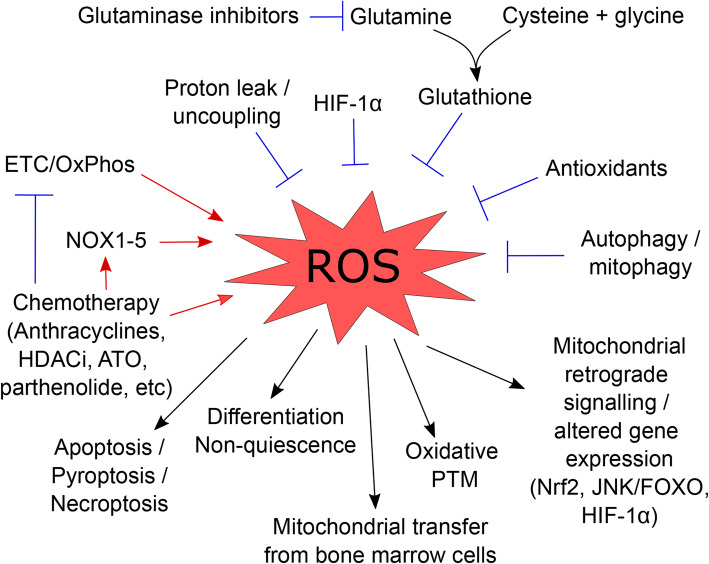
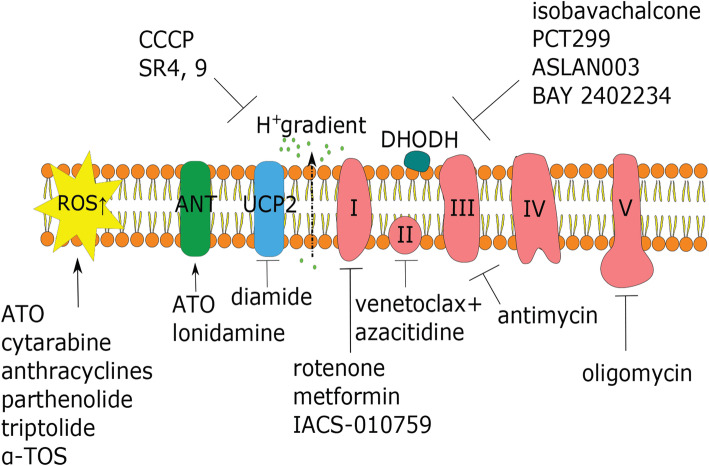
Acute myeloid leukemias (AML) are a group of aggressive hematologic malignancies resulting from acquired genetic mutations in hematopoietic stem cells that affect patients of all ages. Despite decades of research, standard chemotherapy still remains ineffective for some AML subtypes and is often inappropriate for older patients or those with comorbidities. Recently, a number of studies have identified unique mitochondrial alterations that lead to metabolic vulnerabilities in AML cells that may present viable treatment targets. These include mtDNA, dependency on oxidative phosphorylation, mitochondrial metabolism, and pro-survival signaling, as well as reactive oxygen species generation and mitochondrial dynamics. Moreover, some mitochondria-targeting chemotherapeutics and their combinations with other compounds have been FDA-approved for AML treatment. Here, we review recent studies that illuminate the effects of drugs and synergistic drug combinations that target diverse biomolecules and metabolic pathways related to mitochondria and their promise in experimental studies, clinical trials, and existing chemotherapeutic regimens.
急性髓系白血病(AML)是一组侵袭性血液系统恶性肿瘤,由造血干细胞获得性基因突变引起,影响各年龄段患者。尽管经过数十年研究,但标准化疗对某些AML亚型仍然无效,且通常不适用于老年患者或有合并症的患者。最近,一些研究发现了独特的线粒体改变,这些改变导致AML细胞出现代谢脆弱性,可能成为可行的治疗靶点。这些包括线粒体DNA、对氧化磷酸化的依赖性、线粒体代谢和促生存信号传导,以及活性氧生成和线粒体动力学。此外,一些靶向线粒体的化疗药物及其与其他化合物的组合已获美国食品药品监督管理局(FDA)批准用于AML治疗。在此,我们综述了近期的研究,这些研究阐明了靶向与线粒体相关的多种生物分子和代谢途径的药物及协同药物组合的作用,以及它们在实验研究、临床试验和现有化疗方案中的前景。