Cardiovascular Biology and Biomechanics Laboratory, Cardiovascular Division, University of Nebraska Medical Center, 982265 Nebraska Medical Center, Omaha, NE, 68198, USA.
Boston Scientific, Maple Grove, MN, USA.
Sci Rep. 2021 Apr 22;11(1):8728. doi: 10.1038/s41598-021-87908-2.
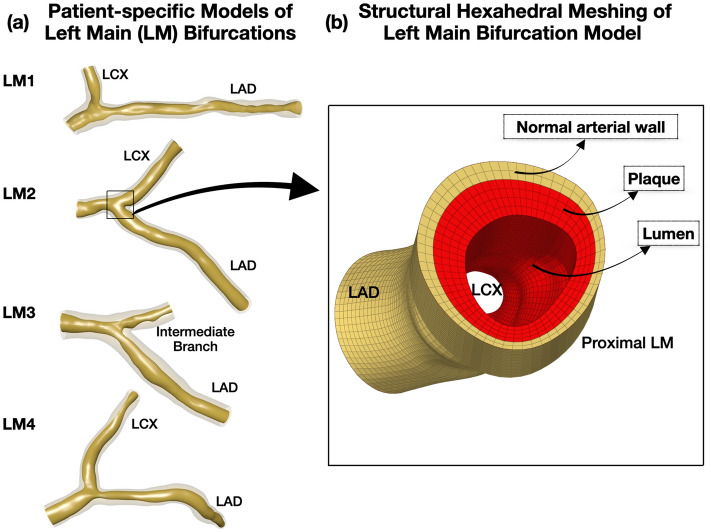
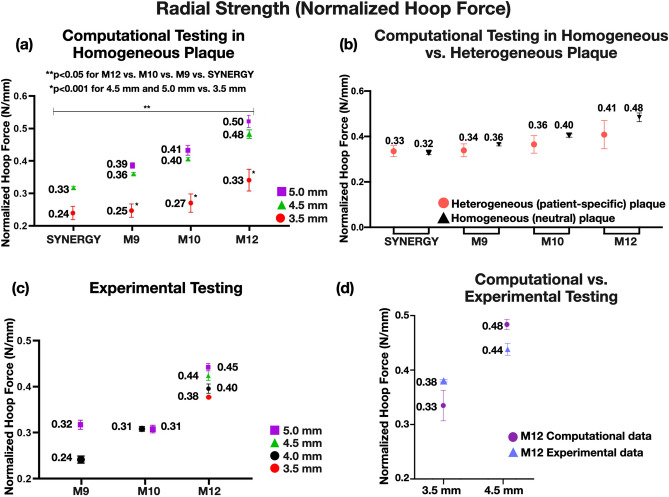
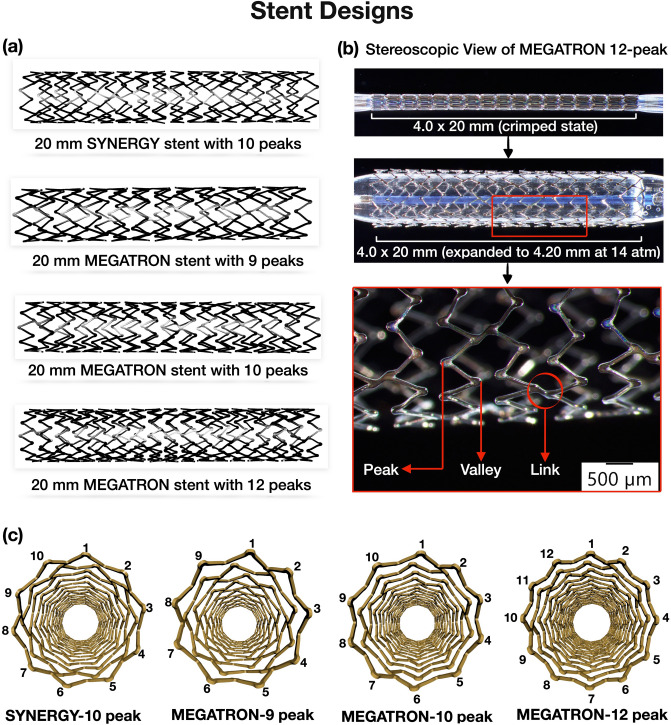
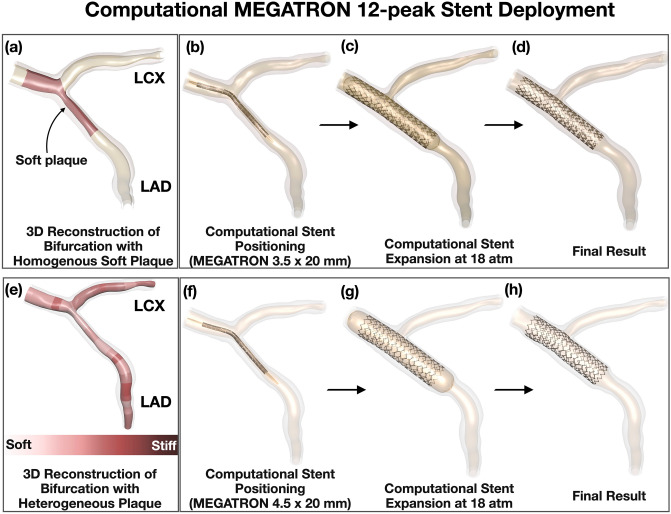
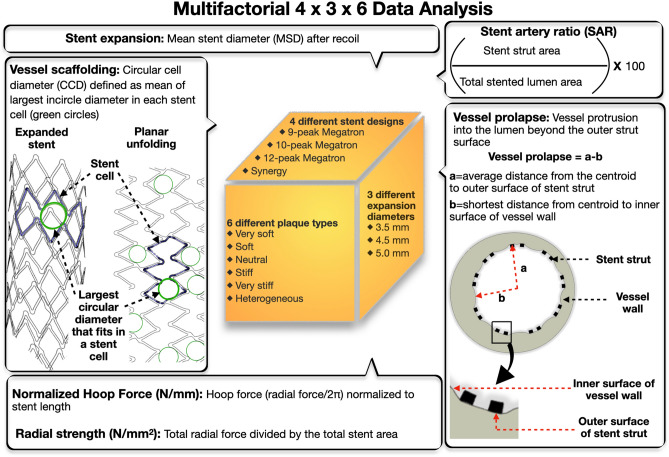
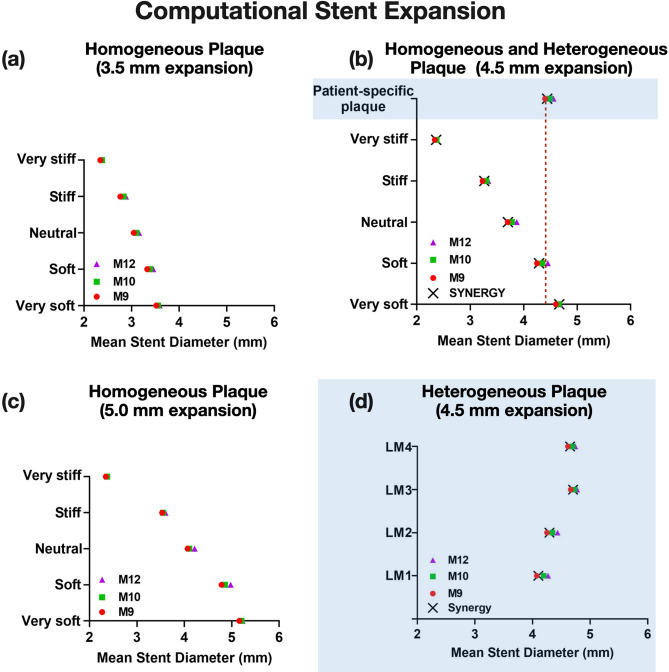
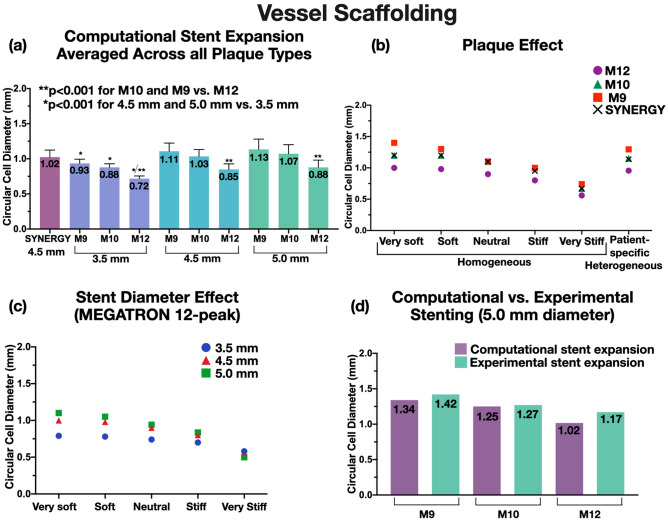
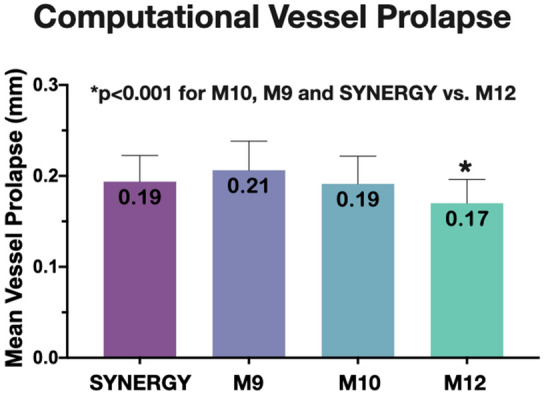
Left main (LM) coronary artery bifurcation stenting is a challenging topic due to the distinct anatomy and wall structure of LM. In this work, we investigated computationally and experimentally the mechanical performance of a novel everolimus-eluting stent (SYNERGY MEGATRON) purpose-built for interventions to large proximal coronary segments, including LM. MEGATRON stent has been purposefully designed to sustain its structural integrity at higher expansion diameters and to provide optimal lumen coverage. Four patient-specific LM geometries were 3D reconstructed and stented computationally with finite element analysis in a well-validated computational stent simulation platform under different homogeneous and heterogeneous plaque conditions. Four different everolimus-eluting stent designs (9-peak prototype MEGATRON, 10-peak prototype MEGATRON, 12-peak MEGATRON, and SYNERGY) were deployed computationally in all bifurcation geometries at three different diameters (i.e., 3.5, 4.5, and 5.0 mm). The stent designs were also expanded experimentally from 3.5 to 5.0 mm (blind analysis). Stent morphometric and biomechanical indices were calculated in the computational and experimental studies. In the computational studies the 12-peak MEGATRON exhibited significantly greater expansion, better scaffolding, smaller vessel prolapse, and greater radial strength (expressed as normalized hoop force) than the 9-peak MEGATRON, 10-peak MEGATRON, or SYNERGY (p < 0.05). Larger stent expansion diameters had significantly better radial strength and worse scaffolding than smaller stent diameters (p < 0.001). Computational stenting showed comparable scaffolding and radial strength with experimental stenting. 12-peak MEGATRON exhibited better mechanical performance than the 9-peak MEGATRON, 10-peak MEGATRON, or SYNERGY. Patient-specific computational LM stenting simulations can accurately reproduce experimental stent testing, providing an attractive framework for cost- and time-effective stent research and development.
左主干(LM)冠状动脉分叉支架置入术是一个具有挑战性的课题,因为 LM 的解剖结构和壁结构独特。在这项工作中,我们通过计算和实验研究了一种新型依维莫司洗脱支架(SYNERGY MEGATRON)的机械性能,该支架专为介入大近端冠状动脉段(包括 LM)而设计。MEGATRON 支架经过专门设计,可在更高的扩张直径下保持其结构完整性,并提供最佳的管腔覆盖率。使用有限元分析对四个特定于患者的 LM 几何形状进行了三维重建,并在经过良好验证的计算支架模拟平台中进行了计算支架置入,研究了不同均匀和不均匀斑块条件下的情况。在所有分叉几何形状中,使用计算方法将四种不同的依维莫司洗脱支架设计(9 峰原型 MEGATRON、10 峰原型 MEGATRON、12 峰 MEGATRON 和 SYNERGY)扩张到三个不同直径(即 3.5、4.5 和 5.0 mm)。还通过实验从 3.5 扩张到 5.0 毫米(盲目分析)将支架设计进行了扩展。在计算和实验研究中计算了支架形态计量和生物力学指数。在计算研究中,与 9 峰 MEGATRON、10 峰 MEGATRON 或 SYNERGY 相比,12 峰 MEGATRON 表现出明显更大的扩张、更好的支撑、更小的血管脱垂和更大的径向强度(表示为归一化环向力)(p < 0.05)。较大的支架扩张直径具有明显更好的径向强度和更差的支撑,而较小的支架直径则更差(p < 0.001)。计算支架置入术与实验支架置入术具有可比的支撑和径向强度。12 峰 MEGATRON 表现出比 9 峰 MEGATRON、10 峰 MEGATRON 或 SYNERGY 更好的机械性能。基于患者的 LM 计算支架置入术模拟可以准确再现实验支架测试,为具有成本效益和时间效益的支架研究和开发提供了有吸引力的框架。