School of Humanities and Social Science, Xi'an Jiaotong University, Xi'an, Shaanxi, China.
Health Commission of Xi'an, Xi'an, Shaanxi, China.
PLoS One. 2021 Apr 23;16(4):e0250526. doi: 10.1371/journal.pone.0250526. eCollection 2021.
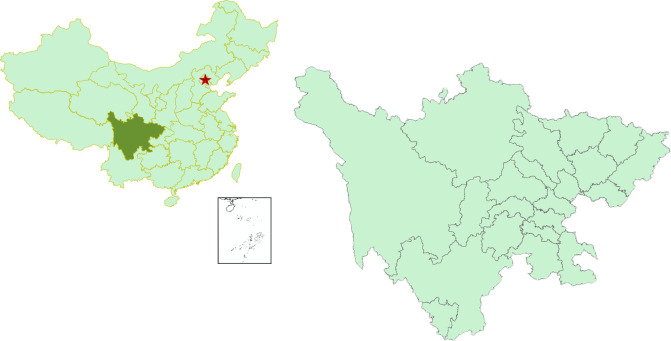
The equity of health resource allocation geographically is a contested topic. Sichuan Province, located in Southwest China, has varied topography, providing us with natural materials to explore the determinants of health resource distribution.
Spatial panel econometric models were constructed to explore the relationship between health resources and factors such as health care service demand and socioeconomic and demographic perspectives using data from Sichuan Province for eight consecutive years (2010-2017).
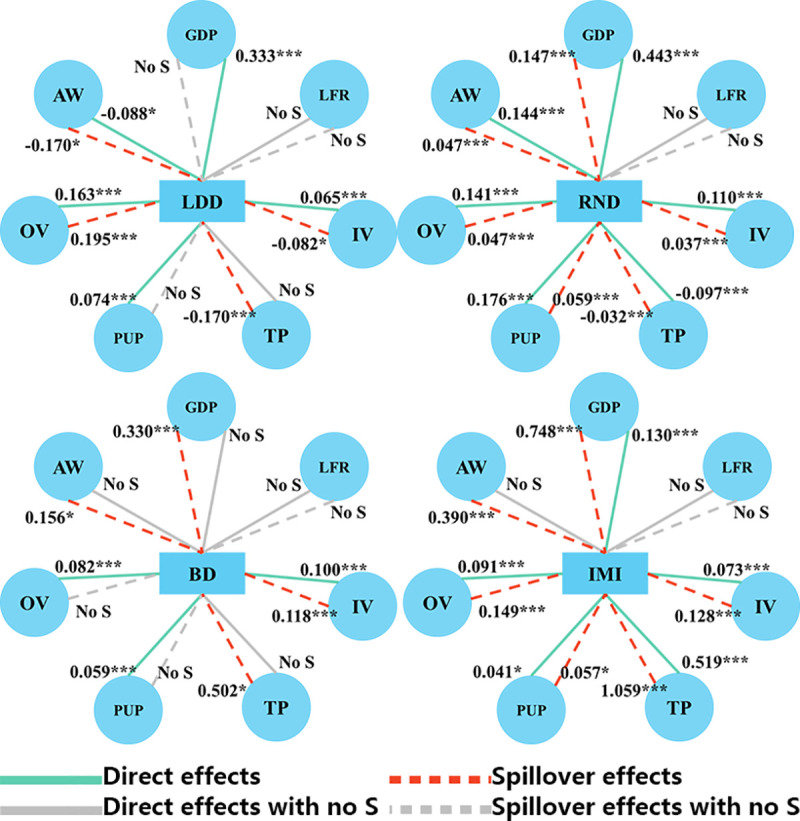
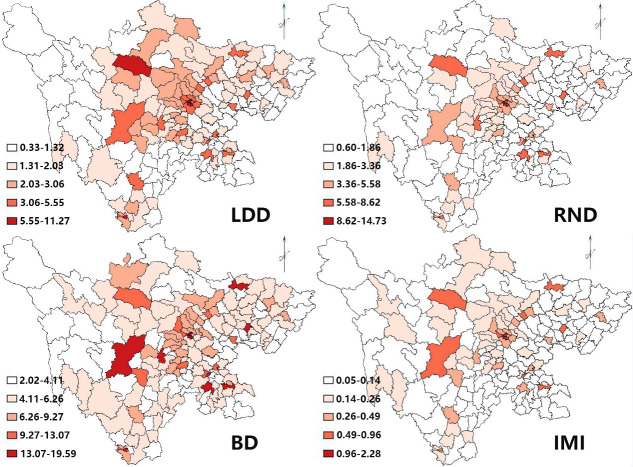
Health care service demands were found to be a major driving force behind the distribution of health resources, showing that an increase in health care service demands draws health resources to specific counties and surrounding areas. From a socioeconomic perspective, gross domestic product per capita and the average wage show a positive association with health resources. In addition, the total population and proportion of the urban population have diverse effects in regard to health-related human resources but have the same effects on material and financial health resources.
Our results provide the Chinese government with evidence needed to formulate and promulgate effective policies, especially those aiming to tackle inequity among different regions.
卫生资源配置的地域公平性是一个有争议的话题。四川省位于中国西南部,地形多样,为我们探索卫生资源分布的决定因素提供了天然材料。
利用四川省连续八年(2010-2017 年)的数据,构建空间面板计量经济学模型,探讨卫生资源与医疗服务需求以及社会经济和人口统计学等因素之间的关系。
医疗服务需求是卫生资源分布的主要驱动力,表明医疗服务需求的增加会将卫生资源吸引到特定的县及其周边地区。从社会经济角度来看,人均国内生产总值和平均工资与卫生资源呈正相关。此外,总人口和城市人口比例对与健康相关的人力资源有不同的影响,但对物质和财政卫生资源的影响是相同的。
我们的研究结果为中国政府制定和颁布有效政策提供了依据,特别是针对解决不同地区之间的不公平问题。