Valencia-Sanchez Cristina, Zekeridou Anastasia
Departments of Neurology and Laboratory Medicine and Pathology, Mayo Clinic College of Medicine, Rochester, MN, United States.
Front Neurol. 2021 Apr 9;12:642800. doi: 10.3389/fneur.2021.642800. eCollection 2021.
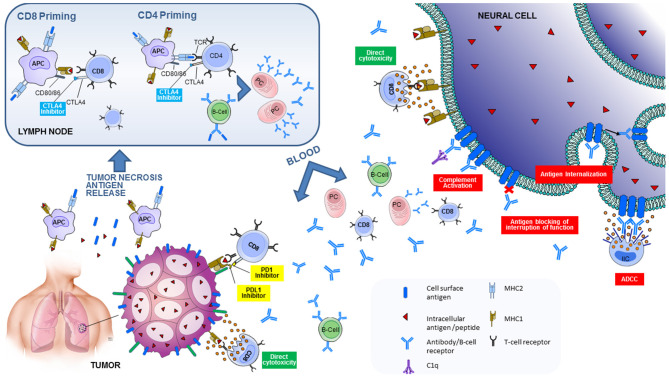
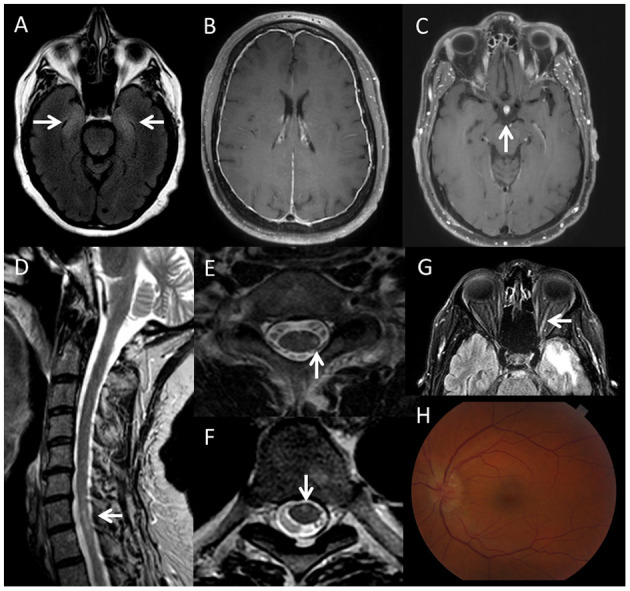
Paraneoplastic neurological syndromes are more commonly seen with malignancies such as small cell lung cancer, thymoma, gynecological malignancies, and breast cancer as well as seminoma. With the introduction of immune checkpoint inhibitor (ICI) cancer immunotherapy we see an increase of autoimmune neurological complications in patients with malignancies not traditionally associated with paraneoplastic neurological syndromes, such as melanoma and renal cell carcinoma. Immune checkpoint inhibitors enhance antitumor immune responses resulting often in immune-related adverse effects that can affect any organ, including the central and peripheral nervous system, neuromuscular junction and muscle. Neurological complications are rare; neuromuscular complications are more common than central nervous system ones but multifocal neurological presentations are often encountered. The vast majority of neurological complications appear within 3 months of ICI initiation, but have been described even after ICI cessation. Neural autoantibody testing reveals autoantibodies in approximately half of the patients with CNS complications. Early suspicion and diagnosis is critical to avoid worsening and improve outcomes. Therapeutic strategies depend on the severity of the symptoms and initially typically involve discontinuation of ICI and high dose steroids. Further immunosuppression might be necessary. Outcomes are dependent on patient's characteristics and clinical presentations.
副肿瘤性神经系统综合征在小细胞肺癌、胸腺瘤、妇科恶性肿瘤、乳腺癌以及精原细胞瘤等恶性肿瘤中更为常见。随着免疫检查点抑制剂(ICI)癌症免疫疗法的引入,我们发现,在一些传统上与副肿瘤性神经系统综合征无关的恶性肿瘤患者中,自身免疫性神经并发症有所增加,比如黑色素瘤和肾细胞癌患者。免疫检查点抑制剂可增强抗肿瘤免疫反应,常常导致免疫相关不良反应,这些反应可能会影响任何器官,包括中枢和外周神经系统、神经肌肉接头和肌肉。神经并发症较为罕见;神经肌肉并发症比中枢神经系统并发症更为常见,但多灶性神经表现也经常出现。绝大多数神经并发症在开始使用ICI后的3个月内出现,但在ICI停药后也有相关描述。神经自身抗体检测显示,约一半的中枢神经系统并发症患者体内存在自身抗体。早期怀疑和诊断对于避免病情恶化和改善预后至关重要。治疗策略取决于症状的严重程度,最初通常包括停用ICI和使用高剂量类固醇。可能需要进一步的免疫抑制治疗。预后取决于患者的特征和临床表现。