Faculty of Mathematics and Natural Sciences, University of Wuppertal, 42119, Wuppertal, Germany.
Vascular Oncology & Metastasis, University Hospital Essen, 45147, Essen, Germany.
ChemMedChem. 2021 Aug 19;16(16):2504-2514. doi: 10.1002/cmdc.202100167. Epub 2021 May 19.
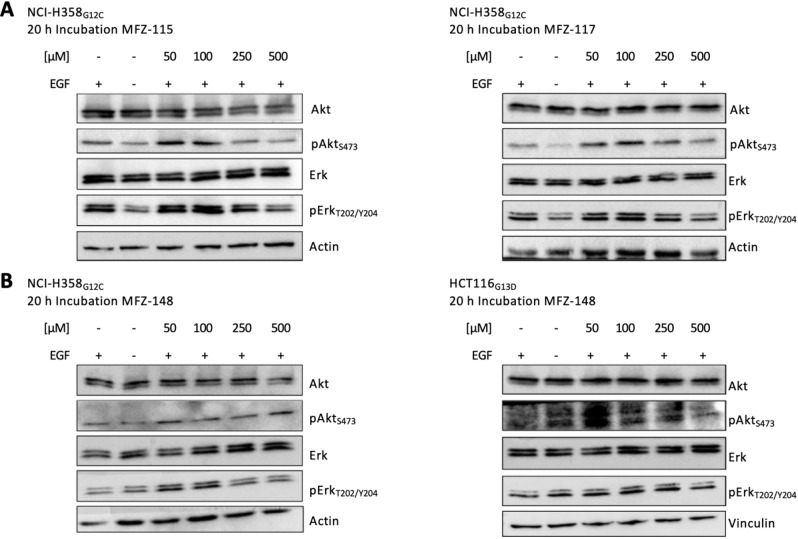
Oncogenic Ras proteins are implicated in the most common life-threatening cancers. Despite intense research over the past two decades, the progress towards small-molecule inhibitors has been limited. One reason for this failure is that Ras proteins interact with their effectors only via protein-protein interactions, which are notoriously difficult to address with small organic molecules. Herein we describe an alternative strategy, which prevents farnesylation and subsequent membrane insertion, a prerequisite for the activation of Ras proteins. Our approach is based on sequence-selective supramolecular receptors which bind to the C-terminal farnesyl transferase recognition unit of Ras and Rheb proteins and covalently modify the essential cysteine in the so-called CaaX-box.
致癌性 Ras 蛋白与最常见的危及生命的癌症有关。尽管在过去的二十年中进行了深入的研究,但在小分子抑制剂方面的进展有限。造成这种失败的原因之一是 Ras 蛋白仅通过蛋白-蛋白相互作用与其效应物相互作用,而这是用小分子有机化合物解决的公认难题。在此,我们描述了一种替代策略,该策略可防止法呢基化和随后的膜插入,这是 Ras 蛋白激活的前提。我们的方法基于序列选择性超分子受体,该受体与 Ras 和 Rheb 蛋白的 C 末端法尼基转移酶识别单元结合,并共价修饰所谓的 CaaX 框中的必需半胱氨酸。