Department of Urology, Faculty of Medicine Universitas Padjadjaran/Hasan Sadikin General Hospital, Bandung, Indonesia.
Asian Pac J Cancer Prev. 2021 Apr 1;22(4):1211-1216. doi: 10.31557/APJCP.2021.22.4.1211.
Cervical cancer is the 3rd most common cancer in women. In late stages, obstructive uropathy due to mass infiltration is common and the mainstay of treatment for this condition is palliative urinary diversion through percutaneous nephrostomy. Nevertheless, complications due to nephrostomy may have adverse effects on some patients. Further study is necessary to determine whether nephrostomy is suitable for all cervical cancer patients with obstructive uropathy. This study aims to identify the determinants of survival rate of cervical cancer patients undergoing nephrostomy for obstructive uropathy and determine the group of cervical cancer patients that would benefit the most from nephrostomy.
Data were obtained from medical records of cervical cancer patients in Hasan Sadikin Central Public Hospital from January 2018 to December 2019. Log-rank analysis was performed to assess the survival rate of patients based on clinical conditions (age, metastasis, and ECOG performance status) and initial laboratory results (hemoglobin, leukocyte, thrombocyte and blood acidity).
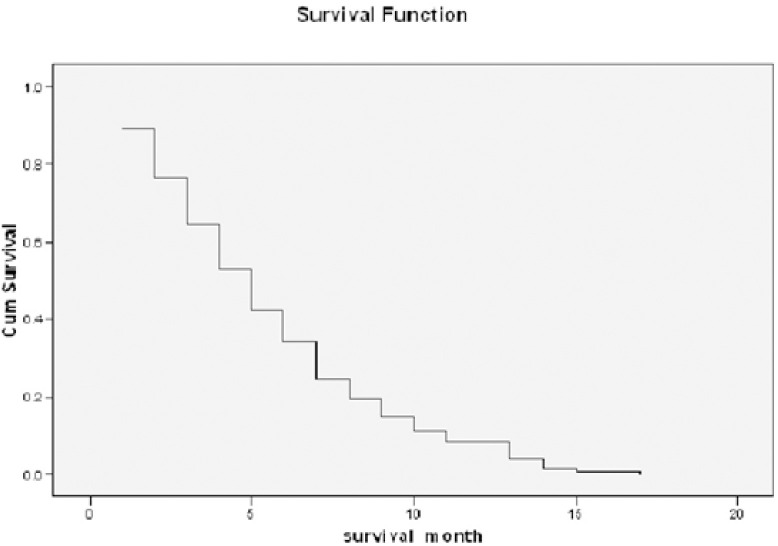
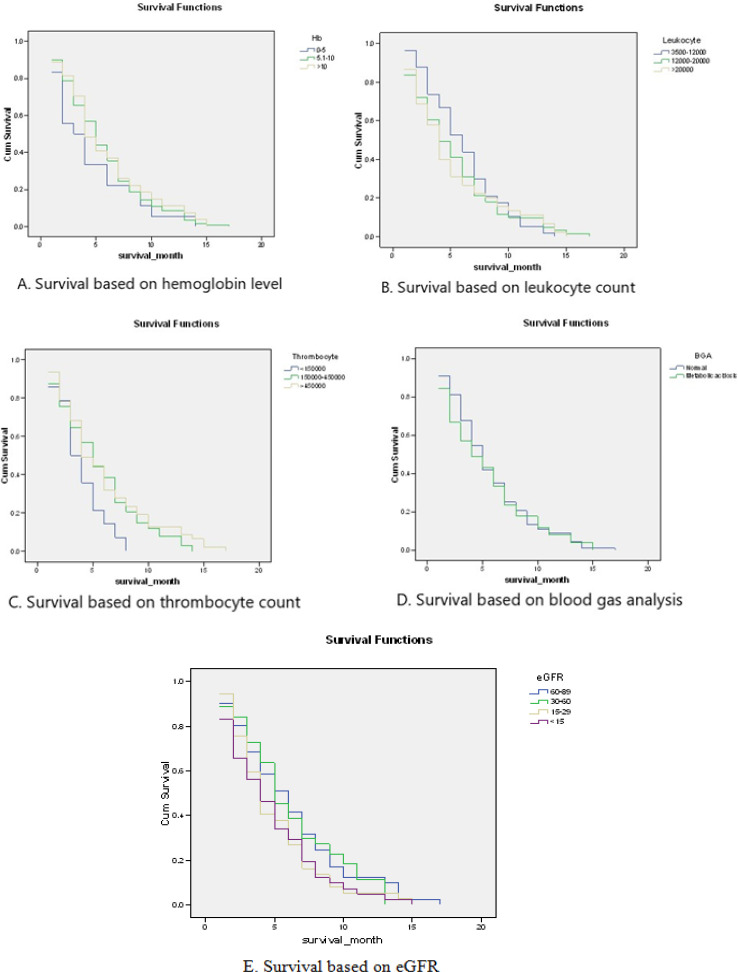
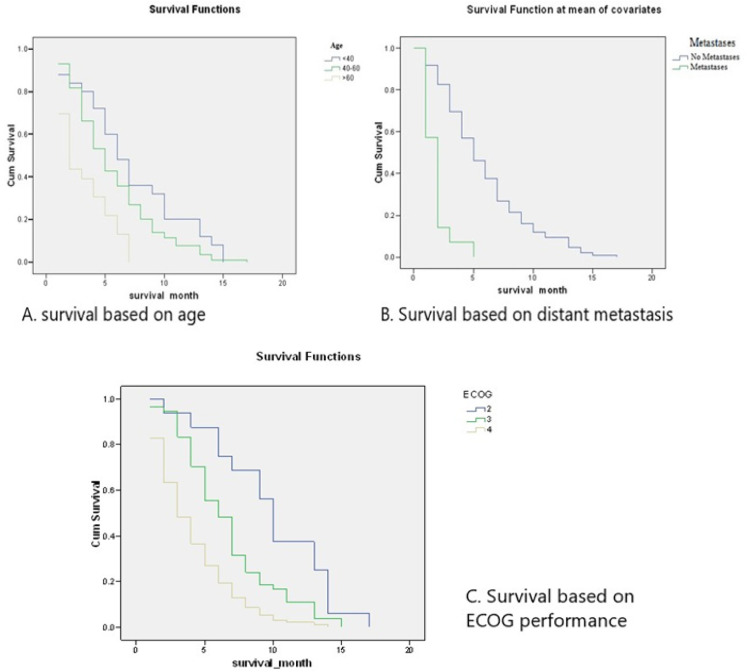
A total of 163 cases were identified from the medical records, with a median survival of 5(1-17) months. The results of the analysis showed that the survival rates of cervical cancer patients undergoing nephrostomy were significantly affected by age (p = 0.0001), metastasis (p = 0.0001), and ECOG performance status (p = 0.0001), while laboratory findings were not significant factors affecting survival (pHb=0.501; pLeu=0.634; pTr=0.077; pBGA=0.687).
The survival after nephrostomy in advanced cervical cancer patients is largely affected by age, metastasis, and performance status. The choices of doing nephrostomy in those patients should be considering those factors to maximize the benefit over the risk of complications.
.
宫颈癌是女性中第三常见的癌症。在晚期,由于肿块浸润导致的尿路梗阻较为常见,这种情况下的主要治疗方法是通过经皮肾造瘘术进行姑息性尿路引流。然而,肾造瘘术引起的并发症可能会对某些患者产生不利影响。需要进一步研究以确定经皮肾造瘘术是否适用于所有患有尿路梗阻的宫颈癌患者。本研究旨在确定接受经皮肾造瘘术治疗的宫颈癌患者的生存率的决定因素,并确定最受益于经皮肾造瘘术的宫颈癌患者群体。
从 2018 年 1 月至 2019 年 12 月,从 Hasan Sadikin 中央公立医院的宫颈癌患者病历中获取数据。通过对数秩分析评估患者的生存率,基于临床状况(年龄、转移和 ECOG 表现状态)和初始实验室结果(血红蛋白、白细胞、血小板和血液酸度)。
从病历中确定了 163 例病例,中位生存期为 5(1-17)个月。分析结果表明,接受肾造瘘术的宫颈癌患者的生存率受到年龄(p=0.0001)、转移(p=0.0001)和 ECOG 表现状态(p=0.0001)的显著影响,而实验室发现不是影响生存的显著因素(pHb=0.501;pLeu=0.634;pTr=0.077;pBGA=0.687)。
晚期宫颈癌患者肾造瘘术后的生存情况在很大程度上受到年龄、转移和表现状态的影响。在这些患者中进行肾造瘘术的选择应考虑到这些因素,以最大限度地提高获益与并发症风险的平衡。