Department of Neurology, Aerospace Center Hospital.
Aerospace Clinic Academy, Peking University Health Science Centre, Beijing, China.
Medicine (Baltimore). 2021 Apr 30;100(17):e25694. doi: 10.1097/MD.0000000000025694.
: Anti-α-amino-3-hydroxy-5-methyl-4-isoxazolepropionic acid receptor (AMPAR) is a subtype of glutamate receptor that mediates most of the fast excitatory neurotransmission in the brain. Anti-AMPAR encephalitis is an autoimmune-mediated neurological disorder, frequently accompanied by the presence of neoplasms, comprising a spectrum of paraneoplastic syndrome.
A 56-year-old man was admitted for deterioration in memory and aberrant psychological behaviors, which lasted for at least 20 days.
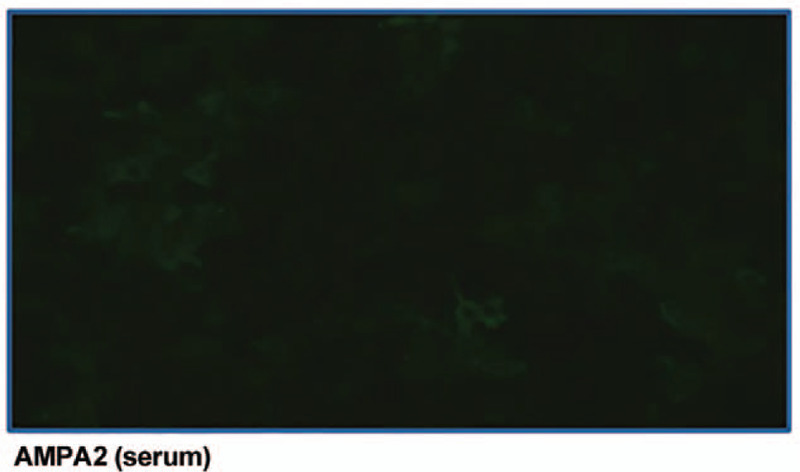
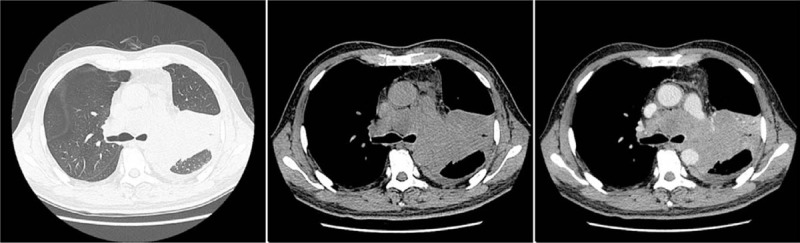
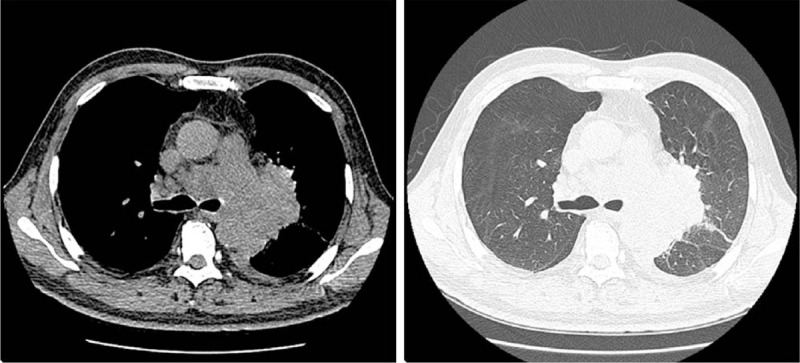
The patient was diagnosed as anti-AMPAR encephalitis and 4 months later, he was diagnosed with small cell lung cancer.
Once diagnosis for anti-AMPAR encephalitis was confirmed, methylprednisolone was prescribed with initial dose 500 mg/d for 14 days until the patient returned to pre-illness state. Then he was discharged with oral treatment with corticosteroids. Following the diagnosis of small cell lung cancer, he received 5 rounds of chemotherapy, including carboplatin and etoposide.
After taken the prescription of Methylprednisolone for anti-AMPAR encephalitis, he returned to pre-illness state and was discharged. In April 21, 2017, after symptoms of respiratory system showed up, he was diagnosed with small cell lung cancer and he eventually died of respiratory failure.
Though progress has been made in recent years in diagnosis and treatment for autoimmune encephalitis, it is challenging to diagnose due to the similarity in clinical findings with other autoimmune or infectious encephalitis. In addition, it is necessary for these patients to regularly have tumor screening, considering AMPAR antibody encephalitis is closely associated with neoplasm, and the incidence of paraneoplastic syndrome is 63% to 70%.
抗 α-氨基-3-羟基-5-甲基-4-异恶唑丙酸受体(AMPAR)是谷氨酸受体的一种亚型,介导大脑中大多数快速兴奋性神经递质传递。抗 AMPAR 脑炎是一种自身免疫介导的神经紊乱,常伴有肿瘤的存在,包括一系列副肿瘤综合征。
一名 56 岁男性因记忆和行为异常恶化而入院,这些症状已经持续了至少 20 天。
患者被诊断为抗 AMPAR 脑炎,4 个月后,他被诊断为小细胞肺癌。
一旦确诊为抗 AMPAR 脑炎,即给予甲基强的松龙治疗,初始剂量为 500mg/d,共 14 天,直至患者恢复到发病前状态。然后他出院,口服皮质类固醇治疗。在诊断出小细胞肺癌后,他接受了 5 轮化疗,包括卡铂和依托泊苷。
在接受抗 AMPAR 脑炎的甲基强的松龙治疗后,他恢复到发病前的状态并出院。2017 年 4 月 21 日,呼吸系统出现症状后,他被诊断为小细胞肺癌,最终因呼吸衰竭而死亡。
尽管近年来在自身免疫性脑炎的诊断和治疗方面取得了进展,但由于其临床发现与其他自身免疫性或感染性脑炎相似,因此诊断仍然具有挑战性。此外,这些患者需要定期进行肿瘤筛查,因为 AMPAR 抗体脑炎与肿瘤密切相关,副肿瘤综合征的发病率为 63%至 70%。