Neuroscience Graduate Group, Perelman School of Medicine, University of Pennsylvania, Pennsylvania, PA, USA.
Department of Psychology, School of Arts and Sciences, University of Pennsylvania, Philadelphia, PA, USA.
Nat Rev Neurosci. 2021 Jun;22(6):372-384. doi: 10.1038/s41583-021-00457-5. Epub 2021 Apr 28.
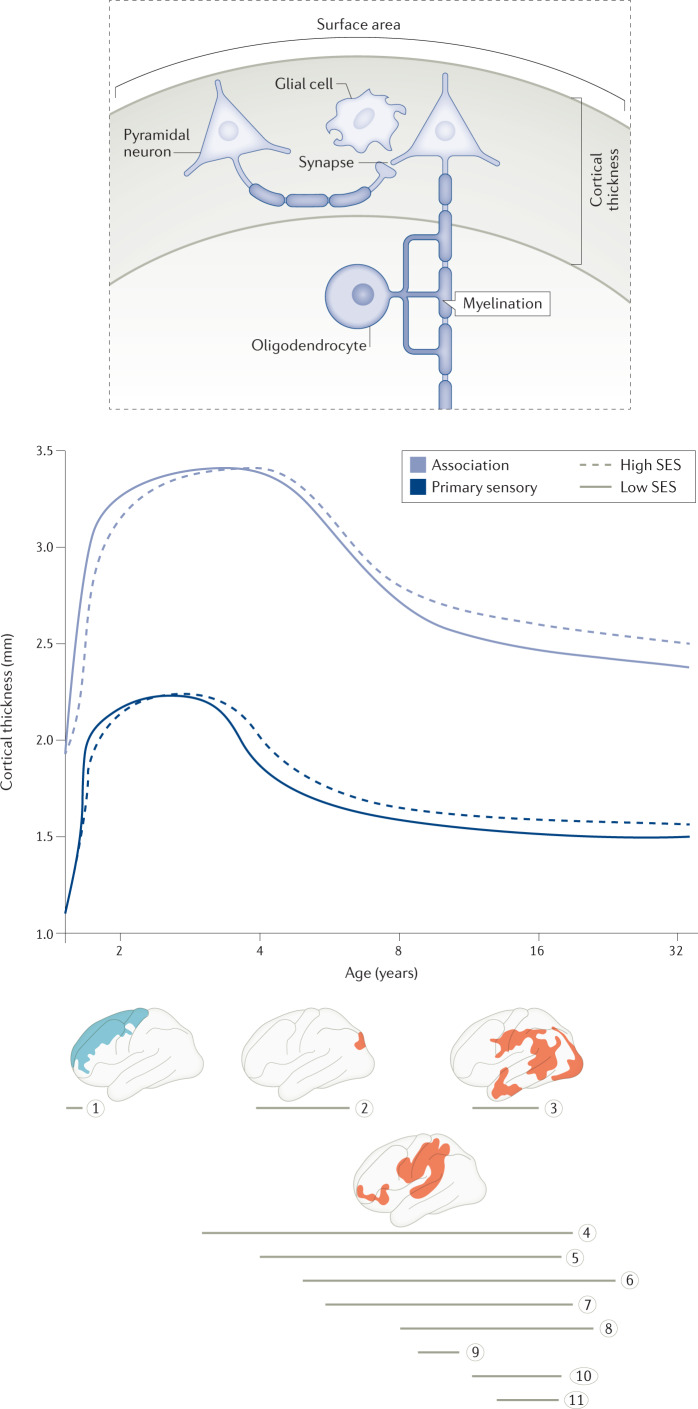
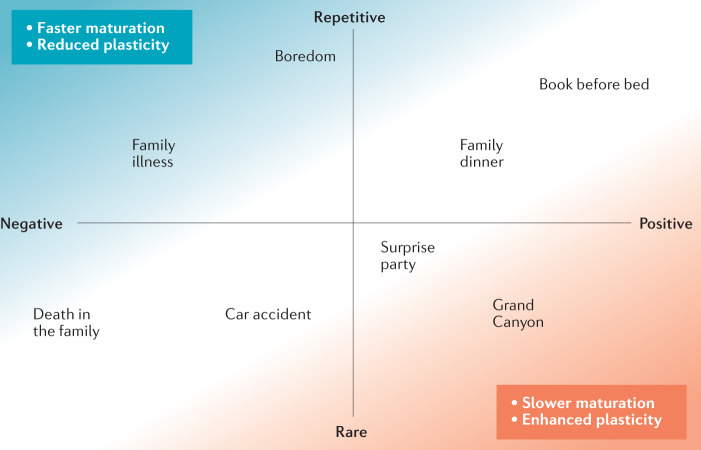
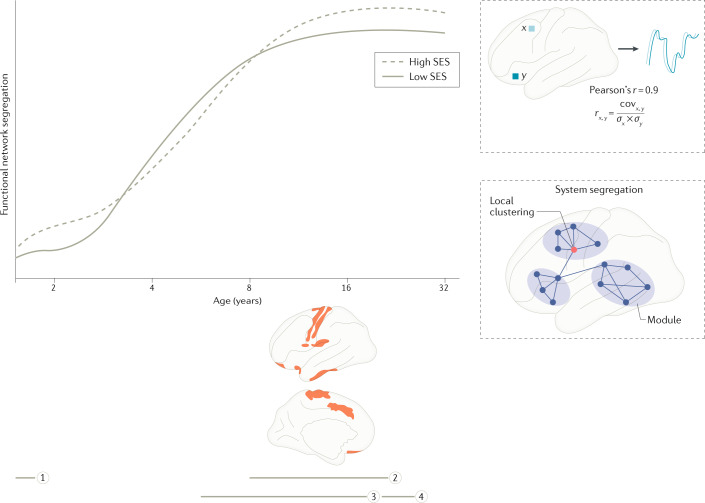
Childhood socio-economic status (SES), a measure of the availability of material and social resources, is one of the strongest predictors of lifelong well-being. Here we review evidence that experiences associated with childhood SES affect not only the outcome but also the pace of brain development. We argue that higher childhood SES is associated with protracted structural brain development and a prolonged trajectory of functional network segregation, ultimately leading to more efficient cortical networks in adulthood. We hypothesize that greater exposure to chronic stress accelerates brain maturation, whereas greater access to novel positive experiences decelerates maturation. We discuss the impact of variation in the pace of brain development on plasticity and learning. We provide a generative theoretical framework to catalyse future basic science and translational research on environmental influences on brain development.
儿童社会经济地位(SES)是衡量物质和社会资源可获得性的指标,是预测终身幸福的最强因素之一。在这里,我们回顾了一些证据,这些证据表明与儿童 SES 相关的经历不仅会影响结果,还会影响大脑发育的速度。我们认为,较高的儿童 SES 与延长的结构大脑发育和更长的功能网络分离轨迹有关,最终导致成年后皮质网络更有效。我们假设,更多地接触慢性压力会加速大脑成熟,而更多地接触新奇的积极体验会减缓成熟。我们讨论了大脑发育速度变化对可塑性和学习的影响。我们提供了一个生成性的理论框架,以促进未来关于环境对大脑发育影响的基础科学和转化研究。