Stewart Rebecca, Wright Breanna, Smith Liam, Roberts Steven, Russell Natalie
BehaviourWorks Australia, Monash Sustainable Development Institute, Monash University, Melbourne, Victoria, Australia.
School of Social Sciences, Faculty of Arts, Monash University, Melbourne, Victoria, Australia.
Heliyon. 2021 Apr 13;7(4):e06660. doi: 10.1016/j.heliyon.2021.e06660. eCollection 2021 Apr.
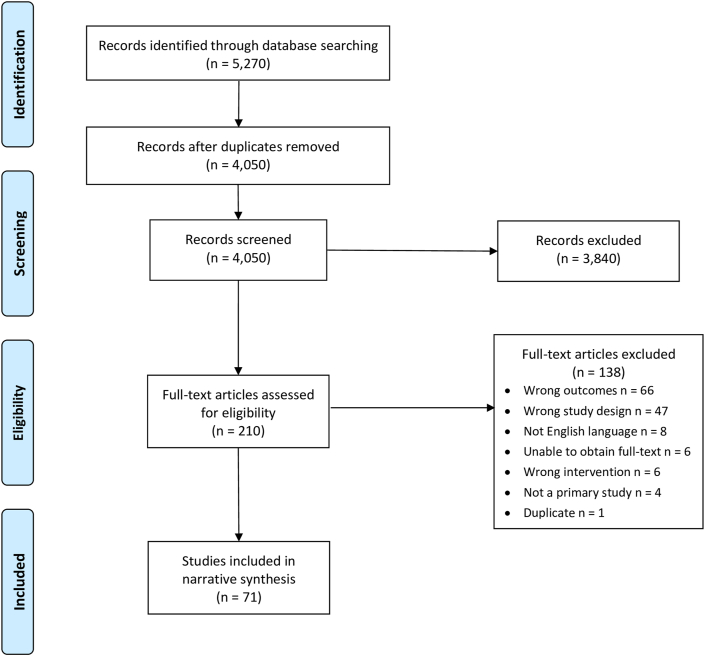
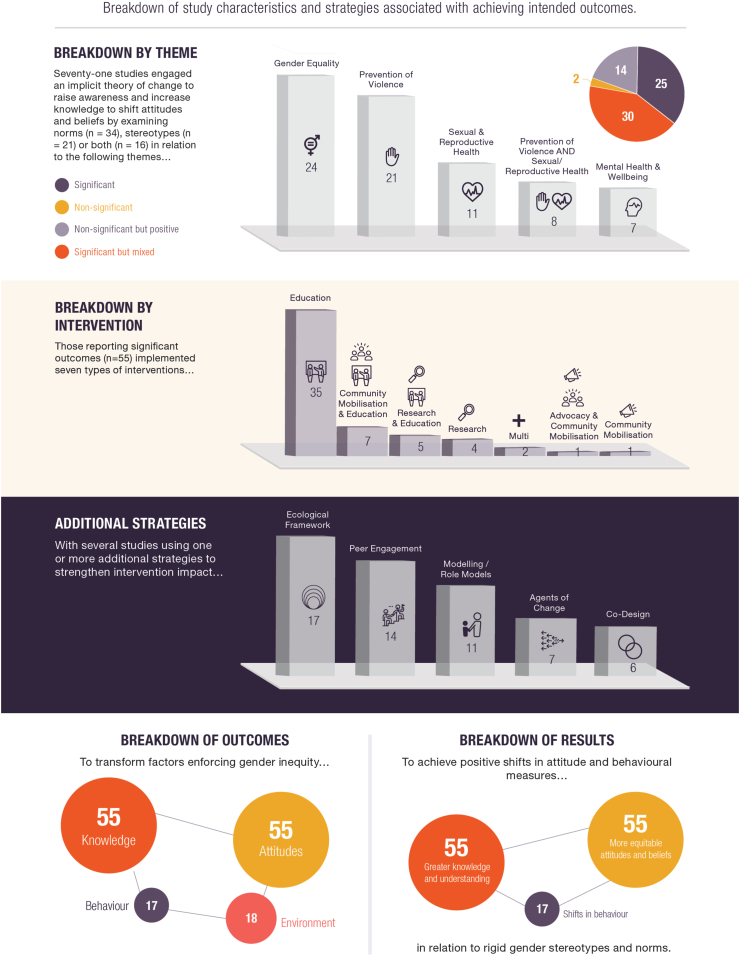
In the face of ongoing attempts to achieve gender equality, there is increasing focus on the need to address outdated and detrimental gendered stereotypes and norms, to support societal and cultural change through individual attitudinal and behaviour change. This article systematically reviews interventions aiming to address gendered stereotypes and norms across several outcomes of gender inequality such as violence against women and sexual and reproductive health, to draw out common theory and practice and identify success factors. Three databases were searched; ProQuest Central, PsycINFO and Web of Science. Articles were included if they used established public health interventions types (direct participation programs, community mobilisation or strengthening, organisational or workforce development, communications, social marketing and social media, advocacy, legislative or policy reform) to shift attitudes and/or behaviour in relation to rigid gender stereotypes and norms. A total of 71 studies were included addressing norms and/or stereotypes across a range of intervention types and gender inequality outcomes, 55 of which reported statistically significant or mixed outcomes. The implicit theory of change in most studies was to change participants' attitudes by increasing their knowledge/awareness of gendered stereotypes or norms. Five additional strategies were identified that appear to strengthen intervention impact; peer engagement, addressing multiple levels of the ecological framework, developing agents of change, modelling/role models and co-design of interventions with participants or target populations. Consideration of cohort sex, length of intervention (multi-session vs single-session) and need for follow up data collection were all identified as factors influencing success. When it comes to engaging men and boys in particular, interventions with greater success include interactive learning, co-design and peer leadership. Several recommendations are made for program design, including that practitioners need to be cognisant of breaking down stereotypes amongst men (not just between genders) and the avoidance of reinforcing outdated stereotypes and norms inadvertently.
面对为实现性别平等而持续不断的努力,人们越来越关注应对过时且有害的性别刻板印象和规范的必要性,通过个人态度和行为的改变来支持社会和文化变革。本文系统回顾了旨在应对性别刻板印象和规范的干预措施,这些措施涉及性别不平等的多个方面,如针对妇女的暴力以及性健康和生殖健康,以梳理出共同的理论和实践,并确定成功因素。我们检索了三个数据库:ProQuest Central、PsycINFO和Web of Science。如果文章使用既定的公共卫生干预类型(直接参与项目、社区动员或强化、组织或劳动力发展、沟通、社会营销和社交媒体、宣传、立法或政策改革)来改变与僵化的性别刻板印象和规范相关的态度和/或行为,则将其纳入。总共纳入了71项研究,这些研究涉及一系列干预类型和性别不平等结果中的规范和/或刻板印象,其中55项报告了具有统计学意义或混合的结果。大多数研究中隐含的变革理论是通过增加参与者对性别刻板印象或规范的知识/认识来改变他们的态度。还确定了另外五种似乎能加强干预影响的策略;同伴参与、应对生态框架的多个层面、培养变革推动者、树立榜样/模范以及与参与者或目标人群共同设计干预措施。对队列性别、干预时长(多阶段与单阶段)以及后续数据收集需求的考虑都被确定为影响成功的因素。特别是在让男性和男孩参与方面,更成功的干预措施包括互动学习、共同设计和同伴领导。针对项目设计提出了几项建议,包括从业者需要意识到打破男性中的刻板印象(不仅仅是性别之间),并避免无意中强化过时的刻板印象和规范。